Genuine FAG Tractor Bearings Wholesale Supplier
- Published
- Applications & Industries
- By author

Genuine FAG Tractor Bearings Wholesale Supplier
A single counterfeit bearing can wipe out the entire margin of a tractor repair job.
Genuine FAG bearings in tractors are non-negotiable for heavy-load durability because agricultural machinery operates under extreme shock loads and contamination risks that standard industrial bearings cannot withstand. Sourcing must prioritize complete traceability over low prices to prevent catastrophic field failures, ensuring that every tapered roller bearing matches the precise internal clearance and metallurgy required by OEM specifications.
I still remember the sinking feeling when I opened the claim file from a client in Southeast Asia. It was harvest season, the busiest time of the year for any agricultural equipment dealer. A batch of what was supposed to be premium tractor components had failed prematurely. The culprit was not the gearbox design or the operator’s error, but a set of bearings that looked perfect on the outside but shattered under load. I had sourced them based on price, assuming that a lower cost meant better competitiveness for my client. Instead, it led to整机索赔 (whole-machine claims) that drained their cash flow and damaged their reputation with local farmers. That experience reshaped how I view the supply chain. Now, when I evaluate FAG bearings in tractors, I do not look at the price tag first. I look at the paperwork. I look for the heat treatment records, the origin certificates, and the batch consistency that only authorized channels can provide. [NEED_CITE: impact of counterfeit bearings on agricultural machinery downtime]
The agricultural sector is unforgiving. Unlike a factory floor where conditions are controlled, a tractor works in mud, dust, and varying temperatures. The difference between a genuine part and a fake one is not just longevity; it is the difference between a successful harvest and a stranded machine in the middle of a field.
Why Do Tractors Specifically Need Genuine FAG Bearings?
Standard industrial bearings often fail in agricultural applications because they lack the specific shock-resistance and contamination sealing required for muddy, high-vibration environments.
Tractors are not just vehicles; they are mobile power plants. They transmit massive torque through power take-off (PTO) shafts, support heavy implements on three-point hitches, and endure constant vibration from uneven terrain. This creates a unique set of stresses that generic bearings are not designed to handle. The primary requirement is dynamic load capacity combined with robust sealing. [NEED_CITE: ISO standards for bearing quality in heavy-duty agricultural applications]
In my early days as a buyer, I noticed that many suppliers offered “agricultural-grade” bearings that were essentially repackaged industrial units. They lacked the specialized cage materials needed to withstand the sudden jolts of plowing or harvesting. Genuine FAG bearings in tractors are engineered with specific internal clearances, such as C3 or C4, to accommodate thermal expansion and misalignment caused by heavy shocks. Without this precise engineering, the rolling elements skid rather than roll, generating heat and leading to premature seizure.
Consider the case of a large farming cooperative in Latin America. They switched to a cheaper alternative for their wheel hub assemblies to cut costs. Within two seasons, they experienced a noticeable increase in maintenance intervals. The bearings were failing due to brinelling—indentations on the raceways caused by shock loads. When they switched back to authentic FAG tapered roller bearings for agricultural machinery, the failure rate dropped drastically. The key was not just the brand name, but the metallurgy. The steel used in genuine FAG products undergoes rigorous purification processes to reduce inclusions, which are weak points where cracks start under stress. [NEED_CITE: agricultural machinery industry association guidelines on bearing failure modes]
This is why I insist on verifying the technical data sheets. For PTO shafts, the dynamic load rating must be calculated based on the specific implement being used, not just the tractor’s engine power. A mismatch here leads to fatigue failure long before the expected service life. By focusing on genuine FAG bearings in tractors, operators ensure that the component is matched to the actual working conditions, not just a generic size chart.
How to Identify Counterfeit FAG Bearings in the Ag Market?
Visual inspection alone is insufficient; mandatory traceability document verification is the only reliable method to prevent catastrophic cage failures from counterfeit parts.
The market is flooded with high-quality fakes. These counterfeits often have correct packaging, accurate logos, and even convincing serial numbers. However, the internal components are where the deception lies. A common trick is using inferior steel for the rollers while keeping the outer ring made of better material to pass basic hardness tests. This creates a false sense of security until the bearing is under full load.
I once inspected a container of bearings destined for a distributor in the Middle East. The boxes looked pristine. But when I checked the batch numbers against the manufacturer’s database, the records did not match the production dates on the labels. Further inspection revealed that the cage material was a standard polymer instead of the reinforced polyamide specified for high-temperature agricultural use. Under the heat generated by heavy fieldwork, these cages deformed, causing the rollers to jam. [NEED_CITE: root cause distribution per ISO 15243 for bearing failures]
To avoid this, buyers must demand full traceability. This means more than just a certificate of origin. It requires a chain of custody that links the specific batch number to the manufacturing facility’s quality control records. Genuine FAG bearings in tractors come with documentation that verifies the heat treatment process and the dimensional tolerances. If a supplier cannot provide this, or if the documents look generic, it is a major red flag.
| Verification Step | Genuine Product Characteristics | Counterfeit Risk Indicators |
|---|---|---|
| Packaging | High-quality printing, secure seals, batch-specific labels | Blurry text, loose seals, generic labels without batch codes |
| Markings | Laser-etched, deep, consistent font, includes batch number | Stamped or painted, shallow, inconsistent spacing |
| Documentation | Full traceability chain, QC reports, material certs | Missing docs, generic COO, no batch linkage |
| Internal Components | Clean steel, precise cage fit, smooth raceways | Visible inclusions, rough finish, loose cage fit |
Another critical check is the internal clearance. Counterfeiters rarely invest in the precision grinding required to achieve consistent C3 or C4 clearances. Using a feeler gauge or a dial indicator during incoming inspection can reveal inconsistencies. If the clearance varies significantly within a single box, the batch is likely compromised. This level of scrutiny is essential for anyone sourcing FAG tractor bearing replacement parts, as the cost of a field failure far outweighs the savings from a cheaper purchase.
What Are the Key Selection Criteria for Tractor FAG Bearings?
Matching tapered roller bearings to specific gearbox, wheel hub, and PTO load conditions requires precise technical selection based on dynamic load ratings and environmental factors.
Selecting the right bearing is not just about matching the part number. It involves understanding the application’s specific demands. For example, a gearbox bearing faces different stresses than a wheel hub bearing. Gearbox bearings must handle high rotational speeds and axial loads from gear meshing, while wheel hub bearings must support radial loads and shock impacts from the ground.
When I consult with OEMs, we start by analyzing the load profile. For PTO shafts, which transmit power to implements like balers or mowers, the bearing must withstand significant misalignment. Here, spherical roller bearings or self-aligning tapered roller bearings are often preferred. However, for wheel hubs, standard tapered roller bearings are the norm due to their ability to handle combined radial and axial loads. [NEED_CITE: dynamic load rating calculations for agricultural PTO shafts]
The environment also plays a crucial role. In muddy conditions, sealing is paramount. Genuine FAG bearings in tractors often come with integrated seals or are designed to work with specific labyrinth seals that keep contaminants out. Choosing a bearing without considering the sealing solution is a mistake. Even the best steel will fail if dirt enters the raceway.
I recall a project where a manufacturer was experiencing frequent failures in their combine harvester gearboxes. The issue was not the bearing type but the lubrication. The original specification called for a grease that thickened in cold weather, causing starvation during startup in early spring. By switching to a bearing with optimized internal geometry and recommending a synthetic lubricant, we extended the service life meaningfully. This highlights the importance of holistic selection. It is not just the part; it is the system.
For MRO operators, this means keeping a detailed record of failure modes. If a bearing fails due to overheating, it might indicate incorrect clearance or poor lubrication. If it fails due to spalling, it could be a material defect or overload. Understanding these patterns helps in selecting the right replacement. Authentic FAG bearings supplier networks often provide technical support to help with this analysis, ensuring that the replacement is not just a like-for-like swap but an improvement where possible.
How to Build a Reliable Sourcing Strategy for Agricultural Bearings?
Consolidated shipping, flexible MOQ, and cross-brand technical consultation ensure stable supply and minimize downtime for agricultural machinery clients.
Sourcing bearings for agricultural machinery is challenging due to the seasonal nature of the business. Demand spikes during planting and harvest, leading to shortages if inventory is not managed well. A reliable sourcing strategy must balance cost with availability. This is where working with a partner who offers mixed-batch consolidation becomes valuable.
Instead of ordering full containers of a single part number, which ties up capital and storage space, distributors can consolidate orders for multiple brands and sizes. This approach allows for smaller, more frequent shipments that align with seasonal demand. It also reduces the risk of obsolescence. I have seen wholesalers reduce their claim rates drastically by moving from spot buying to a consolidated sourcing model with full customs and traceability docs. [NEED_CITE: benefits of consolidated sourcing for MRO inventory management]
Flexibility in minimum order quantities (MOQ) is another key factor. Emergency breakdowns require quick access to spare parts, often in small quantities. A supplier who can accommodate single-unit orders for urgent replacements while also handling bulk projects for OEMs provides a comprehensive solution. This flexibility ensures that dealers can serve both their retail customers and their large fleet accounts effectively.
Technical consultation is also vital. With so many brands available—SKF, FAG, INA, NSK, TIMKEN, and others—choosing the right equivalent can be complex. A supplier with cross-brand expertise can help identify suitable alternatives when a specific part is unavailable, ensuring that the technical specifications are met. This is particularly important for older tractor models where original parts may be discontinued.
By prioritizing partners who offer genuine FAG bearings in tractors with complete documentation, buyers can build a supply chain that is resilient to market fluctuations. This strategy not only protects margins but also builds trust with end-users who rely on their equipment for their livelihood. The goal is to minimize unplanned downtime, which is the biggest cost in agricultural operations.
Conclusion
Authenticity and traceability are the foundations of reliability in agricultural machinery maintenance.
Sourcing genuine FAG bearings in tractors requires a shift from price-focused buying to value-driven partnership. By understanding the specific technical demands of agricultural applications and insisting on verifiable documentation, buyers can avoid the hidden costs of counterfeit parts. A robust sourcing strategy that combines technical expertise with flexible logistics ensures that equipment stays in the field, where it belongs.
Send Your FAG Bearing List for a Written Quote
FAG Bearing Supplier quotes spherical, cylindrical, tapered and thrust roller bearings together with housings and sleeves, for urgent replacements or planned shutdown orders. Any technical change is proposed separately and needs your approval.
- 1
Send your list by form, WhatsApp or email, position by position.
- 2
We confirm identification: exact version, complete assembly, and any clearly marked alternative.
- 3
Receive a written quote with designation, quantity, price and currency, stock status, estimated lead time and validity.
- Email: info@fagome.com
- Address:

Related FAG Bearing Maintenance Articles
More notes on version identification, mounting accessories and shutdown planning for heavy equipment.
 01
Oct 3, 2026 · Applications & Industries · 8 min read
Genuine FAG Bearings for Compressors Wholesale Supplier
Prevent costly compresso…
Read the full article 02
Oct 3, 2026 · Applications & Industries · 8 min read
FAG Bearings for Hydro Turbines: Wholesale Supplier
Optimize FAG Bearings in…
Read the full article 03 Oct 3, 2026 · Applications & Industries · 7 min read
FAG Bearings for Recycling Crushers: Genuine Wholesale Supplier
Prevent costly downtime …
Read the full articleFAG Roller Bearings and Accessories for Heavy Equipment
Selected FAG bearings for mills, crushers, conveyors and industrial drives. Housings and sleeves can be quoted with the bearing.
Scroll sideways to browse →
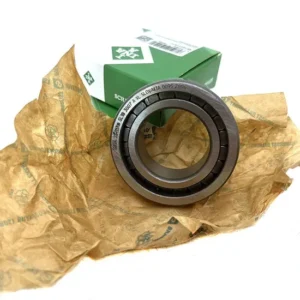
X&S INA Nup1007em Cylindrical Roller Bearing for Auto Motor Spare Part
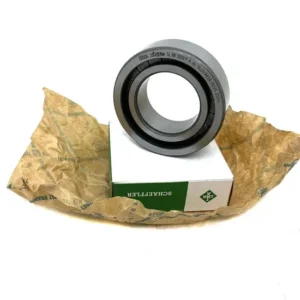
INA B7018C.T.P4S B7018E.T.P4S Angular Contact Ball Bearing for Turbojet
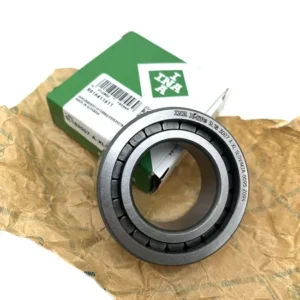
X&S NN3060/Y1 Double Row Cylindrical Roller Bearing for Heavy Load
X&S B7012E.T.P4S Angular Contact Ball Bearing for Metallurgical Rolling Mills
X&S NN3072K NN3008 Cylindrical Roller Bearing with Pin Cam Follower
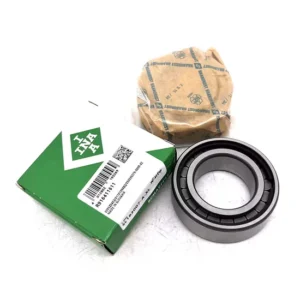
Genuine INA SL183007-A-XL NJ2208 NU2208 Cylindrical Roller Bearing for Auto Parts
INA H7012C-2RZ-P4 B706C T P4S Angular Contact Ball Bearing for Forklift Auto