FAG Bearings for Hydro Turbines: Wholesale Supplier
- Published
- Applications & Industries
- By author

FAG Bearings for Hydro Turbines: Wholesale Supplier
Most bearing failures in hydroelectric plants do not happen during operation, but during the silent months of sea transit.
Selecting the right FAG bearings for hydro turbines requires a strict focus on three non-negotiable factors: massive radial load capacity to handle turbine weight, rigorous anti-corrosion transit protection to survive long-distance shipping, and precise installation clearance control to prevent thermal failure. Neglecting any one of these elements compromises the entire power generation unit, regardless of the bearing brand’s reputation.
I still remember the smell of rust that hit me when we opened a container at a port in South America. It was a shipment of spherical roller bearings destined for a major hydroelectric project. The outer boxes looked pristine, but inside, the inner rings were speckled with orange corrosion. The protective oil layer had been applied too thinly before leaving the warehouse, and the humid sea air had done the rest. That incident nearly resulted in a mid-six-figure loss and a damaged reputation. Since then, I have treated the logistics and technical specification of FAG bearings for hydro turbines with extreme caution. This is not just about selling a component; it is about ensuring the mechanical heart of a dam keeps beating. [NEED_CITE: common failure modes in hydro turbine bearings per ISO 15243]
The transition from factory floor to installation site is where most value is lost. Understanding the specific demands of hydropower applications allows distributors and OEMs to avoid costly downtime. Below, we break down the critical technical and logistical considerations for sourcing these heavy-duty components.
Why are FAG Spherical Roller Bearings Crucial for Hydro Turbines?
Hydro turbine main shafts operate under immense static and dynamic radial loads that few other bearing types can sustain without premature fatigue.
The core function of a hydro turbine is to convert the kinetic energy of water into rotational mechanical energy. This process generates massive radial forces on the main shaft, especially in vertical axis turbines where the entire weight of the rotor and runner rests on the bearing assembly. FAG spherical roller bearings are engineered specifically to accommodate these heavy loads while tolerating slight misalignments caused by shaft deflection or housing deformation. [NEED_CITE: load rating calculation methods for vertical hydro turbines]
Unlike cylindrical roller bearings, which are sensitive to angular misalignment, spherical roller bearings feature two rows of rollers and a common sphered raceway in the outer ring. This design allows the inner ring, rollers, and cage to swivel slightly around the bearing center. In hydro applications, where shaft alignment can shift due to thermal expansion or foundation settling, this self-aligning capability is vital. It prevents edge loading on the rollers, which is a primary cause of early spalling and fatigue failure.
Consider a case involving a medium-sized hydro plant in Southeast Asia. The original equipment manufacturer had specified cylindrical bearings to save costs. Within months of commissioning, the units exhibited severe vibration and overheating. Upon inspection, we found distinct wear patterns on the roller edges, indicating that the shaft was not perfectly aligned with the housing. Replacing them with FAG spherical roller bearings resolved the vibration issues immediately. The ability to handle misalignment without sacrificing load capacity makes them the industry standard for reliable hydropower generation.
For buyers, this means that substituting with a cheaper, non-spherical alternative is a false economy. The initial savings are quickly erased by maintenance costs and unplanned outages. When evaluating FAG bearings for hydro turbines, verify that the selected series offers the necessary dynamic load rating for your specific turbine size and water head pressure.
How to Prevent Corrosion During Long-Distance Sea Transit?
The greatest threat to bearing integrity is often not the operating environment, but the weeks spent in a salt-laden shipping container.
Corrosion during transit is a silent killer. Bearings are precision-ground steel components; even microscopic surface rust can act as a stress concentrator, leading to crack initiation under load. For international buyers, especially those in tropical or coastal regions, the journey from the manufacturing hub to the site can take several weeks. During this time, temperature fluctuations inside containers cause condensation, creating a perfect environment for oxidation if protection is inadequate. [NEED_CITE: VDI guidelines for corrosion protection during transport]
Standard factory packaging often assumes short-term storage or inland transport. For overseas shipments of FAG bearings for hydro turbines, enhanced protection is mandatory. This involves applying a thicker layer of high-viscosity anti-rust oil and using vacuum-sealed vapor corrosion inhibitor (VCI) packaging. The oil must be compatible with the lubricant used during final installation to avoid chemical reactions that could degrade grease performance.
I recall a batch of bearings sent to a project in West Africa. The supplier had used standard paper wrapping and a light oil spray. Due to a delay at the port, the containers sat in high humidity for an extra month. When the client opened them, the cages showed signs of surface oxidation. While the bearings were technically still functional after cleaning, the client’s trust was shaken, and additional inspection costs were incurred. We now enforce a strict protocol for all hydro projects: double-layer VCI bags, desiccant packs, and a heavy-duty rust preventive coating that remains stable for extended periods.
| Protection Level | Packaging Method | Humidity Resistance | Suitability for Sea Freight |
|---|---|---|---|
| Basic | Paper wrap + Light oil | Low | Not Recommended |
| Standard | Plastic bag + Standard oil | Moderate | Short transit only |
| Enhanced | VCI Vacuum Seal + Heavy oil + Desiccant | High | Required for long-haul |
This level of care is not optional for critical infrastructure. Buyers should explicitly request transit-specific corrosion protection when sourcing FAG bearings for hydro turbines. Verify that the supplier understands the difference between domestic and export-grade packaging. A simple question about the type of rust preventive used can reveal whether a supplier is experienced in handling heavy industrial exports.
What is the Impact of Installation Clearance on Turbine Performance?
Tighter installation clearance does not equal better performance; incorrect clearance accelerates fatigue failure under heavy radial loads.
One of the most common misconceptions in bearing installation is that “tighter is better.” In reality, hydro turbine bearings require precise internal clearance to accommodate thermal expansion and maintain an adequate oil film. If the clearance is too tight, the bearing will overheat as the rollers expand against the races, leading to seizure. If it is too loose, excessive vibration and noise will occur, reducing the lifespan of the unit. [NEED_CITE: ISO standards for bearing internal clearance selection]
FAG spherical roller bearings are typically available in standard (CN), C3, and C4 clearance classes. For hydro turbines, which often operate at moderate speeds but under heavy loads and varying temperatures, C3 or C4 clearances are frequently recommended. The choice depends on the operating temperature differential between the inner and outer rings and the fit tolerance of the shaft and housing.
During a recent commissioning of a run-of-river plant, the installation team pressed the bearings onto the shaft with a standard CN clearance. As the turbine loaded up, the temperature rose, and the internal clearance vanished. The bearing began to emit a high-pitched whine, and vibration sensors spiked. We had to shut down the unit, remove the bearing, and replace it with a C3 clearance version. The issue was resolved, but the downtime cost the operator significantly.
| Clearance Class | Typical Application | Thermal Expansion Accommodation | Risk if Misapplied |
|---|---|---|---|
| CN (Normal) | General industrial motors | Low | Overheating in heavy loads |
| C3 | Heavy machinery, pumps | Moderate | Vibration if too loose |
| C4 | High temperature, large shafts | High | Excessive play if too loose |
Selecting the correct clearance requires a thorough understanding of the operating conditions. Suppliers of FAG bearings for hydro turbines should provide technical support to help engineers calculate the required clearance based on shaft diameter, operating temperature, and load profile. Do not rely on generic recommendations; each hydro project has unique thermal and mechanical characteristics.
How to Ensure Authenticity and Quality for Hydropower Projects?
Traceability documentation is the only guarantee against counterfeit components in the global bearing market.
The market for industrial bearings is flooded with counterfeits that look identical to genuine products but lack the metallurgical quality and precision engineering. For a hydro turbine, a fake bearing is a ticking time bomb. It may pass initial inspection but will fail prematurely under load, potentially causing catastrophic damage to the turbine runner and generator. [NEED_CITE: industry reports on counterfeit bearing risks in critical infrastructure]
Ensuring authenticity requires more than just checking the logo on the box. Genuine FAG bearings come with complete traceability documentation, including material certificates, heat treatment records, and batch numbers that can be verified with the manufacturer. Reputable suppliers maintain strict chain-of-custody protocols, ensuring that products are sourced directly from authorized channels or certified distributors.
We once encountered a buyer who purchased bearings from a low-cost online trader. The price was attractive, but the packaging lacked the security seals and detailed batch codes found on genuine units. Upon testing, the hardness of the steel was inconsistent, and the surface finish was rougher than specification. These bearings would have failed within months. By contrast, sourcing through a verified wholesale supplier ensures that every unit of FAG bearings for hydro turbines meets the original equipment manufacturer’s standards.
Buyers should demand full documentation with their orders. This includes certificates of conformity and, where possible, independent inspection reports. A trustworthy supplier will welcome these requests and provide transparent answers. In the hydropower sector, where reliability is paramount, the cost of verification is negligible compared to the cost of failure.
Conclusion
Reliability in hydropower is built on precision, protection, and provenance.
Successfully deploying FAG bearings for hydro turbines demands a holistic approach that extends beyond simple part selection. It requires recognizing the critical role of spherical roller designs in handling radial loads, implementing rigorous anti-corrosion measures for sea transit, and calculating precise installation clearances to manage thermal effects. Furthermore, securing genuine components through traceable supply chains protects the investment from the risks of counterfeits. By focusing on these technical and logistical details, operators and distributors can ensure long-term performance and minimize unplanned downtime in their hydroelectric facilities.
Send Your FAG Bearing List for a Written Quote
FAG Bearing Supplier quotes spherical, cylindrical, tapered and thrust roller bearings together with housings and sleeves, for urgent replacements or planned shutdown orders. Any technical change is proposed separately and needs your approval.
- 1
Send your list by form, WhatsApp or email, position by position.
- 2
We confirm identification: exact version, complete assembly, and any clearly marked alternative.
- 3
Receive a written quote with designation, quantity, price and currency, stock status, estimated lead time and validity.
- Email: info@fagome.com
- Address:

Related FAG Bearing Maintenance Articles
More notes on version identification, mounting accessories and shutdown planning for heavy equipment.
 01
Oct 3, 2026 · Applications & Industries · 8 min read
Genuine FAG Bearings for Compressors Wholesale Supplier
Prevent costly compresso…
Read the full article 02
Oct 3, 2026 · Applications & Industries · 7 min read
FAG Bearings for Recycling Crushers: Genuine Wholesale Supplier
Prevent costly downtime …
Read the full article 03 Oct 3, 2026 · Applications & Industries · 7 min read
Genuine FAG Bearings for Sugar Mills: Wholesale Supplier & Bulk Orders
Prevent costly crusher d…
Read the full articleFAG Roller Bearings and Accessories for Heavy Equipment
Selected FAG bearings for mills, crushers, conveyors and industrial drives. Housings and sleeves can be quoted with the bearing.
Scroll sideways to browse →
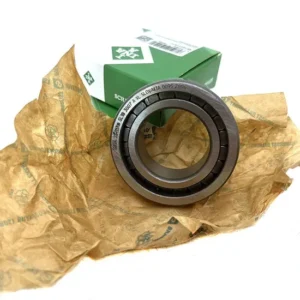
X&S INA Nup1007em Cylindrical Roller Bearing for Auto Motor Spare Part
INA B7018C.T.P4S B7018E.T.P4S Angular Contact Ball Bearing for Turbojet

X&S NN3060/Y1 Double Row Cylindrical Roller Bearing for Heavy Load
X&S B7012E.T.P4S Angular Contact Ball Bearing for Metallurgical Rolling Mills
X&S NN3072K NN3008 Cylindrical Roller Bearing with Pin Cam Follower
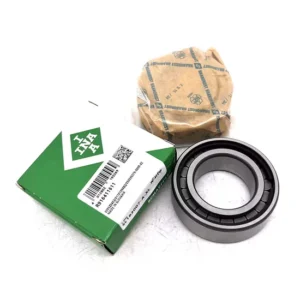
Genuine INA SL183007-A-XL NJ2208 NU2208 Cylindrical Roller Bearing for Auto Parts
INA H7012C-2RZ-P4 B706C T P4S Angular Contact Ball Bearing for Forklift Auto