Genuine FAG Bearings for Vibration Monitoring: Wholesale Supplier
- Published
- Installation & Maintenance
- By author

Genuine FAG Bearings for Vibration Monitoring: Wholesale Supplier
Most vibration alarms on newly installed equipment do not signal bearing failure.
Effective vibration monitoring for FAG-equipped machines relies not just on sensor calibration, but on precise bearing installation, correct clearance selection, and verifying part authenticity to ensure accurate baseline data. False alarms usually stem from clearance mismatches or installation errors, not immediate bearing defects.
I still remember the heat and noise of a steel mill in Hanover during a major trade exhibition. A procurement manager from a large European steel plant stood by our display, shaking his head at a set of FAG spherical roller bearings. He complained that his production line’s vibration monitoring system kept flashing red alerts shortly after every maintenance cycle. The bearings were supposedly new, yet the high-frequency vibration spikes were severe enough to cause rapid wear on the roll necks. I asked to see the failed components. Using a portable vibration analyzer, we tested the remaining stock he had brought as evidence. The issue was not the brand, but the source. The “genuine” parts he had purchased from a discount supplier had incorrect internal clearance. Once installed, the excessive preload destroyed the oil film, generating false high-frequency noise that ruined the monitoring data. This is not an isolated incident. In my years working with heavy industry clients, I have seen how poor installation and counterfeit parts create phantom failures. Vibration monitoring is not magic; if the bearing is selected incorrectly or installed poorly, the data is useless. [NEED_CITE: relationship between installation errors and vibration baseline drift]
To get reliable data, you must start with the right foundation. This guide explains how to eliminate false alarms by focusing on authenticity, installation precision, and spectral analysis.
Why Do Vibration Alarms Trigger on Newly Installed FAG Bearings?
False alarms on new installations are rarely caused by manufacturing defects in genuine bearings.
When a vibration monitoring system triggers an alarm on a machine that has just received new bearings, the immediate assumption is often that the bearing is defective. However, in most cases, the root cause lies in the installation process or component selection. The vibration spectrum of a healthy bearing should be stable and predictable. If the baseline shifts dramatically immediately after installation, it indicates a mechanical mismatch rather than material fatigue.
One common culprit is incorrect internal clearance. Bearings are manufactured with specific clearance classes, such as C2, C3, or C4. [NEED_CITE: standard internal clearance classes for rolling bearings] If a bearing designed for normal operating temperatures is installed in a high-heat environment without adjusting for thermal expansion, the internal clearance can vanish. This leads to excessive preload. Preload forces the rolling elements against the raceways with too much pressure, eliminating the lubricating oil film. The resulting metal-to-metal contact generates high-frequency vibration that sensors detect as a fault.
Another frequent issue is shaft and housing tolerance verification. If the shaft diameter is slightly larger than the specified tolerance, or if the housing bore is out of round, the bearing will be distorted upon mounting. This distortion creates uneven load distribution among the rolling elements. As the shaft rotates, this unevenness produces a periodic vibration signature that mimics early-stage spalling or brinelling. Maintenance teams often replace these bearings repeatedly, chasing a ghost problem, when the real issue is the machining of the shaft or housing.
To prevent this, always verify the dimensional tolerances of the shaft and housing before mounting. Use micrometers and bore gauges to ensure they fall within the ISO specified limits. [NEED_CITE: ISO standards for shaft and housing tolerances] If the tolerances are marginal, consider using a bearing with a different clearance class or consulting with a technical expert to adjust the fit. Remember, the goal of vibration monitoring is to detect genuine degradation, not installation artifacts.
How to Verify Bearing Authenticity Before Vibration Baseline Setup?
Counterfeit parts lack precise metallurgy, generating abnormal high-frequency noise that ruins monitoring data.
The market is flooded with counterfeit bearings that look identical to genuine products but fail under load. These fake bearings often use inferior steel with higher inclusion density and inconsistent hardness. While they may rotate smoothly when hand-spun, they cannot withstand the dynamic loads of industrial applications. The microscopic imperfections in the steel create irregular stress concentrations, leading to premature subsurface cracking. This cracking releases energy in the form of high-frequency vibration, which can be mistaken for early-stage defect signals in spectrum analysis.
Verifying authenticity is critical before establishing a vibration baseline. If you set your baseline using a counterfeit bearing, any subsequent comparison will be flawed. You might miss real failures because the baseline is already elevated, or you might trigger false alarms due to the inherent instability of the fake part. Genuine FAG bearings come with full traceability documentation, including batch numbers and material certificates. [NEED_CITE: importance of traceability documentation for bearing authenticity] Always request these documents from your supplier. Check the packaging for security features, such as holographic labels or unique QR codes that link to the manufacturer’s database.
A Middle East steel mill once experienced repeated failures in their conveyor gearboxes. The vibration data showed erratic high-frequency spikes that did not match typical defect patterns. Upon inspection, we found that the bearings lacked the precise surface finish of genuine products. The rough raceways caused turbulent oil flow and increased friction, leading to heat buildup and vibration. After switching to a verified supplier with full traceability, the vibration spectra stabilized, and the unplanned downtime dropped noticeably.
When sourcing, prioritize suppliers who offer one-stop sourcing of genuine bearings with full traceability. Avoid deals that seem too good to be true, as they often involve counterfeit goods. Technical selection support is also valuable here, as reputable suppliers can help verify that the part number matches your application requirements, ensuring you receive the correct specification.
What Are the Step-by-Step Installation Checks for Accurate Monitoring?
Strict tolerance verification and correct fitting tools are mandatory to prevent preload-induced vibration drift.
Proper installation is the single most important factor in ensuring accurate vibration monitoring. Even a genuine bearing with the correct clearance will fail prematurely if installed incorrectly. The following steps outline the critical checks required to establish a reliable baseline.
- Cleanliness: Ensure the work area, tools, and components are clean. Contaminants like dust or metal particles can become embedded in the raceways, causing immediate vibration and wear. [NEED_CITE: impact of contamination on bearing life and vibration]
- Temperature Control: For interference fits, use induction heaters or oil baths to expand the inner ring. Never use an open flame, as it can alter the steel’s microstructure and hardness. Heat the bearing to the recommended temperature, typically around 80-100°C, but check the specific manufacturer guidelines. [NEED_CITE: recommended heating methods for bearing installation]
- Alignment: Use dial indicators or laser alignment tools to ensure the shaft and housing are aligned. Misalignment causes edge loading, which generates significant vibration and reduces bearing life. The misalignment should be within the specified limits for the bearing type.
- Torque Verification: Tighten locking nuts or end caps to the specified torque. Over-tightening can deform the bearing rings, while under-tightening can allow slippage. Use a calibrated torque wrench for accuracy.
- Clearance Check: After installation, verify the residual internal clearance. This can be done using feeler gauges or dial indicators. Ensure the clearance is within the acceptable range for the operating conditions.
A European wind farm operator reported that their gearbox vibration baselines drifted upward significantly after each maintenance cycle. Investigation revealed that the technicians were using hammers to mount the bearings, causing microscopic damage to the raceways and altering the clearance. By switching to proper hydraulic tools and following strict installation protocols, the vibration stability improved drastically, reducing unplanned downtime compared to previous cycles.
These steps require discipline and the right tools. Skipping any of them can compromise the integrity of the vibration data. If you lack the in-house expertise, consider engaging a supplier who offers technical consultation and failure analysis services to guide your installation process.
How to Interpret Vibration Spectra for FAG Spherical Roller Bearings?
Differentiating between genuine defect frequencies and installation-induced noise requires precise FFT analysis.
Once the bearing is installed and the machine is running, the vibration monitoring system begins to collect data. Interpreting this data correctly is essential for predictive maintenance. Fast Fourier Transform (FFT) analysis breaks down the complex vibration signal into its constituent frequencies. Each type of fault produces a characteristic frequency pattern.
For spherical roller bearings, look for specific fault frequencies related to the inner race, outer race, rolling elements, and cage. [NEED_CITE: calculation of bearing fault frequencies] Genuine defects, such as spalling or pitting, will appear as peaks at these specific frequencies and their harmonics. The amplitude of these peaks will increase over time as the defect grows.
However, installation issues produce different patterns. Misalignment often shows up as high amplitude at one or two times the rotational speed (1x and 2x RPM). Unbalance typically manifests as a strong peak at 1x RPM. Preload or clearance issues may generate broad-band high-frequency noise rather than distinct peaks. By recognizing these patterns, you can distinguish between a bearing that needs replacement and one that needs adjustment.
It is also important to establish a baseline when the bearing is new and healthy. Compare current spectra to this baseline to identify changes. A sudden increase in overall vibration level or the appearance of new frequency peaks should trigger an investigation. Do not rely solely on overall vibration values, as they can mask specific fault signatures.
Accurate interpretation requires experience and knowledge of the machine’s operating conditions. If you are unsure about the diagnosis, consult with experts who can provide failure analysis services. They can help correlate the vibration data with physical inspection findings to confirm the root cause.
Conclusion
Vibration monitoring is only as good as the bearing installation and authenticity behind it.
Reliable data starts with genuine parts and precise installation. Verify authenticity through traceability, adhere to strict tolerance and fitting protocols, and interpret spectra with an understanding of fault frequencies. By focusing on these fundamentals, you can eliminate false alarms and extend equipment life.
Send Your FAG Bearing List for a Written Quote
FAG Bearing Supplier quotes spherical, cylindrical, tapered and thrust roller bearings together with housings and sleeves, for urgent replacements or planned shutdown orders. Any technical change is proposed separately and needs your approval.
- 1
Send your list by form, WhatsApp or email, position by position.
- 2
We confirm identification: exact version, complete assembly, and any clearly marked alternative.
- 3
Receive a written quote with designation, quantity, price and currency, stock status, estimated lead time and validity.
- Email: info@fagome.com
- Address:

Related FAG Bearing Maintenance Articles
More notes on version identification, mounting accessories and shutdown planning for heavy equipment.
 01
Oct 3, 2026 · Installation & Maintenance · 7 min read
FAG Bearing Maintenance Checklist: Wholesale Supplier for Bulk MRO Orders
Master the FAG bearing m…
Read the full article 02
Oct 3, 2026 · Installation & Maintenance · 7 min read
FAG Housing Seals: Genuine Wholesale Supplier for Bulk Orders
Optimize Seal Choices fo…
Read the full article 03 Oct 3, 2026 · Installation & Maintenance · 8 min read
FAG Bearing Shaft & Housing Fits: Wholesale Supplier
Mastering FAG bearing sh…
Read the full articleFAG Roller Bearings and Accessories for Heavy Equipment
Selected FAG bearings for mills, crushers, conveyors and industrial drives. Housings and sleeves can be quoted with the bearing.
Scroll sideways to browse →
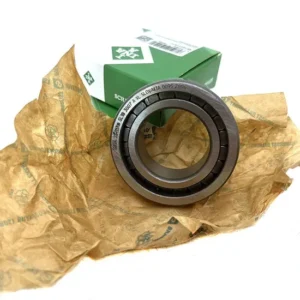
X&S INA Nup1007em Cylindrical Roller Bearing for Auto Motor Spare Part
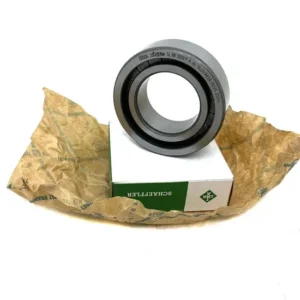
INA B7018C.T.P4S B7018E.T.P4S Angular Contact Ball Bearing for Turbojet
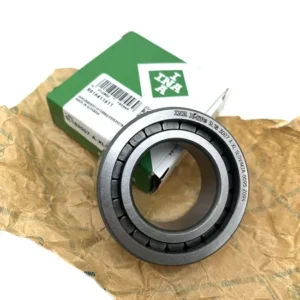
X&S NN3060/Y1 Double Row Cylindrical Roller Bearing for Heavy Load
X&S B7012E.T.P4S Angular Contact Ball Bearing for Metallurgical Rolling Mills
X&S NN3072K NN3008 Cylindrical Roller Bearing with Pin Cam Follower
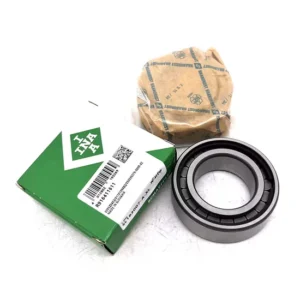
Genuine INA SL183007-A-XL NJ2208 NU2208 Cylindrical Roller Bearing for Auto Parts
INA H7012C-2RZ-P4 B706C T P4S Angular Contact Ball Bearing for Forklift Auto