FAG Bearing Shaft & Housing Fits: Wholesale Supplier
- Published
- Installation & Maintenance
- By author

FAG Bearing Shaft & Housing Fits: Wholesale Supplier
Most bearing failures are not caused by defective products, but by incorrect fits.
Proper shaft and housing fits for FAG bearings are critical to prevent premature failure. The correct fit depends on the load conditions, rotation status of the ring, and ISO tolerance classes. Ignoring local machining capabilities and tolerance limits often leads to catastrophic field failures, such as seized bearings or overheating due to lost internal clearance.
I still remember the humidity in the cement plant in Nigeria. The rotary kiln had been running for only two months when the main drive bearing seized. The maintenance team blamed the bearing quality immediately. But when we opened the housing, the truth was visible to the naked eye: the housing bore was out-of-round. The spherical roller bearing had shifted, and the interference fit intended for the outer ring had vanished. We had to perform manual grinding on-site and reselect the clearance to get the kiln running again. That incident taught me that a few microns of machining error can turn a premium bearing into scrap metal. [NEED_CITE: common causes of bearing failure per ISO 15243]
Understanding these mechanical relationships is essential for anyone sourcing components for heavy industry. As a FAG bearing shaft and housing fits specialist, I see too many projects fail because the focus is solely on the part number, not the installation environment.
How to Determine the Correct Fit Tolerances?
Selecting the right fit is not a guess; it is a calculation based on load and rotation. The general rule is that the rotating ring requires an interference fit to prevent creeping, while the stationary ring needs a looser fit to allow for thermal expansion and ease of assembly. [NEED_CITE: ISO standard guidelines for bearing fits]
For FAG bearings, the fit selection must align with the specific application. In heavy equipment like crushers or mills, the inner ring usually rotates with the shaft. Therefore, a tight interference fit on the shaft is necessary. If the fit is too loose, the inner ring will creep along the shaft, causing fretting corrosion and eventual failure. Conversely, the outer ring sits in the housing and is stationary. It requires a slight clearance or a very light interference fit to accommodate heat generation during operation.
| Application Condition | Rotating Ring Fit | Stationary Ring Fit | Recommended Tolerance Class |
|---|---|---|---|
| Heavy Load, Inner Ring Rotating | Interference (Tight) | Clearance (Loose) | Shaft: k5/m6, Housing: H7/G7 |
| Light Load, Outer Ring Rotating | Clearance (Loose) | Interference (Tight) | Shaft: h6/g6, Housing: M7/N7 |
| Variable Load, Oscillating | Interference (Both) | Interference (Both) | Shaft: m6, Housing: M7 |
Note that these are general guidelines. The actual choice depends on the magnitude of the load. Heavy loads require tighter fits to support the load zone effectively. [NEED_CITE: FAG technical manual on load and fit relationship]
When sourcing from a FAG bearing shaft and housing fits supplier, ensure they provide the technical data sheets that match these ISO standards. Do not rely on generic charts found online. The specific series of the bearing, such as spherical roller bearings versus deep groove ball bearings, has different requirements for internal clearance compensation.
A common mistake is assuming that a “standard” fit works for all brands. While ISO standards are universal, the internal geometry of FAG bearings may require specific adjustments compared to other brands. Always verify the recommended fits against the manufacturer’s latest catalog.
What Happens When Machining Tolerances Fail?
Theoretical fits mean nothing if the machined parts do not meet the specifications. In my experience, the majority of field failures stem from poor machining rather than bearing defects. A shaft journal that is slightly out-of-round or a housing bore with excessive taper will destroy the bearing’s internal geometry.
Consider a case involving a heavy equipment OEM. They specified a precise interference fit for the shaft journal. However, the local machine shop failed to hold the tolerance. The deviation caused the interference fit to shift unexpectedly to the outer ring. Since the outer ring was not designed to handle that level of stress in a stationary position, it began to overheat. The internal clearance was eliminated, leading to rapid seizure. [NEED_CITE: case studies on bearing installation errors]
This is not an isolated incident. In many regions, local workshops lack the precision equipment to maintain micron-level tolerances. When you order a batch of bearings, you must assess the local machining capabilities. If the housing bores are consistently out-of-spec, no amount of premium bearing quality will save the application.
| Machining Error | Consequence | Visual Indicator |
|---|---|---|
| Out-of-Round Housing | Uneven load distribution, early fatigue | Spalling on one side of the raceway |
| Shaft Journal Taper | Ring tilting, edge loading | Wear patterns on ring edges |
| Excessive Surface Roughness | Fretting corrosion, micro-movement | Rust-colored dust under the ring |
These errors are often invisible until the bearing fails. That is why inspection before installation is critical. Use dial indicators to check for roundness and taper. Do not assume the machined part is correct just because it looks smooth.
As a FAG bearing shaft and housing fits distributor, I often advise clients to include machining inspections in their quality control process. It is cheaper to reject a bad housing than to replace a seized bearing in a remote mine site.
The cost of downtime far exceeds the cost of precision machining. Ensure your suppliers understand the importance of these tolerances. A reliable partner will help you identify potential machining risks before they become field failures.
How to Adjust Fits on-Site When Machining is Subpar?
Sometimes, you cannot change the machined parts. In retrofit projects or emergency repairs, you may face housings or shafts that do not meet the original specifications. In these cases, adjustment is necessary to prevent immediate failure.
One method is manual grinding or honing. In the Nigeria cement plant case, we used handheld honing tools to correct the out-of-round housing. This is a skilled task that requires patience. The goal is to restore the geometric shape, not just remove material. After grinding, measure the bore again to ensure it is within acceptable limits. [NEED_CITE: best practices for on-site bearing repair]
Another approach is reselecting the internal clearance. If the fit is looser than recommended, you might choose a bearing with a tighter initial clearance group, such as C3 instead of CN. This compensates for the potential loss of interference during operation. However, this requires careful calculation. Too much preload can cause overheating, while too little can lead to vibration.
| Adjustment Method | Suitable Scenario | Risk Level |
|---|---|---|
| Manual Honing | Slightly out-of-round housing | Medium (requires skill) |
| Clearance Reselection | Loose fit due to wear or error | Low (if calculated correctly) |
| Sleeve Adaptation | Damaged shaft journal | Medium (adds complexity) |
Do not attempt these adjustments without proper tools and knowledge. Incorrect honing can worsen the surface finish, leading to fretting. Always consult with a technical expert before proceeding.
When working with a FAG bearing shaft and housing fits wholesaler, ask for their technical support services. Many reputable suppliers offer guidance on fit adjustments and clearance selection. They can help you analyze the specific conditions of your site and recommend the best course of action.
Field adjustments are a last resort. The best solution is always to ensure proper machining from the start. But when that is not possible, knowing how to adapt can save your operation from costly downtime.
How to Source Genuine FAG Bearings with Technical Support?
Sourcing bearings is not just about finding the lowest price. It is about ensuring authenticity and receiving the technical support needed for proper installation. Counterfeit bearings are a significant risk in the global market. They may look identical but lack the precision and material quality of genuine FAG products.
To verify authenticity, check the packaging, labeling, and documentation. Genuine bearings come with traceability documents that confirm their origin. Be wary of suppliers who cannot provide these details. [NEED_CITE: guidelines for identifying counterfeit bearings]
Technical support is equally important. A good supplier will not just ship boxes; they will help you select the right fit and clearance for your application. They should have engineers who understand the nuances of shaft and housing fits. This expertise is invaluable when troubleshooting complex issues.
| Supplier Feature | Importance | Verification Method |
|---|---|---|
| Traceability Documents | High | Request batch certificates |
| Technical Engineering Support | High | Ask for fit selection guidance |
| Global Inventory Availability | Medium | Check lead times for urgent orders |
| Cross-Brand Consultation | Medium | Verify ability to compare equivalents |
When evaluating a FAG bearing shaft and housing fits provider, look for these capabilities. Do not settle for a vendor who only offers transactional sales. You need a partner who understands the technical challenges of your industry.
Our inventory includes genuine FAG bearings alongside other premium brands. We provide full traceability and technical consultation to ensure you get the right product for your specific fit requirements. Whether you need a single unit for an emergency repair or a container load for a new project, we support your operational needs with expert guidance.
Choosing the right supplier can make the difference between a reliable operation and a constant struggle with failures. Prioritize authenticity and technical expertise in your sourcing decisions.
Conclusion
Correct fits are the foundation of bearing reliability.
Ignoring shaft and housing tolerances leads to premature failure, regardless of bearing quality. Proper selection based on ISO standards and local machining capabilities is essential. Always verify fits before installation and seek technical support when adjustments are needed. Sourcing from a trusted FAG bearing shaft and housing fits supplier ensures authenticity and expert guidance for long-term performance.
Send Your FAG Bearing List for a Written Quote
FAG Bearing Supplier quotes spherical, cylindrical, tapered and thrust roller bearings together with housings and sleeves, for urgent replacements or planned shutdown orders. Any technical change is proposed separately and needs your approval.
- 1
Send your list by form, WhatsApp or email, position by position.
- 2
We confirm identification: exact version, complete assembly, and any clearly marked alternative.
- 3
Receive a written quote with designation, quantity, price and currency, stock status, estimated lead time and validity.
- Email: info@fagome.com
- Address:

Related FAG Bearing Maintenance Articles
More notes on version identification, mounting accessories and shutdown planning for heavy equipment.
 01
Oct 3, 2026 · Installation & Maintenance · 7 min read
FAG Bearing Maintenance Checklist: Wholesale Supplier for Bulk MRO Orders
Master the FAG bearing m…
Read the full article 02
Oct 3, 2026 · Installation & Maintenance · 7 min read
FAG Housing Seals: Genuine Wholesale Supplier for Bulk Orders
Optimize Seal Choices fo…
Read the full article 03
Oct 3, 2026 · Installation & Maintenance · 8 min read
Genuine FAG Bearings for Vibration Monitoring: Wholesale Supplier
Eliminate false vibratio…
Read the full articleFAG Roller Bearings and Accessories for Heavy Equipment
Selected FAG bearings for mills, crushers, conveyors and industrial drives. Housings and sleeves can be quoted with the bearing.
Scroll sideways to browse →
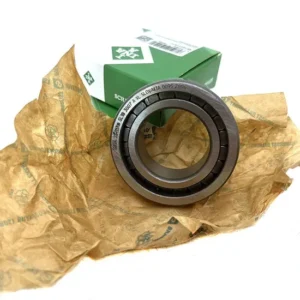
X&S INA Nup1007em Cylindrical Roller Bearing for Auto Motor Spare Part
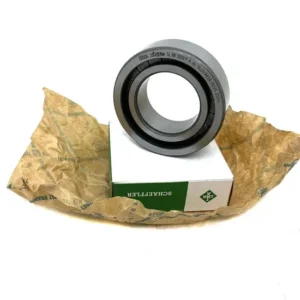
INA B7018C.T.P4S B7018E.T.P4S Angular Contact Ball Bearing for Turbojet
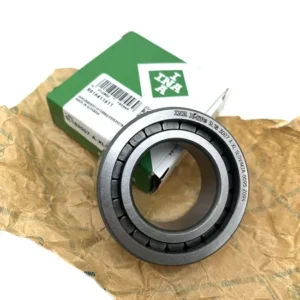
X&S NN3060/Y1 Double Row Cylindrical Roller Bearing for Heavy Load
X&S B7012E.T.P4S Angular Contact Ball Bearing for Metallurgical Rolling Mills
X&S NN3072K NN3008 Cylindrical Roller Bearing with Pin Cam Follower
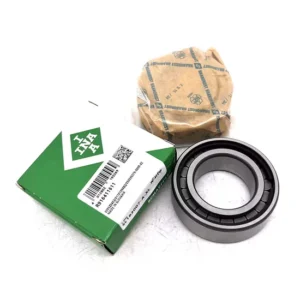
Genuine INA SL183007-A-XL NJ2208 NU2208 Cylindrical Roller Bearing for Auto Parts
INA H7012C-2RZ-P4 B706C T P4S Angular Contact Ball Bearing for Forklift Auto