Genuine FAG Bearings for Process Pumps – Wholesale Supplier
- Published
- Applications & Industries
- By author

Genuine FAG Bearings for Process Pumps – Wholesale Supplier
Most pump bearing failures are not caused by wear, but by thermal expansion eating up internal clearance.
Genuine FAG bearings with precise C3 or C4 clearance control are critical for process pumps operating under high-temperature and heavy-load conditions. Selecting the correct spherical roller bearing variant prevents catastrophic seizure and unplanned downtime, while sourcing from a verified supplier ensures traceability and authentic performance.
I still remember the humid air in a palm oil mill near Medan two years ago. The maintenance team was frantic. A critical centrifugal pump on the main extraction line had seized for the third time in a month. Each failure halted the entire pressing line, costing far more in lost production than the price of the bearing itself. When we dismantled the housing, the issue was immediately visible. The FAG spherical roller bearings inside showed severe surface spalling and discoloration. The root cause was not poor lubrication or excessive load, but a shift in internal clearance due to thermal expansion. The replacement parts used previously were non-genuine equivalents that lacked the precise tolerance control required for such high-temperature applications. This experience reinforced a fundamental truth in industrial maintenance: in process pumps, the bearing is not just a rotating component; it is a precision thermal management device. [NEED_CITE: common failure modes in high-temperature pump applications]
Understanding why these components fail requires looking beyond simple mechanical wear. The real enemy in process pump applications is often the invisible force of thermal dynamics.
Why Do Process Pump Bearings Fail Prematurely?
Thermal expansion is the silent killer of pump bearings, often misdiagnosed as normal wear or lubrication failure.
In many industrial settings, operators assume that a bearing fails because it has reached the end of its natural life. However, in high-temperature process pumps, the primary culprit is frequently the degradation of internal clearance. As the pump shaft heats up during operation, it expands. If the bearing’s internal clearance is not sufficient to accommodate this expansion, the rolling elements become preloaded. This preload generates excessive heat, which causes further expansion, leading to a vicious cycle that ends in seizure. [NEED_CITE: relationship between thermal expansion and bearing clearance in ISO standards]
Genuine FAG bearings are engineered with specific clearance classes, such as C3 or C4, to handle these thermal shifts. Non-genuine alternatives often claim to be equivalent but lack the consistent manufacturing tolerances required to maintain these clearances under stress. In the Medan case, the counterfeit bearings had inconsistent internal geometries. Under normal temperatures, they seemed fine. But as the pump reached operating temperature, the clearance vanished, causing the rollers to bind against the raceways.
| Failure Symptom | Common Misdiagnosis | Actual Root Cause |
|---|---|---|
| Surface Spalling | Poor Lubrication | Clearance loss due to thermal expansion |
| Cage Deformation | Excessive Vibration | Incorrect fit or non-genuine material strength |
| Rapid Seal Failure | Contamination | Heat buildup from internal friction |
This table highlights how symptoms can be misleading. Without understanding the underlying thermal dynamics, maintenance teams may replace seals or change lubricants, only to see the bearing fail again weeks later. Sourcing genuine FAG bearings for process pumps ensures that the clearance specifications match the manufacturer’s design intent, providing a buffer against thermal growth. [NEED_CITE: bearing clearance selection guidelines for pump applications]
Selecting the right bearing involves more than just matching the part number. It requires a deep understanding of the operating environment.
How to Select the Right FAG Bearing for Your Pump?
Match the bearing type and clearance class to the specific thermal and load conditions of your application.
Process pumps vary widely in their operational demands. A chemical transfer pump handling hot solvents faces different challenges than a water circulation pump in a cooling tower. For high-load and high-temperature scenarios, spherical roller bearings are often the preferred choice due to their ability to accommodate misalignment and heavy radial loads. However, not all spherical roller bearings are created equal.
When selecting genuine FAG bearings for process pumps, consider the following factors:
- Clearance Class: Standard clearance (C0) is rarely suitable for high-temperature pumps. Opt for C3 or C4 clearance to allow for thermal expansion. [NEED_CITE: ISO standard clearance classes for rolling bearings]
- Cage Material: In high-speed or high-temperature applications, brass cages may soften. Look for bearings with steel or polyamide cages designed for elevated temperatures.
- Sealing Effectiveness: Process pumps often handle hazardous or corrosive fluids. Ensure the bearing seals are compatible with the pumped media and can withstand the operating temperature range.
A European chemical plant operator once consulted us regarding a series of failures in their high-temperature feed pumps. They were using standard clearance bearings, which failed every few months. By switching to genuine FAG spherical roller bearings with C4 clearance, they extended the replacement cycle significantly. The key was not just the brand, but the precise specification matched to the thermal profile of the pump. [NEED_CITE: case studies on bearing life extension in chemical processing]
The cost of getting this selection wrong is not just measured in bearing prices. It is measured in lost production.
What Are the Hidden Costs of Non-Genuine Pump Bearings?
Cheaper alternative bearings save upfront costs but multiply total downtime losses exponentially.
It is tempting to opt for lower-cost alternatives when budget pressures mount. However, the true cost of a bearing is not its purchase price, but its impact on overall equipment effectiveness. A non-genuine bearing may cost half as much as a genuine FAG unit, but if it fails twice as often, the total cost of ownership skyrockets.
Consider the hidden costs associated with premature bearing failure:
- Production Downtime: Every hour a process pump is offline, production stops. In continuous process industries like oil refining or chemical manufacturing, this can result in mid-six-figure losses per incident.
- Labor and Logistics: Emergency repairs require overtime labor and expedited shipping for replacement parts. These costs far exceed the savings from buying cheaper bearings.
- Secondary Damage: A seized bearing can damage the pump shaft, impeller, and housing. Repairing these components is significantly more expensive than replacing a bearing.
In the palm oil mill example, the cost of the three failed bearings was negligible compared to the three days of lost production. The client realized that investing in genuine FAG bearings for process pumps was not an expense, but an insurance policy against catastrophic downtime. [NEED_CITE: economic impact of unplanned downtime in process industries]
Moreover, non-genuine bearings often lack the material purity and heat treatment consistency of genuine products. This leads to unpredictable performance and higher risk of sudden failure. By contrast, genuine FAG bearings undergo rigorous quality control, ensuring consistent performance and reliability.
Ensuring that you are receiving genuine products requires vigilance and a reliable supply chain.
How to Ensure Traceability and Quality in Bearing Sourcing?
Verify documentation, ISO compliance, and supplier reputation to guarantee authentic FAG bearings.
The market is flooded with counterfeit and substandard bearings that look identical to genuine products. For MRO operators and distributors, distinguishing between real and fake can be challenging. However, there are key indicators of authenticity.
First, demand complete traceability documentation. Genuine FAG bearings come with certificates of conformity and batch numbers that can be traced back to the manufacturer’s production facilities. [NEED_CITE: importance of traceability in bearing supply chains] Second, check for ISO compliance. Reputable suppliers adhere to international quality standards, ensuring that the bearings meet specified dimensional and performance criteria.
When sourcing genuine FAG bearings for process pumps, look for suppliers who offer:
- Mixed-Batch Consolidation: The ability to source multiple brands and sizes in a single shipment reduces logistics complexity and lead times.
- Technical Support: Access to engineering expertise for model selection and failure analysis.
- Spot Inventory: Immediate availability of standard and special part numbers to minimize downtime.
A regional distributor in Southeast Asia recently streamlined their procurement by partnering with a supplier who offered one-stop mixed-brand sourcing. This allowed them to consolidate orders for various pump bearings, reducing lead times and ensuring consistent quality across their inventory. [NEED_CITE: benefits of consolidated bearing sourcing for MRO]
By prioritizing traceability and working with reputable suppliers, you can mitigate the risk of counterfeit products and ensure the reliability of your process pumps.
Conclusion
Precision clearance and authentic sourcing are non-negotiable for reliable process pump operation.
Premature bearing failure in process pumps is often a symptom of inadequate thermal management rather than simple wear. By selecting genuine FAG bearings with appropriate clearance classes and sourcing them through verified channels, operators can prevent costly downtime and extend equipment life. The initial investment in quality pays dividends in reliability and operational efficiency.
Send Your FAG Bearing List for a Written Quote
FAG Bearing Supplier quotes spherical, cylindrical, tapered and thrust roller bearings together with housings and sleeves, for urgent replacements or planned shutdown orders. Any technical change is proposed separately and needs your approval.
- 1
Send your list by form, WhatsApp or email, position by position.
- 2
We confirm identification: exact version, complete assembly, and any clearly marked alternative.
- 3
Receive a written quote with designation, quantity, price and currency, stock status, estimated lead time and validity.
- Email: info@fagome.com
- Address:

Related FAG Bearing Maintenance Articles
More notes on version identification, mounting accessories and shutdown planning for heavy equipment.
 01
Oct 3, 2026 · Applications & Industries · 8 min read
Genuine FAG Bearings for Compressors Wholesale Supplier
Prevent costly compresso…
Read the full article 02
Oct 3, 2026 · Applications & Industries · 8 min read
FAG Bearings for Hydro Turbines: Wholesale Supplier
Optimize FAG Bearings in…
Read the full article 03 Oct 3, 2026 · Applications & Industries · 7 min read
FAG Bearings for Recycling Crushers: Genuine Wholesale Supplier
Prevent costly downtime …
Read the full articleFAG Roller Bearings and Accessories for Heavy Equipment
Selected FAG bearings for mills, crushers, conveyors and industrial drives. Housings and sleeves can be quoted with the bearing.
Scroll sideways to browse →
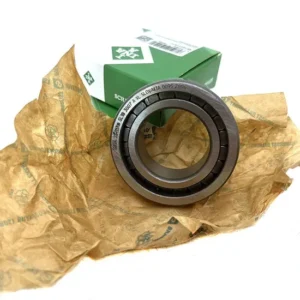
X&S INA Nup1007em Cylindrical Roller Bearing for Auto Motor Spare Part
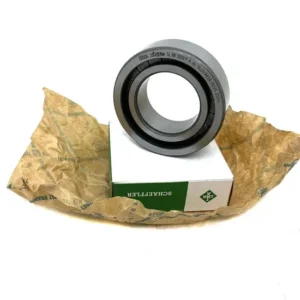
INA B7018C.T.P4S B7018E.T.P4S Angular Contact Ball Bearing for Turbojet

X&S NN3060/Y1 Double Row Cylindrical Roller Bearing for Heavy Load
X&S B7012E.T.P4S Angular Contact Ball Bearing for Metallurgical Rolling Mills
X&S NN3072K NN3008 Cylindrical Roller Bearing with Pin Cam Follower
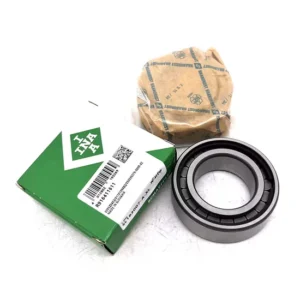
Genuine INA SL183007-A-XL NJ2208 NU2208 Cylindrical Roller Bearing for Auto Parts
INA H7012C-2RZ-P4 B706C T P4S Angular Contact Ball Bearing for Forklift Auto