Genuine FAG Bearings for Brewery Lines | Wholesale Supplier
- Published
- Applications & Industries
- By author

Genuine FAG Bearings for Brewery Lines | Wholesale Supplier
Most bearing failures in breweries are not caused by heavy loads, but by chemical washouts and counterfeit components.
Selecting genuine FAG bearings for brewery lines requires matching seal materials to alkaline CIP agents, verifying full batch traceability to avoid counterfeits, and choosing appropriate clearance classes for thermal expansion during hot washdowns. Without these specific technical alignments, even premium brands will fail prematurely in wet, high-humidity environments.
I still remember the smell of spoiled beer hanging heavy in the air of a craft brewery in Monterrey, Mexico. It was not just a bad batch; it was tons of product lost because a bottling line had seized up. The maintenance manager showed me the shattered cage of a spherical roller bearing, claiming it was an original part. But the metal looked wrong, and the seal was disintegrated. That failure was not due to the weight of the bottles. It was due to moisture and cleaning chemicals destroying a fake component that lacked the proper material integrity. This experience defined my approach to sourcing. I no longer look at price tags first. I look at traceability documents and seal specifications. [NEED_CITE: common failure modes in food processing machinery per ISO 15243]
Understanding why standard industrial bearings fail in breweries is the first step toward reliable operation. The environment is uniquely hostile, combining mechanical stress with aggressive chemical cleaning.
Why Do Bearings Fail Prematurely in Brewery Lines?
Moisture and CIP chemicals are the real killers, not just heavy loads.
In many industrial settings, bearing life is calculated based on load ratings and rotational speed. In a brewery, these calculations are often irrelevant if the sealing system cannot withstand the cleaning process. Breweries use Clean-in-Place (CIP) systems that circulate hot water and caustic or acidic solutions to sanitize pipes and tanks. These chemicals are designed to dissolve organic residue, but they also attack standard rubber seals and wash out grease.
When I inspected the failed units in Monterrey, the grease had turned into a thin, watery sludge. The seal lips were brittle and cracked. This allowed contaminated water to enter the raceway, leading to rapid corrosion and cage fracture. Many engineers assume that a standard IP67 rating is sufficient. However, the dynamic pressure of high-pressure washdown hoses can force water past seals that would otherwise keep out static moisture. [NEED_CITE: effectiveness of bearing seals under high-pressure washdown conditions]
Furthermore, the humidity in bottling halls is consistently high. Condensation forms on cooler metal surfaces, including bearing housings. If the bearing is not equipped with corrosion-resistant materials or proper protective coatings, this constant exposure leads to surface distress. The combination of chemical attack from the outside and condensation from the inside creates a perfect storm for premature failure. It is not uncommon to see bearings fail within months instead of years when these environmental factors are ignored.
How to Select the Right FAG Bearing for Wet & Heavy-Duty Zones?
Match sealing types and clearances to specific filler and conveyor operating conditions.
Selecting the right component involves more than picking a part number. It requires understanding the specific zone within the brewery line. A conveyor chain bearing faces different stresses than a filler valve bearing. For genuine FAG spherical roller bearings for bottling, the focus must be on seal material compatibility and internal clearance.
Standard nitrile rubber seals may swell or degrade when exposed to certain alkaline cleaning agents used in CIP cycles. Fluoroelastomer (FKM) or hydrogenated nitrile butadiene rubber (HNBR) seals offer better resistance to heat and chemicals. When sourcing, verify the seal material specification against the cleaning agents used in your facility. [NEED_CITE: chemical compatibility charts for elastomers in food industry applications]
Internal clearance is another critical factor. During hot washdowns, bearings heat up significantly. If the internal clearance is too tight, thermal expansion can cause the rolling elements to bind, leading to excessive friction and heat generation. Choosing a C3 clearance class often provides the necessary room for thermal expansion without compromising performance during normal operation. This is a subtle detail that many general suppliers overlook, but it is vital for longevity in thermal cycling environments.
| Selection Factor | Standard Industrial Application | Brewery Line Requirement |
|---|---|---|
| Seal Material | Nitrile Rubber (NBR) | FKM or HNBR for chemical resistance |
| Internal Clearance | C0 or C2 | C3 for thermal expansion during washdown |
| Lubrication | Standard Lithium Grease | Food-grade, water-resistant synthetic grease |
| Corrosion Protection | Basic Phosphate Coating | Enhanced corrosion-resistant coating or stainless steel variants |
This table highlights the qualitative differences needed for brewery applications. Using standard industrial specs in a brewery setting is a recipe for frequent replacements. The goal is to extend maintenance intervals and prevent unexpected stoppages.
How to Verify Authenticity and Avoid Counterfeit Disasters?
Demand full traceability documents; visual checks are no longer enough.
The market is flooded with counterfeit bearings that look identical to genuine products. In the case of the Monterrey brewery, the packaging looked authentic, and the bearing had the correct logo stamped on it. However, the internal quality was vastly inferior. Counterfeiters often use lower-grade steel and improper heat treatment, which leads to premature fatigue and catastrophic failure. [NEED_CITE: impact of counterfeit bearings on industrial equipment reliability]
Visual inspection alone is insufficient. Modern counterfeits replicate logos and packaging with high precision. The only reliable way to ensure authenticity is through full batch traceability. This means obtaining certificates of origin and material test reports that link the specific bearing batch to the manufacturer’s production records. When procuring mixed-brand batches for a brewery overhaul, emphasizing origin certificates is essential to pass food-safety audits and ensure equipment reliability.
Many buyers assume that “OEM original” labels guarantee authenticity. Without batch traceability, these labels are often meaningless. Reputable suppliers provide documentation that tracks the product from the factory floor to the end user. This level of transparency is not just about avoiding fakes; it is about ensuring that the bearing meets the precise engineering specifications required for food-grade equipment. [NEED_CITE: standards for traceability in food processing supply chains]
What Are the Hidden Costs of Non-Genuine Bearings?
Cheap fakes lead to massive beer spoilage and unplanned line stoppages.
The initial savings from buying cheaper, non-genuine bearings are quickly erased by the costs associated with failure. In a brewery, downtime is extremely expensive. A stopped bottling line means that beer continues to ferment in tanks that cannot be emptied, leading to potential spoilage of entire batches. The cost of lost product far exceeds the price difference between genuine and counterfeit bearings.
Additionally, emergency maintenance requires overtime labor and expedited shipping fees for replacement parts. The disruption to production schedules can delay deliveries to distributors, damaging customer relationships. When a bearing fails due to a counterfeit component, the damage often extends beyond the bearing itself. Shattered cages can damage housing bores and shafts, requiring costly repairs or replacements of larger assemblies.
Investing in genuine FAG bearings for brewery lines is an insurance policy against these hidden costs. The reliability of authentic components ensures consistent operation, reduces maintenance frequency, and protects the quality of the final product. For MRO managers, the peace of mind that comes with verified authenticity is worth the investment. [NEED_CITE: total cost of ownership analysis for industrial bearings in critical applications]
Conclusion
Reliability in brewery lines depends on genuine components and precise technical selection.
Preventing bearing failure in wet, chemically aggressive environments requires more than just buying a brand name. It demands careful attention to seal materials, internal clearances, and, most importantly, verifiable authenticity. By prioritizing traceability and matching specifications to the specific hazards of brewery operations, you can avoid the costly pitfalls of counterfeit parts and premature failures.
Send Your FAG Bearing List for a Written Quote
FAG Bearing Supplier quotes spherical, cylindrical, tapered and thrust roller bearings together with housings and sleeves, for urgent replacements or planned shutdown orders. Any technical change is proposed separately and needs your approval.
- 1
Send your list by form, WhatsApp or email, position by position.
- 2
We confirm identification: exact version, complete assembly, and any clearly marked alternative.
- 3
Receive a written quote with designation, quantity, price and currency, stock status, estimated lead time and validity.
- Email: info@fagome.com
- Address:

Related FAG Bearing Maintenance Articles
More notes on version identification, mounting accessories and shutdown planning for heavy equipment.
 01
Oct 3, 2026 · Applications & Industries · 8 min read
Genuine FAG Bearings for Compressors Wholesale Supplier
Prevent costly compresso…
Read the full article 02
Oct 3, 2026 · Applications & Industries · 8 min read
FAG Bearings for Hydro Turbines: Wholesale Supplier
Optimize FAG Bearings in…
Read the full article 03 Oct 3, 2026 · Applications & Industries · 7 min read
FAG Bearings for Recycling Crushers: Genuine Wholesale Supplier
Prevent costly downtime …
Read the full articleFAG Roller Bearings and Accessories for Heavy Equipment
Selected FAG bearings for mills, crushers, conveyors and industrial drives. Housings and sleeves can be quoted with the bearing.
Scroll sideways to browse →
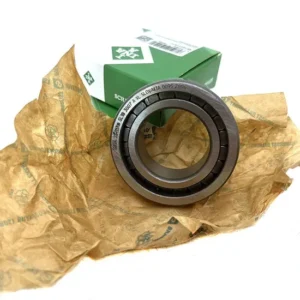
X&S INA Nup1007em Cylindrical Roller Bearing for Auto Motor Spare Part
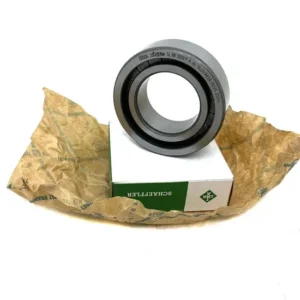
INA B7018C.T.P4S B7018E.T.P4S Angular Contact Ball Bearing for Turbojet
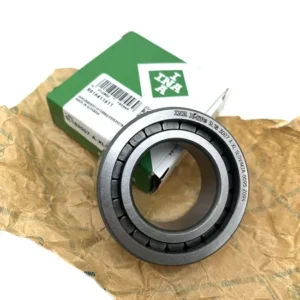
X&S NN3060/Y1 Double Row Cylindrical Roller Bearing for Heavy Load
X&S B7012E.T.P4S Angular Contact Ball Bearing for Metallurgical Rolling Mills
X&S NN3072K NN3008 Cylindrical Roller Bearing with Pin Cam Follower
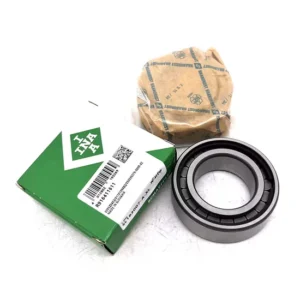
Genuine INA SL183007-A-XL NJ2208 NU2208 Cylindrical Roller Bearing for Auto Parts
INA H7012C-2RZ-P4 B706C T P4S Angular Contact Ball Bearing for Forklift Auto