FAG Suffix Code Reference: Wholesale Supplier for Global Buyers
- Published
- Technical Resources
- By author

FAG Suffix Code Reference: Wholesale Supplier for Global Buyers
A single wrong letter in a bearing designation can trigger catastrophic field failure.
The FAG suffix code reference is the definitive technical key to matching internal clearance, cage material, and seal design with specific operating conditions. Accurately interpreting these codes prevents premature failures caused by thermal expansion mismatches or cage deformation under high loads.
I still remember the dust choking the air at a mining site near Beilun Port years ago. The maintenance team was frantic. A critical conveyor line had stopped dead. The culprit was a set of spherical roller bearings that looked perfect on paper but failed within weeks. The procurement team had ordered standard clearance units instead of the required C3 clearance for the high-temperature environment. Worse, they confused the M suffix for brass cage with a generic material code, not realizing the specific thermal limits involved. That downtime cost far more than the bearings themselves. This experience cemented my approach: never guess the suffix. In global trade, where equipment operates in diverse climates from desert heat to arctic cold, the FAG suffix code reference is not just catalog data—it is an operational safety manual. [NEED_CITE: ISO 15243 failure mode classification related to clearance and lubrication]
Understanding these designations is essential for any buyer managing inventory or specifying replacements. Let us break down how to read them correctly to avoid costly mistakes.
What is the FAG Suffix Code Structure?
The designation sequence follows a strict logical order from basic type to internal modifications.
Many buyers scan the part number linearly but miss the hierarchical meaning. The basic designation identifies the bearing type and dimensions. The suffixes that follow modify its internal architecture. Ignoring this sequence leads to ordering bearings that fit physically but fail functionally.
The structure typically flows as follows:
- Basic Designation: Bearing type (e.g., deep groove ball, spherical roller) and size series.
- Internal Design: Modifications to raceway geometry or rolling element arrangement.
- Cage Material: Defines the retainer holding the rolling elements.
- Clearance: Radial internal clearance class.
- Seals/Shields: Protection against contaminants.
For example, a code ending in “M” indicates a machined brass cage, while “TVH” denotes a glass fiber reinforced polyamide cage. These are not interchangeable. Brass handles higher temperatures but is heavier. Polyamide is lighter and runs cooler but has lower thermal resistance. Misidentifying these in a FAG suffix code reference check can lead to cage disintegration in high-speed applications. [NEED_CITE: Schaeffler technical documentation on cage material properties and speed limits]
When sourcing from a FAG suffix code reference supplier, always verify the full string. A missing suffix implies a standard configuration, which may not suit your application. If the original bearing had a suffix, the replacement must match it unless an engineering upgrade is intended.
How to Select the Right Clearance (C2, C3, C4)?
Radial internal clearance must match the operating temperature and shaft expansion rate.
One of the most common errors I see in procurement is assuming that “standard” clearance fits all scenarios. It does not. Standard clearance (CN) works for normal operating conditions. However, industrial environments often involve heat generation from friction or external sources.
As a bearing heats up, the inner ring expands more than the outer ring if mounted on a solid steel shaft. This reduces the internal clearance. If the initial clearance is too small, the bearing seizes. If it is too large, vibration and noise increase, leading to premature fatigue.
| Clearance Class | Application Context | Thermal Condition | Fit Type |
|---|---|---|---|
| C2 | Precision instruments | Low temperature / Minimal expansion | Tight fit |
| CN (Standard) | General industrial motors | Normal operating temperature | Standard fit |
| C3 | Electric motors / Gearboxes | Moderate heat generation | Interference fit common |
| C4 | Steel mill rollers / Mining | High temperature / Significant expansion | Heavy interference fit |
Selecting C3 or C4 clearance is critical for applications like steel mill rollers where thermal expansion is significant. Upgrading to C4 in such cases extends service life noticeably by accommodating the growth of the inner ring without creating excessive preload. Conversely, using C4 in a precision machine tool spindle would cause unacceptable runout and vibration. [NEED_CITE: ISO 5753 standards for radial internal clearance of rolling bearings]
Always consult the FAG suffix code reference to confirm the clearance class before ordering. If you are replacing a bearing in a high-heat environment, do not default to standard clearance. Check the original suffix. If it was C3, order C3. If the application has changed, consult a technical expert to determine if a step up to C4 is warranted.
Which Cage Material (M, TVH, J) Fits Your Load?
Cage material determines speed capability, temperature resistance, and load handling.
The cage holds the rolling elements in place. It does not carry the primary load, but it endures significant centrifugal forces and friction. Choosing the wrong cage material is a frequent cause of unexpected failure, especially in high-speed or high-vibration settings.
- M (Machined Brass Cage): Robust and durable. Suitable for high temperatures and heavy loads. Common in large spherical roller bearings. However, brass is denser, which can limit maximum speed due to centrifugal forces.
- TVH (Glass Fiber Reinforced Polyamide): Lightweight and allows for higher speeds. It has good sliding properties and requires less lubrication. But it has a temperature limit. Exceeding this limit causes the material to soften and deform.
- J (Stamped Steel Cage): Cost-effective and suitable for moderate speeds and loads. Common in smaller deep groove ball bearings. Not suitable for very high temperatures or corrosive environments unless treated.
In a past case involving a high-speed fan application, a buyer substituted a TVH cage with a standard steel cage to save cost. The increased weight and friction led to overheating and eventual cage fracture. The downtime cost several times the savings from the cheaper bearing. Always match the cage material to the operating speed and temperature. [NEED_CITE: Bearing manufacturer guidelines on cage material speed limits and thermal stability]
When using a FAG suffix code reference, pay close attention to the cage suffix. If the original bearing used M, do not switch to TVH without verifying the temperature profile. If the application involves shock loads, brass or steel may be preferable over polyamide.
How to Avoid Costly Suffix Mismatches?
Verification steps and cross-brand equivalent checking are essential before ordering.
MRO emergencies often pressure buyers to rush orders. This is when mistakes happen. A bearing with the wrong suffix might fit the shaft but fail in days. To avoid this, implement a strict verification process.
- Read the Full Code: Do not stop at the basic number. Capture every suffix letter.
- Check the Environment: Is it hot? Wet? High speed? Match the suffix to these conditions.
- Cross-Reference Carefully: If switching brands, ensure the suffix meanings align. Not all manufacturers use the same codes for clearance or cages. For instance, one brand’s C3 might equate to another’s slightly different tolerance. Always use a reliable FAG suffix code reference guide for cross-brand checks.
- Consult Technical Support: When in doubt, ask. A quick consultation can prevent a mid-six-figure loss from unplanned downtime.
I once helped a distributor in Southeast Asia who received a batch of bearings with the wrong seal suffix. They were open bearings instead of sealed ones. In a dusty cement plant environment, contamination entered immediately, causing rapid wear. We replaced them with the correct sealed units, and the issue resolved. This highlights the importance of checking even the smallest suffix details.
Our team provides cross-brand equivalent consultation to help buyers verify suffixes. We ensure that the replacement matches the original specifications precisely, avoiding the risk of mismatched clearances or cages. This support is crucial for maintaining operational continuity across mixed-brand inventories. [NEED_CITE: Industry best practices for bearing replacement and cross-referencing]
Conclusion
Accurate suffix interpretation prevents failure.
Mastering the FAG suffix code reference is not about memorizing letters. It is about understanding how clearance, cage, and seals interact with your specific operating conditions. A wrong choice leads to downtime. A right choice ensures reliability. Always verify the full designation, match the material to the environment, and seek technical guidance when crossing brands. This diligence protects your equipment and your bottom line.
Send Your FAG Bearing List for a Written Quote
FAG Bearing Supplier quotes spherical, cylindrical, tapered and thrust roller bearings together with housings and sleeves, for urgent replacements or planned shutdown orders. Any technical change is proposed separately and needs your approval.
- 1
Send your list by form, WhatsApp or email, position by position.
- 2
We confirm identification: exact version, complete assembly, and any clearly marked alternative.
- 3
Receive a written quote with designation, quantity, price and currency, stock status, estimated lead time and validity.
- Email: info@fagome.com
- Address:

Related FAG Bearing Maintenance Articles
More notes on version identification, mounting accessories and shutdown planning for heavy equipment.
 01
Oct 3, 2026 · Technical Resources · 7 min read
FAG Industrial Bearing Glossary: Wholesale Supplier & Bulk for Sale
Master the FAG Industria…
Read the full article 02
Oct 3, 2026 · Technical Resources · 7 min read
FAG to Other Brands Interchange Table: Cross-Reference Wholesale Supplier
Stop relying on basic di…
Read the full article 03
Oct 3, 2026 · Technical Resources · 7 min read
FAG SNV Housing Dimension Table: Wholesale Supplier for Bulk Orders
Verify the FAG SNV housi…
Read the full articleFAG Roller Bearings and Accessories for Heavy Equipment
Selected FAG bearings for mills, crushers, conveyors and industrial drives. Housings and sleeves can be quoted with the bearing.
Scroll sideways to browse →
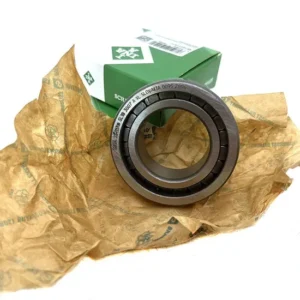
X&S INA Nup1007em Cylindrical Roller Bearing for Auto Motor Spare Part
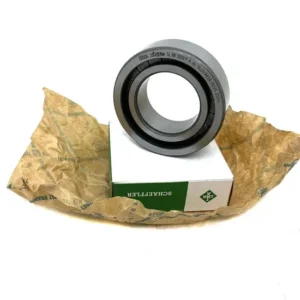
INA B7018C.T.P4S B7018E.T.P4S Angular Contact Ball Bearing for Turbojet
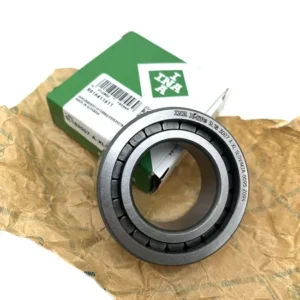
X&S NN3060/Y1 Double Row Cylindrical Roller Bearing for Heavy Load
X&S B7012E.T.P4S Angular Contact Ball Bearing for Metallurgical Rolling Mills
X&S NN3072K NN3008 Cylindrical Roller Bearing with Pin Cam Follower
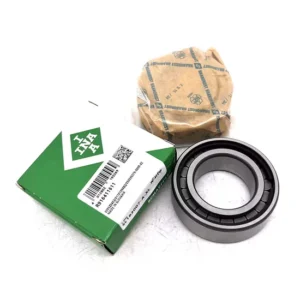
Genuine INA SL183007-A-XL NJ2208 NU2208 Cylindrical Roller Bearing for Auto Parts
INA H7012C-2RZ-P4 B706C T P4S Angular Contact Ball Bearing for Forklift Auto