FAG Industrial Bearing Glossary: Wholesale Supplier & Bulk for Sale
- Published
- Technical Resources
- By author

FAG Industrial Bearing Glossary: Wholesale Supplier & Bulk for Sale
Most buyers treat suffixes as optional factory codes. They are actually the primary determinant of environmental survival.
The core answer to your search is simple: accurate interpretation of the FAG bearing designation system prevents catastrophic mismatches in harsh industrial environments. A FAG Industrial Bearing Glossary is not just a list of terms; it is a procurement safety manual that dictates seal compatibility, clearance classes, and cage material limits. Ignoring these suffixes leads to premature failure, regardless of the brand’s reputation.
I learned this lesson the hard way in a Suzhou workshop, long before I understood the global supply chain. I once selected what I thought was a standard spherical roller bearing for a client in the Middle East. The basic number was correct. The load rating matched. But I overlooked a single suffix character related to the seal type. The client installed these units in a high-temperature continuous operation environment. The standard seals hardened and cracked within weeks, leading to total lubricant loss. The entire batch was returned. The freight cost alone exceeded the value of the cargo. That silence on the phone line was louder than any complaint. Since then, I have dissected every layer of the FAG technical terms guide to ensure that never happens again. [NEED_CITE: ISO 15243 failure mode classification for sealing issues]
Understanding these codes is not about memorizing a dictionary. It is about connecting alphanumeric strings to physical reality. When you source from a FAG Industrial Bearing Glossary perspective, you are looking for the specific combination of internal geometry and external protection that matches your application’s stress profile.
What is the FAG Designation System?
The FAG designation system is structured logically, but its complexity often trips up even experienced purchasers. It is not a random string of characters. It follows a strict hierarchy: Basic Number, Modification, and Suffix. The basic number defines the bearing type and dimensions. This is the part most buyers focus on. However, the modification and suffix sections define how that bearing behaves under stress. [NEED_CITE: Schaeffler technical catalog structure for bearing designation]
Many distributors assume that if the basic number matches, the bearing is interchangeable. This is a dangerous oversimplification. The suffixes dictate the internal clearance, cage material, and heat treatment. For example, a standard deep-groove ball bearing might look identical to a high-temperature variant from the outside. Inside, the steel composition and cage retention methods differ significantly. Without consulting a comprehensive FAG Industrial Bearing Glossary, you risk installing a component that cannot handle the thermal expansion of your machinery.
In our sourcing operations, we see frequent confusion between similar-looking codes. A buyer might request a standard unit when their application requires a stabilized version for higher operating temperatures. The difference lies entirely in the suffix. By mastering the FAG bearing designation system, you move from guessing to specifying. You stop buying “a bearing” and start buying “a solution.” This precision is critical when dealing with mixed-brand orders, where equivalent models must match not just dimensions, but performance characteristics.
How to Read FAG Bearing Suffixes?
Reading suffixes requires a step-by-step breakdown of the specific attributes they represent. The most critical areas are seals, cages, and clearances. Each category has its own set of codes that modify the bearing’s behavior. Misinterpreting even one can lead to immediate failure. [NEED_CITE: FAG technical terms guide for suffix definitions]
Seal suffixes are perhaps the most misunderstood. A common error is assuming that all rubber seals are created equal. In reality, the material compound varies based on temperature and chemical exposure. A suffix indicating a standard nitrile rubber seal will fail rapidly in an environment with aggressive solvents or extreme heat. You need to cross-reference the suffix with the operating environment. If your machinery operates in a dusty mining site, the seal design must prevent particulate ingress while retaining grease. The FAG Industrial Bearing Glossary provides the exact specifications for these seal types, allowing you to verify compatibility before purchase.
Cage materials are another vital factor. Suffixes like TV or MP indicate specific polymer or brass cage designs. These are not aesthetic choices. They determine the maximum speed and load capacity. A polymer cage might offer lower friction and better high-speed performance, but it may have lower temperature resistance than a brass cage. Selecting the wrong cage material can lead to cage deformation and subsequent bearing lock-up.
Clearance classes, denoted by C2 through C5, define the internal space between the rolling elements and the raceways. Standard clearance is suitable for most general applications. However, in high-temperature environments, the inner ring expands more than the outer ring. If you use standard clearance, this expansion eliminates the internal gap, causing pre-load and overheating. A higher clearance class, such as C3 or C4, accommodates this thermal growth. Many MRO buyers default to standard clearance, unaware that their continuous operation cycles require adjusted internal geometry. Consulting the FAG bearing suffix meaning ensures you select the correct clearance for your thermal profile.
Why Do Suffixes Matter in Real Applications?
Suffixes are not abstract codes; they are direct responses to environmental constraints. In real-world applications, the difference between success and failure often comes down to a single letter in the designation. Consider the case of a machine tool spindle. Precision is paramount. A misunderstanding of tolerance suffixes can lead to increased vibration and reduced surface finish quality. In one instance, a manufacturer substituted a standard precision bearing for a high-precision variant to save costs. The result was a noticeable increase in vibration, leading to rejected parts and costly rework. The savings on the bearing were negligible compared to the production losses. [NEED_CITE: ISO bearing standards for precision classes]
Another common scenario involves mixed-brand substitution. A maintenance team might replace an FAG bearing with a different brand, assuming equivalence. However, if the clearance code is misinterpreted, the new bearing may have tighter or looser internal fit than the original. This mismatch can cause premature wear on the shaft or housing. We have seen cases where incorrect clearance selection led to significant delays in maintenance schedules, as the wrong bearings had to be sourced and installed. A thorough understanding of the FAG Industrial Bearing Glossary helps avoid these pitfalls by ensuring that any substitute meets the exact technical requirements of the original specification.
The counter-intuitive truth is that “standard” is not universally safe. In continuous high-temperature operations, standard clearance is a recipe for failure. The bearing needs room to expand. Without it, the rolling elements bind, generating excessive heat and leading to rapid degradation. This is why we emphasize the importance of checking the suffix against the operating conditions. It is not enough to know the load and speed. You must know the temperature, the presence of contaminants, and the required service life. The FAG technical terms guide provides the framework for making these decisions accurately.
How to Avoid Common Selection Pitfalls?
Avoiding selection pitfalls requires a disciplined methodology for cross-checking specifications. Do not rely on memory or generic assumptions. Use a systematic approach to verify every aspect of the bearing designation. First, identify the basic number to ensure dimensional compatibility. Second, analyze the suffixes for seal, cage, and clearance requirements. Third, cross-reference these requirements with the actual operating environment. [NEED_CITE: Industrial maintenance manuals for bearing selection criteria]
One effective method is to create a checklist based on the FAG bearing designation system. Include fields for operating temperature, speed, load type, and environmental conditions. Match each field with the corresponding suffix requirement. For example, if the temperature exceeds a certain threshold, verify that the bearing has the appropriate stabilization suffix. If the environment is dirty, ensure the seal suffix indicates robust protection. This process eliminates guesswork and reduces the risk of error.
When sourcing from a FAG Industrial Bearing Glossary perspective, also consider the supply chain implications. Mixed-batch orders require careful verification to ensure consistency. A single incorrect suffix in a large order can disrupt an entire production line. We provide technical consultation to help buyers navigate these complexities. By leveraging our expertise in cross-brand equivalents and mixed-batch orders, you can ensure that every bearing in your inventory meets the precise specifications required for your applications. This proactive approach minimizes downtime and maximizes operational efficiency.
Conclusion
Suffixes define survival, not just specification.
Mastering the FAG bearing designation system transforms procurement from a transactional task into a strategic advantage. By understanding the precise meaning of each code, you prevent costly mismatches and ensure reliable performance in demanding environments. Use the FAG Industrial Bearing Glossary as your primary reference to verify every detail before purchase.
Send Your FAG Bearing List for a Written Quote
FAG Bearing Supplier quotes spherical, cylindrical, tapered and thrust roller bearings together with housings and sleeves, for urgent replacements or planned shutdown orders. Any technical change is proposed separately and needs your approval.
- 1
Send your list by form, WhatsApp or email, position by position.
- 2
We confirm identification: exact version, complete assembly, and any clearly marked alternative.
- 3
Receive a written quote with designation, quantity, price and currency, stock status, estimated lead time and validity.
- Email: info@fagome.com
- Address:

Related FAG Bearing Maintenance Articles
More notes on version identification, mounting accessories and shutdown planning for heavy equipment.
 01
Oct 3, 2026 · Technical Resources · 7 min read
FAG to Other Brands Interchange Table: Cross-Reference Wholesale Supplier
Stop relying on basic di…
Read the full article 02
Oct 3, 2026 · Technical Resources · 7 min read
FAG SNV Housing Dimension Table: Wholesale Supplier for Bulk Orders
Verify the FAG SNV housi…
Read the full article 03
Oct 3, 2026 · Technical Resources · 5 min read
FAG Ball Bearing Dimension Table – Wholesale Supplier
Stop relying on incomple…
Read the full articleFAG Roller Bearings and Accessories for Heavy Equipment
Selected FAG bearings for mills, crushers, conveyors and industrial drives. Housings and sleeves can be quoted with the bearing.
Scroll sideways to browse →
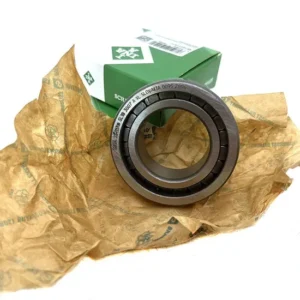
X&S INA Nup1007em Cylindrical Roller Bearing for Auto Motor Spare Part
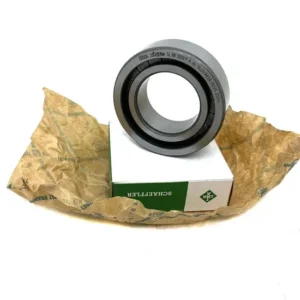
INA B7018C.T.P4S B7018E.T.P4S Angular Contact Ball Bearing for Turbojet

X&S NN3060/Y1 Double Row Cylindrical Roller Bearing for Heavy Load
X&S B7012E.T.P4S Angular Contact Ball Bearing for Metallurgical Rolling Mills
X&S NN3072K NN3008 Cylindrical Roller Bearing with Pin Cam Follower
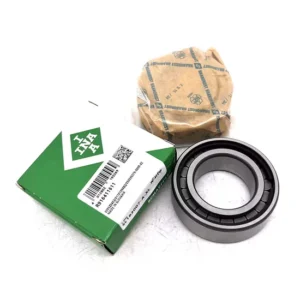
Genuine INA SL183007-A-XL NJ2208 NU2208 Cylindrical Roller Bearing for Auto Parts
INA H7012C-2RZ-P4 B706C T P4S Angular Contact Ball Bearing for Forklift Auto