FAG Ball Bearing Dimension Table – Wholesale Supplier
- Published
- Technical Resources
- By author

FAG Ball Bearing Dimension Table – Wholesale Supplier
A dimension table listing only inner diameter, outer diameter, and width is technically incomplete for industrial applications.
Accurate selection requires integrating dimensional tolerances, radial internal clearance codes like C3, and suffix definitions for seals and cage materials to prevent catastrophic equipment failure. Relying solely on basic geometric sizes ignores the thermal expansion and fitting requirements critical for high-load or high-temperature environments.
I still remember the humidity in Ho Chi Minh City when a local textile factory called me in a panic. Their main production line had seized up after just two days of operation. The supplier they used had provided an FAG ball bearing dimension table that looked perfect on paper: the inner diameter, outer diameter, and width matched the original specifications exactly. But when we dismantled the housing, the bearings were welded to the shafts by heat. The issue was not the basic size. It was the internal clearance and the chamfer dimensions. The replacement units lacked the necessary C3 clearance for the high-ambient temperature environment, and the sharp chamfers had damaged the shaft shoulders during press-fitting. That loss was significant enough to change how I approach technical documentation forever. Now, when I distribute bearings across Southeast Asia and beyond, I never send a datasheet without verifying these hidden parameters.
Understanding the full scope of an FAG ball bearing dimension table is the difference between a smooth installation and a costly downtime event. Basic geometry is just the starting point.
Why Basic Dimensions Fail in Real Applications?
Most buyers assume that if the ID, OD, and width match, the bearing will fit. This is a dangerous oversimplification. In real-world industrial settings, basic dimensions ignore critical factors like thermal expansion and interference fits. A bearing that fits perfectly at room temperature may seize when the machine reaches operating temperature if the internal clearance is incorrect. [NEED_CITE: relationship between operating temperature and radial internal clearance]
Consider the case of a steel mill in the Middle East. They ordered replacements based on a standard dimension chart. The basic sizes were correct, but the original bearings had a specific radial internal clearance class to handle the extreme heat near the furnace. The new batch had normal clearance. Within weeks, the bearings overheated and failed, causing unplanned downtime. The cost of the lost production far exceeded the price difference between standard and high-clearance bearings.
The key takeaway is that basic dimensions do not account for the dynamic conditions of the application. You must look beyond the three primary measurements.
How to Read the Full FAG Dimension Table?
Reading an FAG ball bearing dimension table correctly requires a step-by-step approach that integrates chamfers, tolerances, and clearance. Here is how to decode the data effectively.
First, check the dimensional tolerances. Standard bearings usually fall under Normal tolerance classes, but precision applications may require P6 or higher. [NEED_CITE: ISO 492 tolerance classes for rolling bearings] A mismatch here can lead to excessive vibration or premature wear.
Second, examine the chamfer dimensions. These are often overlooked but are crucial for proper seating on the shaft and in the housing. Incorrect chamfers can cause stress concentrations and damage during installation. A distributor in Latin America once faced a high return rate because the chamfers on a batch of bearings did not match the shaft design, leading to fitting issues and customer complaints.
Third, verify the radial internal clearance. Codes like C3, C4, or C5 indicate the amount of space between the rolling elements and the raceways. C3 is common for applications with temperature differences between the inner and outer rings. Choosing the wrong clearance can cause skidding or overheating.
| Parameter | Standard Check | Critical Application Check |
|---|---|---|
| Basic Dimensions (ID/OD/Width) | Match nominal size | Verify against actual measured shaft/housing |
| Tolerance Class | Normal (PN) | P6, P5, or higher as per design |
| Radial Internal Clearance | Normal (CN) | C3, C4, or C5 based on thermal conditions |
| Chamfer Dimensions | Standard | Match shaft/housing fillet radius |
This structured approach ensures that every aspect of the bearing is suitable for the intended use. [NEED_CITE: importance of chamfer dimensions in bearing installation]
What Do the Suffixes Really Mean for Your Operation?
Suffixes in an FAG ball bearing dimension table are not just random letters; they define the bearing’s construction and suitability for specific environments. Misinterpreting these can lead to selecting a bearing that fails prematurely.
The most common suffixes relate to internal clearance and sealing. For example, C3 indicates greater radial internal clearance than normal, which is essential for high-temperature applications. 2RSR denotes double-sided rubber seals, providing protection against contaminants but potentially limiting speed due to friction. [NEED_CITE: FAG suffix designation system for seals and clearance]
Cage material is another critical factor indicated by suffixes. Steel cages are robust for heavy loads, while polyamide cages offer lighter weight and better damping properties. In a mixed-brand replacement scenario in Latin America, matching the exact suffixes and cage materials allowed for successful substitution without compromising performance. This extended the lifespan of the equipment and reduced inventory costs.
Ignoring these suffixes is akin to ignoring the engine type when buying a car. You might get something that fits, but it won’t perform as needed.
How to Verify Dimensions Before Bulk Ordering?
Before placing a bulk order, it is essential to verify the dimensions and specifications to avoid costly mistakes. Cross-checking traceability documents and spot-checking critical tolerances can save time and money.
Start by requesting complete traceability documentation from your supplier. This should include material certificates and inspection reports that confirm the bearings meet the specified standards. [NEED_CITE: importance of traceability in bearing supply chain] Genuine products come with verifiable docs that link back to the manufacturer’s production facilities.
Next, perform spot checks on critical tolerances. Use precision measuring tools to verify the inner and outer diameters, as well as the radial internal clearance. This is especially important for large orders where consistency is key. A single out-of-spec bearing can cause significant issues in a production line.
Finally, consult with technical experts who can provide cross-brand equivalent model consultation. This ensures that if you are switching brands or sourcing mixed batches, the technical details match the application requirements. Our one-stop sourcing solutions include this level of technical support, ensuring that every detail is verified before shipment.
Conclusion
Basic dimensions are insufficient for reliable bearing selection.
Integrating tolerances, internal clearance, and suffix definitions is essential for preventing failure. Always verify these details through traceable documentation and technical consultation to ensure long-term equipment reliability.
Send Your FAG Bearing List for a Written Quote
FAG Bearing Supplier quotes spherical, cylindrical, tapered and thrust roller bearings together with housings and sleeves, for urgent replacements or planned shutdown orders. Any technical change is proposed separately and needs your approval.
- 1
Send your list by form, WhatsApp or email, position by position.
- 2
We confirm identification: exact version, complete assembly, and any clearly marked alternative.
- 3
Receive a written quote with designation, quantity, price and currency, stock status, estimated lead time and validity.
- Email: info@fagome.com
- Address:

Related FAG Bearing Maintenance Articles
More notes on version identification, mounting accessories and shutdown planning for heavy equipment.
 01
Oct 3, 2026 · Technical Resources · 7 min read
FAG Industrial Bearing Glossary: Wholesale Supplier & Bulk for Sale
Master the FAG Industria…
Read the full article 02
Oct 3, 2026 · Technical Resources · 7 min read
FAG to Other Brands Interchange Table: Cross-Reference Wholesale Supplier
Stop relying on basic di…
Read the full article 03
Oct 3, 2026 · Technical Resources · 7 min read
FAG SNV Housing Dimension Table: Wholesale Supplier for Bulk Orders
Verify the FAG SNV housi…
Read the full articleFAG Roller Bearings and Accessories for Heavy Equipment
Selected FAG bearings for mills, crushers, conveyors and industrial drives. Housings and sleeves can be quoted with the bearing.
Scroll sideways to browse →
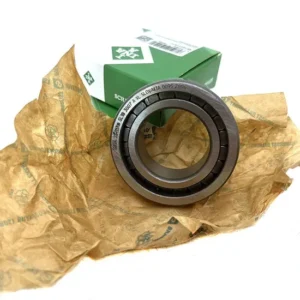
X&S INA Nup1007em Cylindrical Roller Bearing for Auto Motor Spare Part
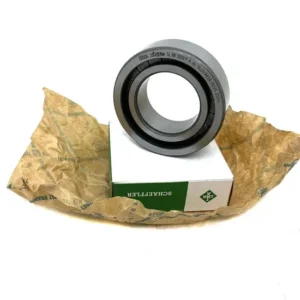
INA B7018C.T.P4S B7018E.T.P4S Angular Contact Ball Bearing for Turbojet

X&S NN3060/Y1 Double Row Cylindrical Roller Bearing for Heavy Load
X&S B7012E.T.P4S Angular Contact Ball Bearing for Metallurgical Rolling Mills
X&S NN3072K NN3008 Cylindrical Roller Bearing with Pin Cam Follower

Genuine INA SL183007-A-XL NJ2208 NU2208 Cylindrical Roller Bearing for Auto Parts
INA H7012C-2RZ-P4 B706C T P4S Angular Contact Ball Bearing for Forklift Auto