FAG Crusher Bearings: Fixes & Wholesale Supplier
- Published
- Installation & Maintenance
- By author

FAG Crusher Bearings: Fixes & Wholesale Supplier
Most early FAG crusher bearing failures are not caused by heavy loads, but by misalignment and poor lubrication.
To fix FAG crusher bearing failures, you must stop using refurbished parts with unknown histories, enforce strict ISO 15243 damage classification for root cause analysis, and install genuine replacements with verified clearance adjustments. Sourcing from a supplier who provides full traceability documentation is the only way to ensure the internal geometry matches OEM specifications.
I still remember the dust in that Nigerian quarry. It wasn’t just dirt; it was a fine, abrasive powder that found its way into every seal. A client had insisted on saving costs by using refurbished spherical roller bearings for their primary jaw crusher. Three months later, the cage fragmented. The downtime cost far more than the price difference between a refurbished unit and a new one. I learned then that machines do not lie. The iron debris tells the truth. When you see smearing or spalling, it is rarely bad luck. It is a symptom of a specific handling error or contamination issue. [NEED_CITE: common failure modes per ISO 15243]
Understanding these patterns is critical for any maintenance team. Let’s look at how to diagnose, fix, and prevent these issues systematically.
What Are the Most Common FAG Crusher Bearing Failure Modes?
Identifying the exact type of damage is the first step toward a permanent fix.
Crusher environments are brutal. High shock loads, vibration, and contaminant ingress create a perfect storm for bearing degradation. However, not all damage looks the same. By classifying the failure mode according to international standards, you can pinpoint the root cause rather than just swapping parts. [NEED_CITE: ISO 15243 bearing damage classification system]
| Failure Mode | Visual Characteristics | Primary Root Cause | Prevention Strategy |
|---|---|---|---|
| Fatigue Spalling | Small craters or pits on raceways | Overloading or incorrect fit | Verify load ratings and housing fits |
| Smearing | Shiny, smeared metal surfaces | Insufficient lubrication or sliding | Improve grease purge frequency |
| Cage Fragmentation | Broken cage pockets or wires | Vibration, shock loads, or poor handling | Use robust cages and avoid hammering |
| Creep | Discoloration and wear on shaft | Loose fit or improper installation | Ensure correct interference fit |
In my experience, fatigue spalling is often blamed on “bad quality” bearings. In reality, it usually stems from excessive preload or misalignment. When a bearing is forced into a housing that is out of round, the load distribution becomes uneven. One section of the raceway takes the brunt of the force, leading to premature subsurface cracking. [NEED_CITE: effect of misalignment on bearing life]
Smearing is another frequent culprit in crushers. This happens when the rolling elements slide instead of roll, typically due to inadequate lubrication film thickness. In dusty environments, if the grease is contaminated or depleted, metal-to-metal contact occurs. The resulting friction generates heat, softening the surface and causing material to transfer from one surface to another.
Cage fragmentation is particularly dangerous. I once saw a case where a refurbished bearing’s cage failed because the original rivets were weakened during disassembly. The cage broke apart, locking the rollers and seizing the spindle. This is why using genuine parts with verified structural integrity is non-negotiable.
Recognizing these signs early allows you to adjust your maintenance protocol before a catastrophic seizure occurs.
How to Diagnose Root Causes from Iron Debris and Vibration?
Vibration spectrum analysis and ferrography provide definitive evidence of failure origins.
Guessing is expensive. Data is cheap. When a FAG crusher bearing starts making noise, the answer lies in the vibration signature and the oil debris. [NEED_CITE: principles of vibration analysis for rotating machinery]
Vibration analysis can detect issues long before they become audible. Inner ring defects produce specific frequency peaks related to the ball pass frequency inner (BPFI). Outer ring defects show up at the ball pass frequency outer (BPFO). If you see high amplitude at these frequencies, you know exactly which component is failing. Misalignment, on the other hand, often manifests as high axial vibration at one times running speed.
Ferrography takes this a step further by analyzing the wear particles in the lubricant. The shape, size, and composition of these particles tell a story. Large, jagged chunks indicate fatigue spalling. Fine, shiny flakes suggest abrasive wear from contamination. Blue-tinted particles point to overheating due to lubrication failure. [NEED_CITE: ferrography interpretation guide for wear debris]
A European mining operator once faced repeated failures on their cone crusher. Standard visual inspections showed nothing wrong. However, ferrography revealed a high concentration of copper particles. This indicated that the bronze cage was wearing down due to excessive sliding. The root cause was traced back to an incorrect grease viscosity that failed to maintain an adequate film thickness under high load. Switching to a higher-viscosity synthetic grease resolved the issue.
By combining these diagnostic tools, you move from reactive replacement to predictive maintenance. This approach minimizes unplanned downtime and extends the service life of your equipment.
What Are the Critical Steps for Flawless Installation?
Proper installation is more important than the bearing brand itself.
Even the best FAG spherical roller bearing will fail if installed incorrectly. The most common mistake is improper fit. Many technicians believe that tighter fits always prevent slipping. This is wrong. Excessive interference destroys the internal clearance, leading to overheating and premature fatigue. [NEED_CITE: ISO 1132 tolerance standards for rolling bearings]
Here is the correct procedure for installing spherical roller bearings on crusher spindles:
- Cleanliness: Ensure the shaft and housing are clean and free of burrs. Any dirt acts as an abrasive paste.
- Heating: Use an induction heater to expand the inner ring. Never use an open flame, as it can alter the steel’s metallurgy. Heat the bearing to the recommended temperature, typically around 110°C, but check the manufacturer’s guidelines. [NEED_CITE: safe heating temperatures for bearing installation]
- Mounting: Slide the heated bearing onto the shaft quickly and evenly. Use a mechanical press or hydraulic nut if necessary. Avoid hammering, which can damage the raceways.
- Clearance Adjustment: This is critical. Spherical roller bearings require specific residual radial clearance. Use feeler gauges to measure the clearance after mounting. If the clearance is too tight, the bearing will overheat. If it is too loose, vibration will increase.
- Locking: Secure the locking device properly. Ensure the locking ring is tightened to the specified torque.
I recall a site in Southeast Asia where a technician used a sledgehammer to drive a bearing onto a shaft. The impact created micro-cracks in the raceway. The bearing lasted only a few weeks. Proper tools and methods are not optional; they are essential.
Following these steps ensures that the bearing performs as designed, handling the heavy loads and shocks inherent in crushing applications.
How to Optimize Lubrication and Sealing in Harsh Environments?
The right grease and sealing strategy block contaminants and maintain film strength.
Lubrication failure is a leading cause of FAG crusher bearing failures. In dusty, wet, or high-temperature environments, standard greases break down. You need a lubricant that resists water washout, handles high loads, and stays in place. [NEED_CITE: lubrication requirements for heavy-duty mining applications]
Selecting the right grease involves considering the base oil viscosity, thickener type, and additives. For crushers, lithium complex or polyurea thickeners are often preferred for their stability. The base oil viscosity must be high enough to maintain a protective film under heavy load but low enough to allow for easy starting in cold conditions.
Sealing is equally important. Labyrinth seals are effective in keeping out large particles, but they may need supplementation with additional protection in extremely dusty environments. Some operators use external seal rings or air purges to create a positive pressure barrier against dust ingress.
Grease consumption frequency should be monitored. Over-greasing can be as harmful as under-greasing. Excess grease causes churning, which generates heat and increases energy consumption. Establish a purge schedule based on operating hours and environmental conditions. Remove old grease until clean grease appears at the seal exit.
By optimizing both lubrication and sealing, you create a hostile environment for contaminants and a friendly one for your bearings.
When Should You Repair vs. Replace with Genuine Parts?
Traceability and original manufacturing standards dictate the decision.
The temptation to repair expensive bearings is strong. However, not all repairs are equal. Refurbishment can restore dimensions, but it cannot restore the original metallurgical integrity or internal geometry unless done by the original manufacturer or a certified partner. [NEED_CITE: limitations of bearing refurbishment processes]
When evaluating whether to repair or replace, consider the following:
- Damage Extent: If the raceways have deep spalling or the cage is damaged, replacement is mandatory. Minor surface polishing might be acceptable for non-critical applications, but not for crushers.
- Traceability: Can the repaired part’s history be fully traced? Without documentation of the materials and processes used, you are taking a risk. Genuine FAG bearings come with complete traceability, ensuring every component meets strict quality controls.
- Cost of Downtime: Calculate the cost of another failure. If a repaired bearing fails prematurely, the loss in production time will dwarf the savings from refurbishment.
As a global supplier, we see many distributors struggle with mixed batches of uncertain origin. We provide genuine products with full documentation, ensuring that every bearing meets OEM specifications. This reliability is crucial for MRO operators who cannot afford unexpected stops. Our technical support helps clients analyze failure data to make informed decisions, ensuring that replacements are not just new, but correct for the application.
Choosing genuine parts with verified provenance is an investment in uptime. It eliminates the guesswork and ensures that your equipment runs as intended.
Conclusion
Systematic analysis and strict installation protocols prevent most FAG crusher bearing failures.
Stop blaming the load. Start checking the alignment, lubrication, and installation practices. Use vibration and ferrography to diagnose root causes accurately. Install genuine bearings with correct clearance and proper tools. Protect them with suitable grease and seals. And always source from suppliers who offer full traceability. Your machinery will thank you with extended service life and reduced downtime.
Send Your FAG Bearing List for a Written Quote
FAG Bearing Supplier quotes spherical, cylindrical, tapered and thrust roller bearings together with housings and sleeves, for urgent replacements or planned shutdown orders. Any technical change is proposed separately and needs your approval.
- 1
Send your list by form, WhatsApp or email, position by position.
- 2
We confirm identification: exact version, complete assembly, and any clearly marked alternative.
- 3
Receive a written quote with designation, quantity, price and currency, stock status, estimated lead time and validity.
- Email: info@fagome.com
- Address:

Related FAG Bearing Maintenance Articles
More notes on version identification, mounting accessories and shutdown planning for heavy equipment.
 01
Oct 3, 2026 · Installation & Maintenance · 7 min read
FAG Bearing Maintenance Checklist: Wholesale Supplier for Bulk MRO Orders
Master the FAG bearing m…
Read the full article 02
Oct 3, 2026 · Installation & Maintenance · 7 min read
FAG Housing Seals: Genuine Wholesale Supplier for Bulk Orders
Optimize Seal Choices fo…
Read the full article 03 Oct 3, 2026 · Installation & Maintenance · 8 min read
FAG Bearing Shaft & Housing Fits: Wholesale Supplier
Mastering FAG bearing sh…
Read the full articleFAG Roller Bearings and Accessories for Heavy Equipment
Selected FAG bearings for mills, crushers, conveyors and industrial drives. Housings and sleeves can be quoted with the bearing.
Scroll sideways to browse →
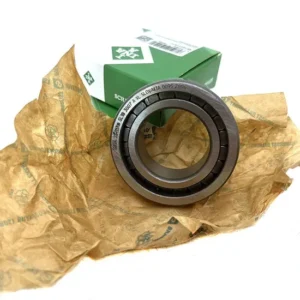
X&S INA Nup1007em Cylindrical Roller Bearing for Auto Motor Spare Part
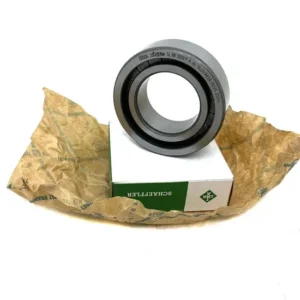
INA B7018C.T.P4S B7018E.T.P4S Angular Contact Ball Bearing for Turbojet
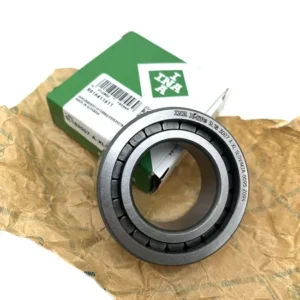
X&S NN3060/Y1 Double Row Cylindrical Roller Bearing for Heavy Load
X&S B7012E.T.P4S Angular Contact Ball Bearing for Metallurgical Rolling Mills
X&S NN3072K NN3008 Cylindrical Roller Bearing with Pin Cam Follower
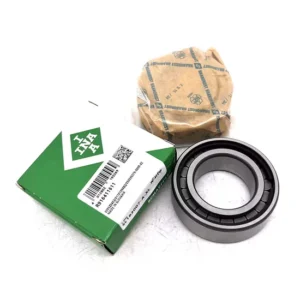
Genuine INA SL183007-A-XL NJ2208 NU2208 Cylindrical Roller Bearing for Auto Parts
INA H7012C-2RZ-P4 B706C T P4S Angular Contact Ball Bearing for Forklift Auto