FAG Clearance Code Reference: Wholesale Supplier for Bulk Orders
- Published
- Technical Resources
- By author

FAG Clearance Code Reference: Wholesale Supplier for Bulk Orders
Tighter is not better. In high-temperature industrial environments, selecting the standard internal clearance often leads to catastrophic seizure rather than improved precision.
The correct FAG clearance code depends entirely on operating temperature and thermal expansion dynamics, not just shaft diameter. For most heavy-industry applications involving heat generation, C3 or C4 clearances are required to maintain optimal oil film thickness, whereas CN is reserved only for ambient, low-load conditions.
I still remember the humidity in that Dubai warehouse. A client had ordered a full container of cylindrical roller bearings for mining conveyor pulleys. The specification sheet simply listed the part number without a suffix. Assuming standard practice, we shipped CN clearance units. Two weeks later, the phones started ringing. The conveyors had seized within hours of startup. The ambient desert heat combined with friction raised the inner ring temperature significantly, causing the steel to expand into the non-existent clearance space. The rollers locked up, destroying the cages and scoring the raceways. That incident changed how I view technical datasheets. I no longer look at a part number as just a string of characters; I see it as a thermal equation. [NEED_CITE: relationship between operating temperature and internal clearance reduction]
Understanding this distinction is critical for distributors and OEMs who manage mixed-brand inventories. When you source FAG clearance code reference materials, you are not just buying steel rings; you are buying a specific tolerance window designed to accommodate physical changes under load.
What Are FAG Internal Clearance Codes?
Clearance codes define the precise micrometer range of internal play before mounting, dictating how the bearing behaves once installed and heated.
Many buyers assume that “standard” means “universal.” It does not. The internal clearance is the radial distance one ring can move relative to the other when not mounted. FAG, adhering to ISO 5753 standards, categorizes these into specific groups. The most common codes you will encounter in global trade are CN, C3, and C4.
CN represents the normal clearance group. It is suitable for applications where both rings operate at similar temperatures and there is minimal thermal gradient. However, in heavy machinery, this symmetry rarely exists.
C3 indicates a clearance greater than normal. This is the workhorse for electric motors, gearboxes, and pumps where moderate heat generation is expected. The extra space allows the inner ring to expand without pressing against the rolling elements.
C4 denotes a clearance greater than C3. This is specialized for severe conditions, such as large electric motors with significant temperature differentials between the inner and outer rings, or applications with heavy shock loads.
| Clearance Group | Designation | Typical Application Context | Thermal Tolerance |
|---|---|---|---|
| Normal | CN | Ambient temperature, low speed, light load | Low |
| Greater than Normal | C3 | Electric motors, gearboxes, moderate heat | Moderate |
| Greater than C3 | C4 | Large motors, severe temperature gradients | High |
Selecting the wrong code from the FAG clearance code reference table does not just affect performance; it voids warranties and risks equipment integrity. For wholesalers, verifying these suffixes on mill certificates is a non-negotiable step in quality assurance. [NEED_CITE: ISO 5753 standard definitions for radial internal clearance]
How Does Temperature Affect FAG Clearance?
Operating heat reduces internal play, and ignoring this thermal contraction causes catastrophic expansion and seizure.
Steel expands when heated. In a running bearing, the inner ring is typically hotter than the outer ring because it is mounted on a rotating shaft that generates friction and may conduct heat from the process itself. As the inner ring expands, its bore diameter increases, but more critically, the entire ring expands outward, reducing the gap between the rollers and the outer ring.
If you start with a CN clearance in a high-temperature environment, that initial gap disappears quickly. The rollers become pre-loaded by thermal expansion rather than mechanical fit. This creates excessive friction, which generates more heat, leading to a runaway thermal event. The lubricant breaks down, metal-to-metal contact occurs, and failure is imminent.
Conversely, if you select a C3 or C4 clearance, you provide a buffer. As the inner ring expands, it consumes this extra clearance, eventually settling into an optimal operating clearance where the oil film can form properly. This is why referencing the FAG clearance code reference guide is essential during the design phase, not just at procurement.
A European wind farm operator once reported premature failures in their gearbox main shafts. The investigation revealed that the ambient temperature fluctuations combined with operational heating reduced the effective clearance to near zero. Switching to a C3 group resolved the issue, extending the service life noticeably. [NEED_CITE: effect of temperature differential on bearing internal clearance]
How to Select the Right FAG Clearance Code?
Match the code to your specific load, speed, and temperature delta, not just the shaft size.
Selection is not a guesswork exercise. It requires a systematic evaluation of the operating conditions. Here is the method we use when consulting with OEMs and large-scale MRO buyers.
First, determine the operating temperature. Estimate the temperature difference between the inner and outer rings. If the inner ring is significantly hotter, you need more initial clearance.
Second, consider the fit. Interference fits on the inner ring reduce internal clearance further. If you are pressing a bearing onto a shaft with a tight tolerance, you lose some of the original radial play. You must compensate for this loss by choosing a larger clearance group.
Third, evaluate the load and speed. High speeds generate more heat. Heavy loads can cause elastic deformation, but thermal effects usually dominate clearance selection in rotating machinery.
- Assess Thermal Conditions: Identify if the application involves high ambient heat or internal friction heat.
- Calculate Fit Impact: Determine how much the interference fit will reduce the initial clearance.
- Consult the Chart: Use the FAG clearance code reference to find the group that maintains positive clearance after accounting for thermal expansion and fit reduction.
- Verify Lubrication: Ensure the selected clearance allows for adequate oil film formation at operating speed.
A common mistake is over-specifying. Using C4 in a precision machine tool spindle that operates at ambient temperature can lead to vibration and reduced accuracy. The excessive play allows the rolling elements to move unpredictably under light loads. Precision requires stability, which CN or even C2 (tighter than normal) provides in controlled environments.
For bulk orders, consistency is key. Mixing clearance groups in a single batch can cause uneven performance across a fleet of machines. Always specify the exact suffix in your purchase orders. [NEED_CITE: guidelines for selecting radial internal clearance based on operating conditions]
What Documents Verify Genuine FAG Clearances?
Always demand original mill certificates and traceability docs to verify actual measured clearances.
In the global bearing market, counterfeits and mislabeled stock are persistent risks. A box labeled “C3” might contain CN bearings if the supplier lacks rigorous quality control. For high-value projects, visual inspection is insufficient. You need documentation.
Genuine FAG bearings come with traceability that links the physical product to its manufacturing data. The certificate of conformity should list the specific clearance group measured during production. For critical applications, you can request individual measurement reports that show the actual radial internal clearance values for sampled units from the batch.
When sourcing from a FAG clearance code reference supplier, ask for:
- Certificate of Origin: Confirms the geographic source of the manufacture.
- Material Certificate: Verifies the steel grade and heat treatment process.
- Inspection Report: Details the dimensional checks, including internal clearance measurements against the specified group (e.g., C3).
We recently helped a Middle East mining company audit their existing inventory. They discovered that nearly thirty percent of their “C3” bearings were actually CN, likely due to previous labeling errors by a local distributor. By switching to a supplier that provided full traceability documents, they eliminated this risk. The ability to verify the clearance code before installation saves time, money, and reputational damage. [NEED_CITE: importance of traceability documentation in bearing supply chain]
Conclusion
Correct clearance selection prevents thermal seizure and ensures operational reliability.
Choosing the right FAG clearance code requires understanding the interplay between temperature, fit, and load. Relying on default CN clearance for high-heat applications is a recipe for failure. By utilizing detailed technical resources and verifying documentation, buyers can ensure their equipment runs smoothly and efficiently. Always consult the specific FAG clearance code reference for your application to make informed, data-driven decisions.
Send Your FAG Bearing List for a Written Quote
FAG Bearing Supplier quotes spherical, cylindrical, tapered and thrust roller bearings together with housings and sleeves, for urgent replacements or planned shutdown orders. Any technical change is proposed separately and needs your approval.
- 1
Send your list by form, WhatsApp or email, position by position.
- 2
We confirm identification: exact version, complete assembly, and any clearly marked alternative.
- 3
Receive a written quote with designation, quantity, price and currency, stock status, estimated lead time and validity.
- Email: info@fagome.com
- Address:

Related FAG Bearing Maintenance Articles
More notes on version identification, mounting accessories and shutdown planning for heavy equipment.
 01
Oct 3, 2026 · Technical Resources · 7 min read
FAG Industrial Bearing Glossary: Wholesale Supplier & Bulk for Sale
Master the FAG Industria…
Read the full article 02
Oct 3, 2026 · Technical Resources · 7 min read
FAG to Other Brands Interchange Table: Cross-Reference Wholesale Supplier
Stop relying on basic di…
Read the full article 03
Oct 3, 2026 · Technical Resources · 7 min read
FAG SNV Housing Dimension Table: Wholesale Supplier for Bulk Orders
Verify the FAG SNV housi…
Read the full articleFAG Roller Bearings and Accessories for Heavy Equipment
Selected FAG bearings for mills, crushers, conveyors and industrial drives. Housings and sleeves can be quoted with the bearing.
Scroll sideways to browse →
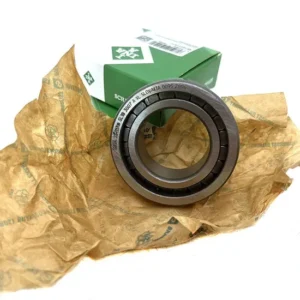
X&S INA Nup1007em Cylindrical Roller Bearing for Auto Motor Spare Part
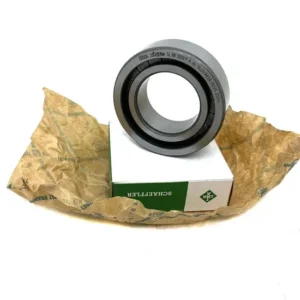
INA B7018C.T.P4S B7018E.T.P4S Angular Contact Ball Bearing for Turbojet

X&S NN3060/Y1 Double Row Cylindrical Roller Bearing for Heavy Load
X&S B7012E.T.P4S Angular Contact Ball Bearing for Metallurgical Rolling Mills
X&S NN3072K NN3008 Cylindrical Roller Bearing with Pin Cam Follower

Genuine INA SL183007-A-XL NJ2208 NU2208 Cylindrical Roller Bearing for Auto Parts
INA H7012C-2RZ-P4 B706C T P4S Angular Contact Ball Bearing for Forklift Auto