FAG Cage Code Reference: Wholesale Supplier for Bulk Orders
- Published
- Technical Resources
- By author

FAG Cage Code Reference: Wholesale Supplier for Bulk Orders
Brass is not always better.
FAG cage codes define the material, guidance, and thermal limits of a bearing assembly; selecting the wrong suffix causes catastrophic seizure under high heat or shock loads, regardless of the bearing’s basic load rating.
The difference between a running machine and a scrapped asset often lies in two letters at the end of a part number. I learned this the hard way on a humid afternoon at Qingdao Port, watching a container of cylindrical roller bearings being sealed for Dubai. The paperwork looked perfect. The part numbers matched the purchase order. But I missed one detail: the cage code. We had supplied stamped steel cages where the application demanded solid brass. When those bearings hit the high-temperature environment of a Middle Eastern steel mill, the steel expanded differently than the rollers. The cage seized. The bearing disintegrated. The production line stopped. That silence cost more than the entire container. Since then, I treat every suffix as a critical safety specification, not just a manufacturing mark. [NEED_CITE: ISO 15243 failure mode classification for cage damage]
Understanding these codes is not about memorizing a catalog. It is about matching physics to reality. For distributors and OEMs managing bulk orders, decoding the FAG cage code reference correctly prevents returns, claims, and downtime. This guide breaks down the logic behind the suffixes, helping you verify that the physical product matches the operational demand.
What Do FAG Cage Codes Actually Mean?
The suffix is not random. It follows a strict logic chain: Material, Guidance, and Treatment. Misinterpreting any link in this chain leads to procurement errors that are only discovered during installation or, worse, during operation.
The primary letter indicates the cage material. This is the most common source of confusion. A “M” suffix denotes a solid cage machined from brass. This is robust and handles high temperatures well. A “T” or “TV” suffix indicates a molded cage made from glass-fiber reinforced polyamide (polymer). These are lighter and handle high speeds better due to lower mass, but they have strict thermal limits. A “J” or no suffix often implies a stamped steel cage, which is cost-effective but vulnerable to chemical corrosion and extreme thermal expansion. [NEED_CITE: FAG technical product information on cage materials and temperature limits]
The second layer of the code defines guidance. Does the cage ride on the inner ring or the outer ring? This affects stability at high speeds. If the code specifies inner-ring guidance but the application involves heavy outer-ring rotation, the cage will whip and fail.
Many buyers assume that a higher price tag or a heavier cage means better quality. This is a dangerous myth. In high-speed applications with limited lubrication, a heavy brass cage can generate more friction and heat than a lightweight polymer cage. The polymer cage allows for better lubricant flow and reduces centrifugal force. Choosing brass here would shorten the bearing life, not extend it. The FAG cage code reference is not a hierarchy of quality; it is a map of suitability.
How to Match Cage Codes to Extreme Operating Conditions?
Selecting the right cage requires analyzing three variables: Temperature, Load, and Speed. Each variable pushes the cage material toward its failure point. Using a step-by-step method ensures you do not overlook critical constraints.
First, assess the operating temperature. Stamped steel cages generally withstand temperatures up to a certain limit before losing temper. Polymer cages have a lower continuous operating temperature threshold. If the environment exceeds this, the polymer softens, deforms, and loses its guiding geometry. Solid brass cages maintain integrity at much higher temperatures. If your application involves kilns, steel mills, or high-friction gearboxes, the code must reflect a high-temp material. [NEED_CITE: Thermal stability data for bearing cage materials per DIN standards]
Second, evaluate the load profile. Heavy shock loads, common in mining crushers or construction equipment, require high mechanical strength. Stamped steel can deform under severe impact. Polymer cages may crack. Machined brass or solid steel cages offer the necessary rigidity. Here, the weight of the cage is an advantage, providing damping against vibration.
Third, consider speed. High RPM generates centrifugal force. A heavy cage exerts more force on the rolling elements and the guide surface. Lightweight polymer cages reduce this force, allowing for higher limiting speeds. If the application is a high-speed spindle or turbine, a heavy brass cage might cause premature wear on the guide lands.
| Operating Condition | Recommended Cage Type | Suffix Example | Risk of Mismatch |
|---|---|---|---|
| High Temperature | Solid Brass | M | Polymer softening, Steel temper loss |
| High Shock Load | Solid Brass/Steel | M / J | Polymer cracking, Steel deformation |
| High Speed | Polymer | TV / T | Brass centrifugal stress, Heat generation |
| Corrosive Environment | Stainless Steel/Polymer | W / TV | Steel rust, Brass dezincification |
A European wind farm operator once requested a bulk replacement for gearbox bearings. They specified standard codes. However, site data showed intermittent high-speed spikes during gusts. The original polymer cages were failing due to fatigue. Switching to a reinforced polymer variant with a specific FAG cage code reference for high-cycle endurance resolved the issue without changing the bearing dimensions. The key was matching the code to the dynamic load, not just the static rating.
What Are the Hidden Risks of Ignoring Suffix Codes?
Ignoring suffix codes leads to three specific types of failure: thermal seizure, mechanical fragmentation, and procurement mismatch. These are not theoretical risks; they are frequent causes of warranty claims and site accidents.
Thermal seizure occurs when the cage material expands at a different rate than the rolling elements or rings. In a recent case involving a cement plant in Southeast Asia, stamped steel cages were used in a high-heat fan application. The steel expanded, reduced the internal clearance, and locked the rollers. The bearing did not just fail; it welded itself to the shaft. Removing it required cutting the shaft, causing days of downtime. A simple check of the FAG cage code reference would have specified a brass or high-temp polymer alternative.
Mechanical fragmentation happens under shock loads. Polymer cages are excellent for smooth, high-speed operations. But drop a heavy rock into a crusher, and the sudden deceleration sends a shock wave through the bearing. If the cage is brittle or lacks the tensile strength of metal, it shatters. Pieces of the cage enter the raceway, destroying the rollers and rings. This turns a simple bearing replacement into a full gearbox overhaul.
Procurement mismatch is a silent killer in bulk trading. A distributor might order a thousand units based on the base number alone, assuming all variants are interchangeable. They receive the correct bearing type but the wrong cage. The warehouse accepts them because the box looks right. The error is only found when the maintenance team tries to install them and notices the cage color or weight is different. By then, the project is delayed, and return shipping costs eat into margins. [NEED_CITE: Industry reports on supply chain errors in industrial spare parts]
How to Verify Cage Codes During Procurement?
Verification must happen before the container leaves the warehouse. Relying on the box label is insufficient. A rigorous SOP involves document checks, visual inspection, and physical verification.
Start with the documentation. The packing list and certificate of conformity must explicitly state the full part number, including the suffix. Do not accept generic descriptions like “Cylindrical Roller Bearing.” Demand the exact code. Cross-reference this code with the manufacturer’s current catalog. Suffix meanings can evolve, so ensure the reference is up to date. [NEED_CITE: Best practices for industrial bearing procurement documentation]
Next, perform a visual inspection on a random sample. Open the box. Look at the cage. Brass cages are golden-yellow and heavy. Stamped steel cages are silver-gray and light. Polymer cages are usually black or dark gray and feel slightly textured. If the order specifies “M” for brass, but you see silver steel, stop the shipment. Do not assume it is a substitute. It is a mistake.
Finally, check the physical traits. Machined brass cages have a smooth, precise finish. Stamped steel cages may have slight burrs or seams from the pressing process. Polymer cages have a molded appearance. If the code indicates a machined cage but the part looks stamped, the supplier has sent the wrong grade.
For bulk orders, consistency is key. A mixed batch with different cage codes creates chaos on the maintenance floor. Technicians grab the wrong bearing, install it, and face premature failure. Ensuring that every unit in a container shares the exact same FAG cage code reference guarantees that the performance prediction holds true for the entire fleet.
Conclusion
Suffixes dictate survival.
The cage code is not a minor detail; it is the component that determines whether a bearing survives its environment. Matching material to temperature, load, and speed prevents catastrophic failure. Always verify the full part number, inspect the physical cage, and trust the FAG cage code reference over assumptions. Correct selection protects your equipment, your reputation, and your bottom line.
Send Your FAG Bearing List for a Written Quote
FAG Bearing Supplier quotes spherical, cylindrical, tapered and thrust roller bearings together with housings and sleeves, for urgent replacements or planned shutdown orders. Any technical change is proposed separately and needs your approval.
- 1
Send your list by form, WhatsApp or email, position by position.
- 2
We confirm identification: exact version, complete assembly, and any clearly marked alternative.
- 3
Receive a written quote with designation, quantity, price and currency, stock status, estimated lead time and validity.
- Email: info@fagome.com
- Address:

Related FAG Bearing Maintenance Articles
More notes on version identification, mounting accessories and shutdown planning for heavy equipment.
 01
Oct 3, 2026 · Technical Resources · 7 min read
FAG Industrial Bearing Glossary: Wholesale Supplier & Bulk for Sale
Master the FAG Industria…
Read the full article 02
Oct 3, 2026 · Technical Resources · 7 min read
FAG to Other Brands Interchange Table: Cross-Reference Wholesale Supplier
Stop relying on basic di…
Read the full article 03
Oct 3, 2026 · Technical Resources · 7 min read
FAG SNV Housing Dimension Table: Wholesale Supplier for Bulk Orders
Verify the FAG SNV housi…
Read the full articleFAG Roller Bearings and Accessories for Heavy Equipment
Selected FAG bearings for mills, crushers, conveyors and industrial drives. Housings and sleeves can be quoted with the bearing.
Scroll sideways to browse →
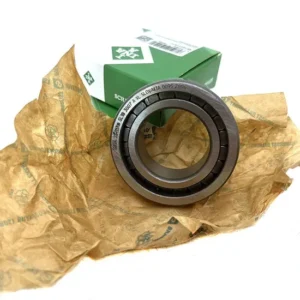
X&S INA Nup1007em Cylindrical Roller Bearing for Auto Motor Spare Part
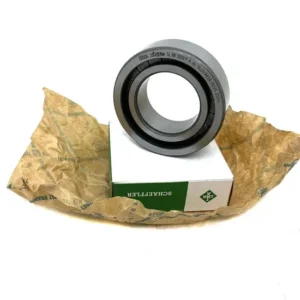
INA B7018C.T.P4S B7018E.T.P4S Angular Contact Ball Bearing for Turbojet

X&S NN3060/Y1 Double Row Cylindrical Roller Bearing for Heavy Load
X&S B7012E.T.P4S Angular Contact Ball Bearing for Metallurgical Rolling Mills
X&S NN3072K NN3008 Cylindrical Roller Bearing with Pin Cam Follower
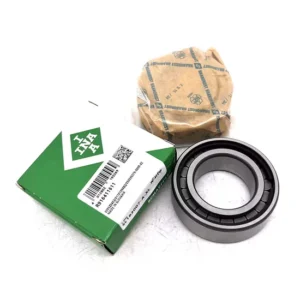
Genuine INA SL183007-A-XL NJ2208 NU2208 Cylindrical Roller Bearing for Auto Parts
INA H7012C-2RZ-P4 B706C T P4S Angular Contact Ball Bearing for Forklift Auto