FAG Bearings in SNV Housings: Genuine Wholesale Supplier for Bulk Orders
- Published
- Installation & Maintenance
- By author

FAG Bearings in SNV Housings: Genuine Wholesale Supplier for Bulk Orders
Tighter fits do not guarantee stability; they often cause thermal binding.
Correct installation of FAG bearings in SNV housings requires precise clearance adjustment, specialized sealing for high-humidity environments, and adherence to interference fit tolerances to prevent premature failure.
I still remember the humidity clinging to the air in Sulawesi during the rainy season. The nickel mine’s belt conveyor system was down, not because of a broken motor, but because an SNV housing had failed. We had used a batch of FAG spherical roller bearings sourced from an unclear channel to save costs. The mounting seemed fine at first glance, but the lack of proper traceability meant we missed critical details about the internal clearance class. Within two months, moisture ingress combined with incorrect fit led to a seized shaft. The entire line stopped for days. That experience reshaped how I approach every order of FAG bearings in SNV housings. It is not just about the part number; it is about understanding the interaction between the bearing, the housing, and the environment. [NEED_CITE: common failure modes in split pillow block housings per ISO 15243]
This guide breaks down the technical realities of mounting these components. For distributors and MRO operators dealing with harsh climates, knowing the difference between a standard install and a robust one is the difference between uptime and costly downtime.
Why Do SNV Housings Fail in Harsh Environments?
Poor sealing and incorrect fits are responsible for the majority of early failures in split pillow block applications.
In tropical mining or heavy industrial settings, the environment is the enemy. Standard grease often fails quickly when exposed to high humidity and fine particulate matter. I have seen countless cases where operators assumed that a generic seal would suffice. It does not. The SNV housing design relies on specific labyrinth seals to block contaminants while allowing for thermal expansion. When these seals are installed incorrectly, or when the wrong type of grease is used, moisture finds its way into the raceway.
The direction of moisture ingress is often underestimated. In many installations, the seal lip faces the wrong way relative to the shaft rotation or environmental spray. This simple error allows water to be pumped directly into the bearing cav*an emulsion that loses its protective properties. The result is rapid corrosion and fatigue spalling. [NEED_CITE: impact of water contamination on bearing lubricant life]
Another critical factor is the fit. Many technicians believe that a tighter fit between the bearing outer ring and the housing bore ensures better stability. This is a dangerous misconception. Excessive interference can distort the bearing rings, reducing the internal clearance to zero. When the bearing heats up during operation, there is no room for expansion. This leads to thermal binding, where the rolling elements lock up, generating excessive heat and eventually causing catastrophic failure. Proper mounting of FAG bearings in SNV housings requires respecting the manufacturer’s specified tolerance ranges for both the shaft and the housing bore.
For those sourcing these components, verifying the authenticity of the seals and the bearing itself is crucial. Counterfeit or substandard seals may look identical but lack the precise elastomer formulation needed to resist heat and chemicals. This is why traceability matters. When you receive genuine packages with full documentation, you ensure that every component, from the labyrinth seal to the spherical roller bearing, meets the rigorous standards required for harsh environments.
How to Prepare the SNV Housing and FAG Bearing?
Cleaning and inspection establish the baseline accuracy necessary for a successful installation.
Before any mounting begins, the workspace and components must be pristine. Dirt is the primary cause of premature wear. I always insist on a clean, dry area for assembly, especially when dealing with precision components like FAG spherical roller bearings. The SNV housing halves should be cleaned thoroughly to remove any casting sand, rust, or old grease residues. Pay special attention to the mating surfaces where the two halves join. Any burrs or irregularities here can distort the housing when bolted together, affecting the alignment of the bearing bore.
Inspect the housing bore for dimensional accuracy. Use a micrometer to check the diameter at multiple points. The bore should be within the specified tolerance for the chosen fit. If the housing has been previously used, check for signs of fretting corrosion or wear. A worn bore will not provide adequate support for the bearing outer ring, leading to movement and further damage. [NEED_CITE: recommended inspection procedures for reused bearing housings]
The FAG bearing itself should remain in its original packaging until the moment of installation. Remove it carefully, avoiding any direct contact with the raceways or rolling elements. Inspect the bearing for any visible damage during transit. Check the label to confirm the model number and clearance class. For tropical or high-temperature applications, a C3 or C4 clearance is often required to accommodate thermal expansion. Installing a bearing with standard clearance in a high-heat environment is a recipe for failure.
Preparation also involves checking the shaft. The shaft surface must be smooth and free of scratches. Measure the shaft diameter to ensure it matches the required interference fit for the bearing inner ring. A mismatch here can lead to either a loose fit, causing creep and wear, or an overly tight fit, making installation difficult and risking damage to the bearing. Having the right tools ready, such as induction heaters or hydraulic nuts, is part of this preparation phase. It ensures that the actual mounting process is smooth and controlled.
What Is the Correct Mounting and Clearance Adjustment?
Hydraulic or thermal methods prevent mechanical damage and ensure precise clearance control.
Mounting a spherical roller bearing onto a shaft requires force. Using a hammer and drift is never acceptable, as it can damage the rolling elements and raceways. Instead, use a hydraulic nut or an induction heater. The induction heating method is particularly effective for larger bearings. It expands the inner ring uniformly, allowing it to slide easily onto the shaft. As it cools, it shrinks back, creating a secure interference fit. This method avoids the axial forces that can misalign the bearing during press-fitting. [NEED_CITE: best practices for thermal mounting of large bearings]
Once the bearing is on the shaft, it is placed into the SNV housing. The housing halves are then bolted together. It is vital to tighten the bolts evenly and to the specified torque. Uneven tightening can distort the housing, pinching the bearing outer ring and altering the internal clearance. This is where the concept of residual clearance becomes critical. After mounting, the internal clearance of the bearing is reduced due to the interference fit on the shaft and potentially the housing.
Calculating the residual clearance is essential. You start with the initial clearance of the bearing (e.g., C3) and subtract the reduction caused by the fits. If the residual clearance is too small, the bearing will overheat. If it is too large, the load distribution among the rolling elements becomes uneven, leading to premature fatigue. For FAG bearings in SNV housings, the goal is to maintain enough clearance to allow for thermal expansion and slight misalignment, which is the primary advantage of spherical roller bearings.
In emergency MRO scenarios, time is pressure. However, skipping the clearance check is not an option. I have seen teams rush a replacement, only to have the bearing fail weeks later because the residual clearance was negligible. Taking the time to measure and adjust ensures that the replacement lasts. This is why having access to technical support and genuine parts with known specifications is invaluable. It removes the guesswork from the equation.
How to Seal and Lubricate for Maximum Lifespan?
Proper grease filling and labyrinth sealing block contaminants effectively.
Sealing is the last line of defense. The SNV housing uses labyrinth seals, which rely on a series of narrow gaps to create resistance against contaminants. These seals must be installed with the correct orientation. The lip should face inward to keep grease in and contaminants out, but in some high-spray environments, additional deflection shields might be necessary. Ensure the seals are seated properly in their grooves. A twisted or pinched seal is useless.
Lubrication is equally important. Use a high-quality lithium complex or polyurea grease that is compatible with the operating temperature and environment. In high-humidity areas, choose a grease with excellent water resistance. Do not mix different types of grease, as this can cause chemical reactions that degrade the lubricant. Fill the housing with the recommended amount of grease. Overfilling can cause churning and overheating, while underfilling leaves metal surfaces unprotected. [NEED_CITE: guidelines for grease selection in humid industrial environments]
For tropical climates, consider using specialized sealing solutions or even upgrading to higher-grade seals if the standard ones are insufficient. The key is to create a barrier that withstands the specific challenges of the site. Regular maintenance checks should include inspecting the seals for wear and replenishing grease as needed. Purging old grease helps remove any contaminants that may have entered.
When sourcing FAG bearings in SNV housings, ask for packages that include genuine seals and appropriate lubricants. Some suppliers offer pre-lubricated units or kits with traceability documents. This ensures that every component is compatible and designed to work together. It simplifies the maintenance process and reduces the risk of using incompatible materials. For bulk orders, having a consistent supply of these genuine components means your team can perform maintenance with confidence, knowing that the parts meet the original equipment manufacturer’s standards.
Conclusion
Precision in mounting and sealing defines the lifespan of your equipment.
Installing FAG bearings in SNV housings correctly prevents the majority of premature failures in harsh environments. Focus on proper clearance adjustment, use thermal or hydraulic mounting methods, and ensure robust sealing against moisture. By prioritizing genuine components with full traceability, you protect your operations from the hidden costs of downtime and repeated repairs.
Send Your FAG Bearing List for a Written Quote
FAG Bearing Supplier quotes spherical, cylindrical, tapered and thrust roller bearings together with housings and sleeves, for urgent replacements or planned shutdown orders. Any technical change is proposed separately and needs your approval.
- 1
Send your list by form, WhatsApp or email, position by position.
- 2
We confirm identification: exact version, complete assembly, and any clearly marked alternative.
- 3
Receive a written quote with designation, quantity, price and currency, stock status, estimated lead time and validity.
- Email: info@fagome.com
- Address:

Related FAG Bearing Maintenance Articles
More notes on version identification, mounting accessories and shutdown planning for heavy equipment.
 01
Oct 3, 2026 · Installation & Maintenance · 7 min read
FAG Bearing Maintenance Checklist: Wholesale Supplier for Bulk MRO Orders
Master the FAG bearing m…
Read the full article 02
Oct 3, 2026 · Installation & Maintenance · 7 min read
FAG Housing Seals: Genuine Wholesale Supplier for Bulk Orders
Optimize Seal Choices fo…
Read the full article 03 Oct 3, 2026 · Installation & Maintenance · 8 min read
FAG Bearing Shaft & Housing Fits: Wholesale Supplier
Mastering FAG bearing sh…
Read the full articleFAG Roller Bearings and Accessories for Heavy Equipment
Selected FAG bearings for mills, crushers, conveyors and industrial drives. Housings and sleeves can be quoted with the bearing.
Scroll sideways to browse →
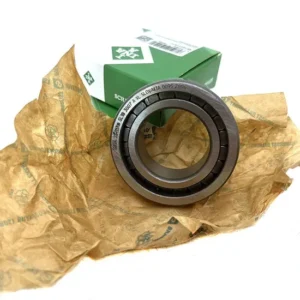
X&S INA Nup1007em Cylindrical Roller Bearing for Auto Motor Spare Part
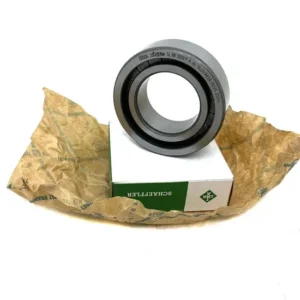
INA B7018C.T.P4S B7018E.T.P4S Angular Contact Ball Bearing for Turbojet
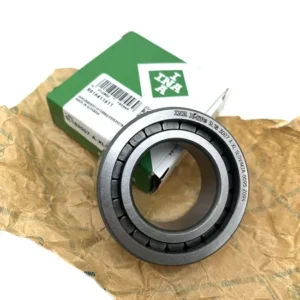
X&S NN3060/Y1 Double Row Cylindrical Roller Bearing for Heavy Load
X&S B7012E.T.P4S Angular Contact Ball Bearing for Metallurgical Rolling Mills
X&S NN3072K NN3008 Cylindrical Roller Bearing with Pin Cam Follower
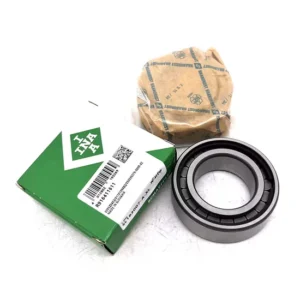
Genuine INA SL183007-A-XL NJ2208 NU2208 Cylindrical Roller Bearing for Auto Parts
INA H7012C-2RZ-P4 B706C T P4S Angular Contact Ball Bearing for Forklift Auto