FAG Bearings for Wind Turbine Main Shafts Wholesale Supplier
- Published
- Applications & Industries
- By author

FAG Bearings for Wind Turbine Main Shafts Wholesale Supplier
Standard clearance is not universally safe in cold climates.
Selecting the correct internal clearance, specifically C3 or C4, for FAG main shaft bearings is critical to preventing early pitting in low-temperature and heavy-load wind turbine applications. This selection must be based on specific site conditions rather than standard catalog specifications.
I still remember the chill of a Hamburg port morning when a batch of bearings returned from an offshore wind farm installation failed within months. The rollers showed early pitting, a classic sign of edge stress caused by insufficient internal clearance under heavy cyclic loads in low temperatures. We had supplied standard clearance units, assuming they would suffice for general industrial use. That assumption was wrong. The local minimum temperatures required a larger internal clearance to accommodate thermal contraction and maintain proper load distribution. [NEED_CITE: impact of temperature on bearing internal clearance] Since then, I have made it a practice to scrutinize operational parameters before confirming any order for wind power applications.
This experience highlights why technical selection support is as vital as the physical product itself. For distributors and MRO operators, understanding these nuances separates a reliable supply partner from a mere box mover.
Why Do Standard FAG Main Shaft Bearings Fail Prematurely?
Early pitting is often a clearance mismatch, not a material defect.
In many wind farm failure analysis reports, premature bearing failure is mistakenly attributed to material fatigue or manufacturing defects. However, a significant portion of these failures stems from using standard internal clearance bearings in environments that demand expanded clearance. [NEED_CITE: common causes of wind turbine main bearing failure]
When a wind turbine operates in cold climates, the outer ring of the main shaft bearing contracts more than the inner ring due to temperature differentials. If the initial internal clearance is too tight, this contraction eliminates the necessary play, leading to high edge stresses on the rollers. These stresses cause micro-pitting, which rapidly progresses to spalling and catastrophic failure.
Consider a case involving a high-altitude onshore wind farm. The operator reported lubrication issues and frequent overheating alarms. Upon inspection, we found that the standard clearance bearings had effectively seized under heavy cyclic loads because the grease could not circulate properly in the reduced internal space. Switching to bearings with C3 clearance resolved the issue by restoring adequate space for lubricant flow and accommodating thermal expansion during operation.
For wholesalers supplying FAG Bearings for Wind Turbine Main Shafts Wholesale Supplier markets, recognizing this pattern is essential. It allows you to advise clients against simply replacing failed units with identical standard parts, which would only repeat the failure cycle. Instead, recommending a clearance upgrade based on site-specific temperature data can significantly extend maintenance intervals.
How to Calculate the Right Internal Clearance (C3/C4) for Your Site?
Match clearance to local minimum temperatures and load spectra.
Determining the appropriate internal clearance involves more than just checking a catalog. It requires calculating the effective clearance under operating conditions, considering both thermal effects and mechanical loads. [NEED_CITE: method for calculating operating internal clearance]
The process begins with identifying the lowest ambient temperature at the site. In regions where temperatures drop below freezing, standard clearance (CN) is often insufficient. C3 clearance provides a larger initial gap, ensuring that even after thermal contraction, sufficient play remains for proper roller movement. For extreme cold or heavy misalignment scenarios, C4 clearance may be necessary.
| Condition | Recommended Clearance | Reason |
|---|---|---|
| Moderate Temperature, Normal Load | CN (Standard) | Cost-effective for mild conditions |
| Low Temperature, Heavy Load | C3 | Prevents edge stress from thermal contraction |
| Extreme Cold, High Misalignment | C4 | Accommodates significant thermal and mechanical shifts |
A European wind farm operator once faced repeated failures in their gearbox integration due to misalignment causing edge stress. By switching to C4 clearance FAG spherical roller bearings, they accommodated the misalignment without compromising the bearing’s structural integrity. This adjustment extended the service life meaningfully, reducing unplanned downtime.
When sourcing FAG Bearings for Wind Turbine Main Shafts Wholesale Supplier products, ensure that your supplier can provide technical data supporting these clearance choices. Access to detailed specification sheets and application handbooks is crucial for making informed decisions.
What Are the Key Installation & Maintenance Pitfalls?
Improper fitting and lubrication negate premium bearing life.
Even the correctly selected bearing will fail if installed improperly. Two common pitfalls in wind turbine maintenance are incorrect fitting methods and inadequate lubrication practices.
During installation, using excessive force or improper heating techniques can damage the bearing races or alter the internal clearance. It is essential to use induction heaters or oil baths to expand the inner ring uniformly before mounting. Avoid direct flame heating, which can cause localized overheating and material degradation. [NEED_CITE: best practices for bearing installation]
Lubrication is equally critical. In heavy-load scenarios, the grease must withstand high pressures and low temperatures. Using a grease with the wrong viscosity or base oil can lead to starvation or stiffening, increasing friction and heat generation. Regular monitoring of grease condition and replenishment schedules helps prevent these issues.
A Middle East steel mill experienced premature bearing failure in their heavy equipment due to contaminated lubrication. By implementing a strict filtration protocol and switching to a high-performance grease, they noticed a substantial extension in bearing life. This case underscores the importance of holistic maintenance strategies beyond just component replacement.
For MRO operators, partnering with a supplier who offers technical consultation on lubrication and installation can mitigate these risks. Ensuring that maintenance teams are equipped with the right knowledge and tools is key to maximizing the return on investment for premium bearings.
How to Verify Authenticity and Traceability for Wind Projects?
Demand full traceability docs to avoid counterfeit risks.
The market for industrial bearings is plagued by counterfeit products that mimic reputable brands like FAG. These fake bearings often lack the precise metallurgy and manufacturing tolerances required for demanding applications like wind turbines. Using them can lead to catastrophic failures and safety hazards.
To verify authenticity, always request full traceability documentation from your supplier. This includes material certificates, heat treatment records, and quality control reports linked to specific batch numbers. Genuine manufacturers maintain rigorous quality assurance processes that are documented and verifiable. [NEED_CITE: importance of traceability in bearing supply chain]
A buyer in Southeast Asia once received a shipment of bearings that appeared genuine but failed prematurely. Upon investigation, it was discovered that the bearings were counterfeits with inferior steel quality. By switching to a supplier who provided complete traceability documents, they ensured that all subsequent orders met the required standards.
When evaluating a FAG Bearings for Wind Turbine Main Shafts Wholesale Supplier, prioritize those who offer transparent documentation and support cross-brand technical selection. This level of diligence protects your reputation and ensures the reliability of the wind farms you serve.
Conclusion
Technical precision prevents premature failure.
Selecting the right FAG main shaft bearings requires matching internal clearance to specific site conditions, particularly in low-temperature and heavy-load environments. By understanding the root causes of failure, such as clearance mismatch and improper maintenance, operators can extend bearing life and reduce downtime. Ensuring authenticity through full traceability further safeguards against counterfeit risks. For wholesalers and MRO providers, offering technical expertise alongside genuine products creates lasting value for clients in the wind energy sector.
Send Your FAG Bearing List for a Written Quote
FAG Bearing Supplier quotes spherical, cylindrical, tapered and thrust roller bearings together with housings and sleeves, for urgent replacements or planned shutdown orders. Any technical change is proposed separately and needs your approval.
- 1
Send your list by form, WhatsApp or email, position by position.
- 2
We confirm identification: exact version, complete assembly, and any clearly marked alternative.
- 3
Receive a written quote with designation, quantity, price and currency, stock status, estimated lead time and validity.
- Email: info@fagome.com
- Address:

Related FAG Bearing Maintenance Articles
More notes on version identification, mounting accessories and shutdown planning for heavy equipment.
 01
Oct 3, 2026 · Applications & Industries · 8 min read
Genuine FAG Bearings for Compressors Wholesale Supplier
Prevent costly compresso…
Read the full article 02
Oct 3, 2026 · Applications & Industries · 8 min read
FAG Bearings for Hydro Turbines: Wholesale Supplier
Optimize FAG Bearings in…
Read the full article 03 Oct 3, 2026 · Applications & Industries · 7 min read
FAG Bearings for Recycling Crushers: Genuine Wholesale Supplier
Prevent costly downtime …
Read the full articleFAG Roller Bearings and Accessories for Heavy Equipment
Selected FAG bearings for mills, crushers, conveyors and industrial drives. Housings and sleeves can be quoted with the bearing.
Scroll sideways to browse →
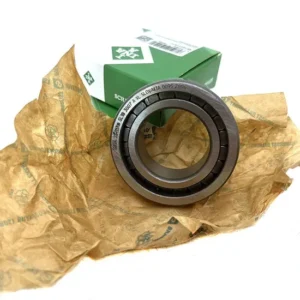
X&S INA Nup1007em Cylindrical Roller Bearing for Auto Motor Spare Part
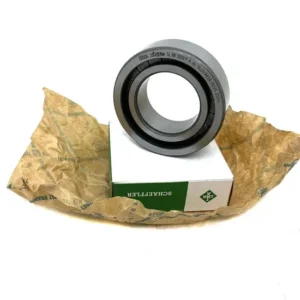
INA B7018C.T.P4S B7018E.T.P4S Angular Contact Ball Bearing for Turbojet

X&S NN3060/Y1 Double Row Cylindrical Roller Bearing for Heavy Load
X&S B7012E.T.P4S Angular Contact Ball Bearing for Metallurgical Rolling Mills
X&S NN3072K NN3008 Cylindrical Roller Bearing with Pin Cam Follower
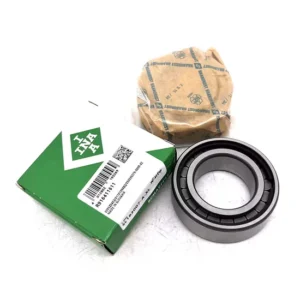
Genuine INA SL183007-A-XL NJ2208 NU2208 Cylindrical Roller Bearing for Auto Parts
INA H7012C-2RZ-P4 B706C T P4S Angular Contact Ball Bearing for Forklift Auto