FAG Bearings for Printing Cylinders Wholesale Supplier
- Published
- Applications & Industries
- By author

FAG Bearings for Printing Cylinders Wholesale Supplier
Saving a few dollars on bearings often costs the entire production run.
The core answer to selecting FAG bearings for printing cylinders is strict adherence to original clearance pairing and verified preload precision. Only genuine components with full traceability can prevent high-speed cage failure and ensure registration accuracy in modern presses.
I still remember the humidity in Jakarta when I stood next to a silent packaging line. The air smelled of burnt lubricant and regret. A local plant manager had swapped out the original equipment manufacturer’s specified units for cheaper alternatives, convinced that a bearing was just a bearing. He did not account for the microscopic differences in internal geometry that define performance at high rotational speeds. When the press restarted, the vibration was immediate. Within hours, the cylinder registration drifted beyond recovery. The cages disintegrated under centrifugal force, scattering metal debris through the ink units. The cost of those “savings” was measured in weeks of downtime and a total loss of the printed stock. That incident reshaped how I approach every inquiry for FAG bearings for printing cylinders. It is not about the price tag on the component; it is about the integrity of the rotating assembly under extreme dynamic loads.
Understanding why these specific components fail requires looking beyond the basic load ratings. The printing environment is unforgiving. Cylinders rotate at constant high speeds while subjected to varying radial loads from paper tension and impression pressure. Any deviation in roundness or internal clearance translates directly into print defects. This is why the selection process must prioritize dimensional stability and material purity over initial cost.
Why Do Printing Cylinders Demand Premium Bearings?
The operational conditions of printing cylinders dictate a non-negotiable requirement for precise clearance and preload control.
In high-speed offset and flexographic presses, the cylinder acts as the heart of the machine. It must maintain perfect concentricity to ensure that color layers align within microns. If the bearing supporting this cylinder has even a slight inconsistency in its internal geometry, the resulting runout will cause slurring or doubling in the printed image. This is not a minor quality issue; it is a fundamental failure of the mechanical system.
The demand for premium FAG bearings for printing cylinders stems from the need to manage thermal expansion and dynamic loading simultaneously. As the press runs, friction generates heat. Standard bearings may expand unevenly, altering their internal clearance and leading to premature seizure or excessive play. High-precision bearings are manufactured with tight tolerances that account for these thermal dynamics. They maintain their geometric integrity across a wide range of operating temperatures. [NEED_CITE: thermal expansion effects on bearing clearance in high-speed applications]
Furthermore, the preload applied during installation is critical. Preload eliminates internal play and increases the stiffness of the bearing arrangement. However, too much preload generates excessive heat, while too little allows for vibration and impact damage. Achieving the correct preload requires bearings with consistent and predictable internal dimensions. Generic alternatives often lack the batch-to-batch consistency required for such precise adjustments. When a maintenance team attempts to set preload on inconsistent units, they are essentially guessing. This guesswork leads to variable performance and unpredictable failure modes.
The consequence of ignoring these demands is not just mechanical failure. It is the degradation of print quality. In an industry where clients pay for precision, any deviation is unacceptable. Therefore, the bearing is not merely a spare part; it is a critical quality control component. Selecting the right unit means verifying that it meets the stringent requirements of the application, not just the basic size specifications.
FAG Cylindrical vs. Spherical Roller Bearings: Which Fits?
Choosing between cylindrical and spherical roller bearings depends on the specific alignment tolerance and load distribution of the cylinder arrangement.
Not all positions in a printing press require the same type of support. Understanding the distinct roles of cylindrical and spherical roller bearings is essential for optimal performance. Cylindrical roller bearings are designed primarily for high radial load capacity and high-speed operation. They feature line contact between the rollers and raceways, which distributes load effectively along the length of the roller. This design minimizes friction and allows for higher rotational speeds, making them ideal for main cylinder supports where speed and precision are paramount.
However, cylindrical bearings are sensitive to misalignment. Even slight angular deviations between the shaft and housing can cause edge loading, leading to rapid wear and failure. This is where spherical roller bearings come into play. These bearings can accommodate angular misalignment due to their curved outer raceway. They are typically used in positions where structural deflection or installation inaccuracies might occur. While they offer excellent self-aligning capabilities, they generally have lower speed limits compared to cylindrical types due to higher frictional losses.
| Feature | Cylindrical Roller Bearings | Spherical Roller Bearings |
|---|---|---|
| Primary Load Capacity | High Radial | High Radial and Moderate Axial |
| Speed Capability | Very High | Moderate to High |
| Misalignment Tolerance | Low | High |
| Friction Level | Low | Moderate |
| Ideal Application | Main Cylinder Supports | Support Positions with Deflection |
When sourcing FAG bearings for printing cylinders, it is crucial to match the bearing type to the specific function of the cylinder. Using a spherical bearing in a high-speed main position may introduce unnecessary heat and vibration. Conversely, using a cylindrical bearing in a position prone to misalignment risks catastrophic edge loading. The decision should be based on the mechanical design of the press and the expected operating conditions. [NEED_CITE: comparative performance data of cylindrical vs spherical roller bearings in rotating machinery]
A common mistake is assuming that a higher load rating always means better performance. In reality, the wrong type of bearing can degrade performance regardless of its load capacity. The key is to select the bearing that best matches the kinematic requirements of the application. This ensures that the bearing operates within its designed parameters, maximizing service life and maintaining print quality.
What Happens When Substitutes Fail at High Speeds?
Substitute bearings often fail catastrophically at high speeds due to inferior cage design and material inconsistencies.
The incident in Jakarta was not an isolated case. Across multiple regions, I have seen similar failures where alternative bearings could not withstand the demands of modern printing presses. The primary point of failure is often the cage. At high rotational speeds, the cage is subjected to significant centrifugal forces. If the cage material lacks sufficient strength or if the design does not adequately guide the rollers, it can deform or fracture. Once the cage fails, the rollers lose their spacing, leading to immediate seizure and destruction of the bearing.
Another critical factor is material purity. High-quality bearings use steel with very low levels of impurities. These impurities can act as stress concentrators, initiating fatigue cracks under cyclic loading. Substitute bearings often use lower-grade steel with higher inclusion densities. While these may perform adequately in low-speed applications, they are vulnerable to premature fatigue failure in high-speed, high-load environments like printing presses. [NEED_CITE: impact of steel purity on bearing fatigue life]
The failure mode is rarely gradual. It is often sudden and destructive. When a bearing fails in a printing cylinder, it can damage the cylinder surface, the gear train, and even the ink units. The resulting downtime is extensive, as the entire press must be stripped down for inspection and repair. The cost of replacing the damaged components far exceeds the savings achieved by using cheaper bearings.
Moreover, substitute bearings often lack the precise surface finish required for high-speed operation. Rougher surfaces generate more friction and heat, accelerating wear and increasing the risk of thermal seizure. This is particularly problematic in enclosed lubrication systems where heat dissipation is limited. The accumulation of heat can degrade the lubricant, further exacerbating the failure process.
Sourcing FAG bearings for printing cylinders from verified channels ensures that these critical design and material standards are met. It eliminates the risk of hidden defects that can lead to costly failures. The reliability of the supply chain is as important as the quality of the product itself.
How to Verify Genuine FAG Bearings for Core Positions?
Verification of genuine components requires rigorous documentation checks and physical inspection of marking and packaging.
In a market flooded with counterfeits and refurbished parts, verifying the authenticity of bearings is a critical skill. Counterfeit bearings may look identical to genuine products but lack the internal precision and material quality required for demanding applications. They pose a significant risk to equipment reliability and operator safety.
The first step in verification is checking the documentation. Genuine bearings come with complete traceability records, including batch numbers and manufacturing dates. These records allow users to verify the origin of the product and ensure it meets the specified standards. Without this documentation, the authenticity of the bearing cannot be confirmed. [NEED_CITE: importance of traceability documentation in preventing counterfeit industrial components]
Physical inspection is also essential. Genuine bearings have precise and clear markings on the rings and packaging. The font, spacing, and depth of the markings are consistent and difficult to replicate accurately. Counterfeit products often have blurred or uneven markings. Additionally, the packaging of genuine bearings is robust and designed to protect the product during transit. Damaged or poor-quality packaging can be a sign of tampering or improper handling.
Another indicator is the surface finish. Genuine bearings have a smooth, uniform surface finish with no visible defects. Counterfeit products may have rough surfaces, scratches, or discoloration. These defects can affect the performance and life of the bearing. It is also important to check the internal clearance. Genuine bearings meet strict tolerance standards for internal clearance. Deviations from these standards can indicate a non-genuine product.
When procuring FAG bearings for printing cylinders, it is advisable to work with suppliers who provide full technical support and verification services. They can assist in interpreting documentation and performing physical inspections. This adds an extra layer of security to the procurement process and reduces the risk of acquiring counterfeit products.
Conclusion
Precision in printing is impossible without precision in the supporting components.
The choice of bearing for printing cylinders is a strategic decision that impacts print quality, operational efficiency, and total cost of ownership. By prioritizing genuine FAG bearings for printing cylinders with verified traceability and correct specification matching, operators can avoid the catastrophic costs of failure. The focus must remain on technical compliance and supply chain integrity rather than initial purchase price. This approach ensures sustained performance and reliability in high-demand printing environments.
Send Your FAG Bearing List for a Written Quote
FAG Bearing Supplier quotes spherical, cylindrical, tapered and thrust roller bearings together with housings and sleeves, for urgent replacements or planned shutdown orders. Any technical change is proposed separately and needs your approval.
- 1
Send your list by form, WhatsApp or email, position by position.
- 2
We confirm identification: exact version, complete assembly, and any clearly marked alternative.
- 3
Receive a written quote with designation, quantity, price and currency, stock status, estimated lead time and validity.
- Email: info@fagome.com
- Address:

Related FAG Bearing Maintenance Articles
More notes on version identification, mounting accessories and shutdown planning for heavy equipment.
 01
Oct 3, 2026 · Applications & Industries · 8 min read
Genuine FAG Bearings for Compressors Wholesale Supplier
Prevent costly compresso…
Read the full article 02
Oct 3, 2026 · Applications & Industries · 8 min read
FAG Bearings for Hydro Turbines: Wholesale Supplier
Optimize FAG Bearings in…
Read the full article 03 Oct 3, 2026 · Applications & Industries · 7 min read
FAG Bearings for Recycling Crushers: Genuine Wholesale Supplier
Prevent costly downtime …
Read the full articleFAG Roller Bearings and Accessories for Heavy Equipment
Selected FAG bearings for mills, crushers, conveyors and industrial drives. Housings and sleeves can be quoted with the bearing.
Scroll sideways to browse →
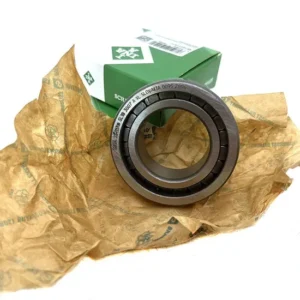
X&S INA Nup1007em Cylindrical Roller Bearing for Auto Motor Spare Part
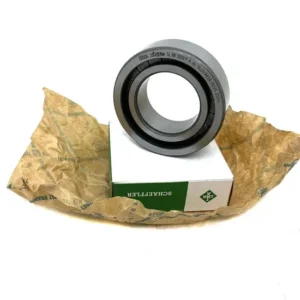
INA B7018C.T.P4S B7018E.T.P4S Angular Contact Ball Bearing for Turbojet
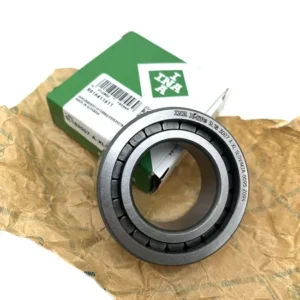
X&S NN3060/Y1 Double Row Cylindrical Roller Bearing for Heavy Load
X&S B7012E.T.P4S Angular Contact Ball Bearing for Metallurgical Rolling Mills
X&S NN3072K NN3008 Cylindrical Roller Bearing with Pin Cam Follower
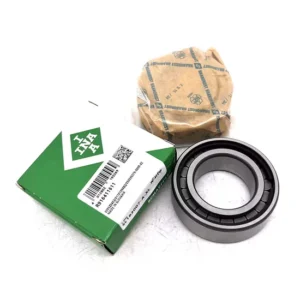
Genuine INA SL183007-A-XL NJ2208 NU2208 Cylindrical Roller Bearing for Auto Parts
INA H7012C-2RZ-P4 B706C T P4S Angular Contact Ball Bearing for Forklift Auto