FAG Bearings for Cement Kiln Overhaul: Genuine Wholesale Supplier
- Published
- News & Cases
- By author

FAG Bearings for Cement Kiln Overhaul: Genuine Wholesale Supplier
Counterfeit cages do not just fail; they disintegrate under thermal stress.
Sourcing genuine FAG bearings for cement kiln overhaul requires strict supply chain traceability, specifically verified origin certificates and customs declarations, rather than relying on visual inspection or discounted pricing from unauthorized channels.
The smell of burnt lubricant mixed with pulverized clinker is distinct. I remember standing at the head of a rotary kiln in Indonesia, the ambient temperature pushing past fifty degrees Celsius, scraping blackened metal fragments from the trunnion roller assembly. The plant manager had purchased a batch of “special price” units months earlier, confident he had secured a deal on premium German engineering. Within ninety days, the cage had shattered. The resulting downtime cost the facility a mid-six-figure loss, far exceeding the initial procurement savings. This was not a manufacturing defect; it was a failure of verification. In heavy industry, particularly in high-temperature environments like cement production, the bearing is not merely a component; it is the linchpin of continuous operation. [NEED_CITE: impact of unplanned downtime in heavy industry]
Understanding why these failures occur requires looking beyond the part number. It demands a rigorous approach to sourcing FAG bearings for cement kiln overhaul that prioritizes documentation over discount.
What Happens When a Cement Kiln Trunnion Roller Fails?
A single bearing collapse halts the entire production line.
The trunnion rollers support the massive weight of the rotating kiln shell. When a bearing fails here, it is not a localized issue; it is a systemic catastrophe. The kiln must be cooled down slowly to prevent thermal shock to the refractory lining, a process that takes d*ll, removing the failed unit, and installing the replacement. During this period, the plant produces zero output.
In my early days handling after-sales installations, I witnessed how quickly a minor vibration escalated into a total shutdown. The initial sign is often a subtle change in sound—a grinding noise that operators might dismiss as normal wear. By the time the temperature spikes are visible on the monitoring systems, the damage is already done. The rollers seize, the shell shifts, and the structural integrity of the support station is compromised. [NEED_CITE: mechanical failure progression in rotary kilns]
The financial implication is severe. For a medium-sized cement plant, the cost of halted production accumulates by the hour. When you factor in the emergency logistics for spare parts, the overtime labor for repair crews, and the potential damage to the kiln shell itself, the expense dwarfs the price difference between a genuine unit and a counterfeit one. This is why MRO managers must treat the sourcing of FAG bearings for cement kiln overhaul as a critical risk management activity, not just a purchasing task.
Why Did the “Special Price” FAG Bearings Disintegrate?
Counterfeit cages cannot withstand extreme kiln temperatures and heavy loads.
The failure in Indonesia was not random. Upon examining the remnants, it became clear that the cage material was inferior. Genuine FAG spherical roller bearings designed for such applications use specific brass or steel cages engineered to maintain integrity under high thermal expansion. Counterfeit manufacturers often substitute these with cheaper, softer alloys that lack the necessary heat resistance.
Under the intense heat radiating from the kiln head, the fake cage expanded unevenly. The clearance, which should have been selected according to C3 or C4 standards to accommodate thermal growth, was either incorrect or non-existent in the fake unit. [NEED_CITE: bearing clearance selection for high temperature applications] The rolling elements bound, generating excessive friction. This friction created more heat, leading to a thermal runaway scenario. The lubricant broke down, losing its viscosity and protective film. Without that film, metal contacted metal, leading to rapid wear and eventual catastrophic disintegration.
It is a common misconception that a bearing looks authentic if the logo is crisp and the packaging is professional. Modern counterfeiting has become sophisticated. The outer ring might be genuine, salvaged from a scrap yard, while the internal components are substandard. Or the entire unit is a low-quality replica. Visual inspection alone is insufficient. The only way to ensure survival in such harsh conditions is to verify the metallurgical quality through documented supply chains. When sourcing FAG bearings for cement kiln overhaul, one must demand proof that the internal components meet the original manufacturer’s specifications for load rating and thermal stability.
How to Calculate the True Cost of Fake Bearings?
Downtime losses exponentially outweigh initial procurement savings.
Most procurement decisions are made based on the upfront price. A buyer sees a quote for a bearing that is thirty percent cheaper than the market average and assumes they have optimized the budget. This is a dangerous illusion. The true cost of a bearing includes its purchase price, its installation cost, and its operational risk.
Consider the case of a European cement producer who switched to a non-verified supplier to cut costs. The initial savings were noticeable. However, after six months, two bearings failed simultaneously. The plant had to shut down for five days. The lost production revenue, combined with the emergency air freight for replacement parts and the penalty clauses for delayed deliveries to customers, resulted in a financial hit that was several times the total annual savings from the cheaper bearings. [NEED_CITE: total cost of ownership models in industrial maintenance]
This calculation is often overlooked in tender processes. Buyers focus on the unit price, ignoring the lifecycle cost. A genuine bearing, properly installed and maintained, can last for years. A counterfeit one may fail in months. The frequency of replacement increases labor costs and inventory complexity. Moreover, the risk of secondary damage to the housing or shaft adds another layer of expense.
When evaluating suppliers for FAG bearings for cement kiln overhaul, the conversation must shift from price per unit to cost per operating hour. A supplier who offers deep discounts without providing full traceability is effectively transferring the risk of failure to the buyer. The cheap bearing is not a saving; it is a liability waiting to manifest.
How to Verify Genuine FAG Bearings Before Overhaul?
Strict document checks (origin certificates, customs declarations) are mandatory.
Trust is not a verification method. In the global bearing market, where products cross multiple borders and handlers, the chain of custody is easily broken. To ensure authenticity, one must demand a paper trail that leads back to the manufacturer.
The first step is requesting the Certificate of Origin. This document specifies where the bearing was produced. For FAG, this should align with their known manufacturing locations. Next, ask for the customs declaration from the importer. This shows the declared value and the description of goods as they entered the country. Discrepancies here are red flags. A genuine supplier will have these documents readily available for every batch. [NEED_CITE: supply chain traceability standards for industrial components]
I now insist on seeing these documents before any payment is processed. It is not about distrust; it is about due diligence. A reputable supplier understands this requirement and builds their processes around it. They consolidate orders from authorized channels, ensuring that every box of FAG bearings for cement kiln overhaul comes with the necessary paperwork. This level of transparency is rare among traders who deal in gray market goods.
Additionally, check the packaging for security features. Many premium brands now include holographic labels or QR codes that can be scanned to verify the product. However, even these can be faked. The documents are harder to forge consistently across a large order. If a supplier hesitates to provide origin certificates or claims they are “commercially sensitive,” walk away. There is nothing sensitive about proving that the product you are selling is real.
For MRO managers overseeing major overhauls, the stakes are too high to gamble on uncertainty. Sourcing FAG bearings for cement kiln overhaul through a channel that provides complete traceability ensures that when the kiln turns, it turns on reliable foundations. The peace of mind that comes from knowing every component is genuine is worth the effort of verification. It transforms the overhaul from a risky gamble into a controlled, predictable maintenance event.
Conclusion
Authenticity is verified by documentation, not appearance.
The cost of counterfeit bearings is measured in lost production and operational chaos, not just unit price. Securing genuine FAG bearings for cement kiln overhaul demands rigorous supply chain checks and a refusal to compromise on traceability. Prioritize verified sources to ensure long-term reliability and avoid catastrophic downtime.
Send Your FAG Bearing List for a Written Quote
FAG Bearing Supplier quotes spherical, cylindrical, tapered and thrust roller bearings together with housings and sleeves, for urgent replacements or planned shutdown orders. Any technical change is proposed separately and needs your approval.
- 1
Send your list by form, WhatsApp or email, position by position.
- 2
We confirm identification: exact version, complete assembly, and any clearly marked alternative.
- 3
Receive a written quote with designation, quantity, price and currency, stock status, estimated lead time and validity.
- Email: info@fagome.com
- Address:

Related FAG Bearing Maintenance Articles
More notes on version identification, mounting accessories and shutdown planning for heavy equipment.
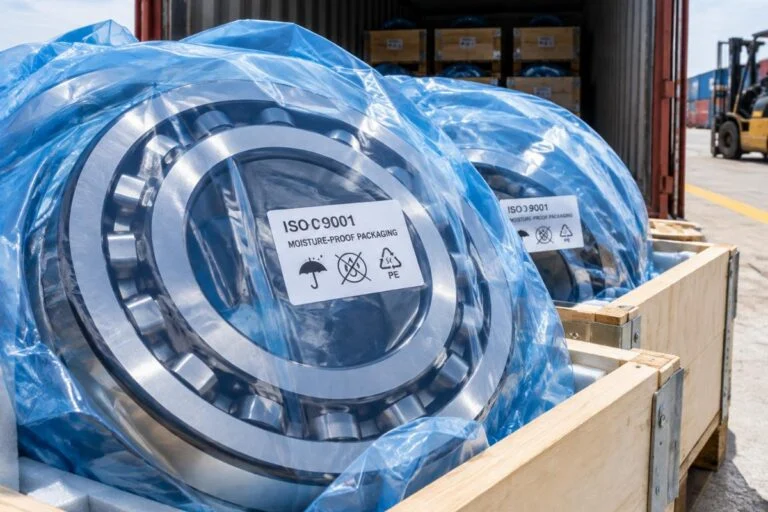 01
Oct 3, 2026 · News & Cases · 7 min read
Heavy Industry Bearing Outlook 2026: Global Wholesale Supplier
Heavy Industry Bearing O…
Read the full article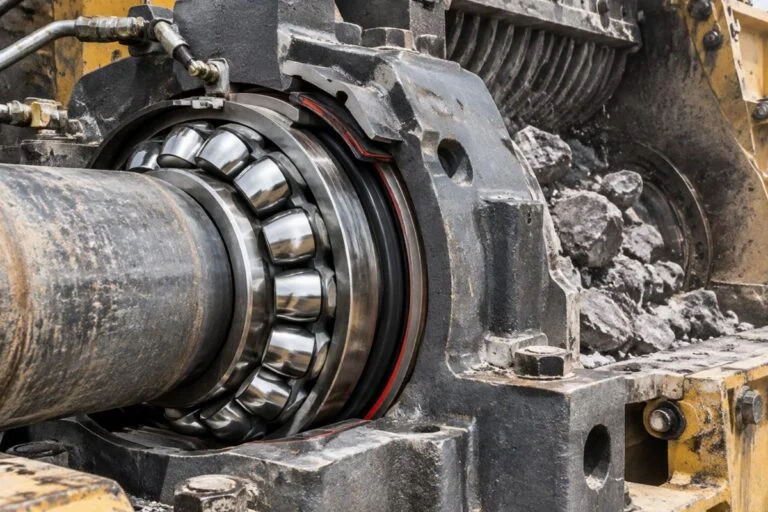 02
Oct 3, 2026 · News & Cases · 7 min read
Mining Equipment Bearing Demand 2026: Wholesale Supplier for Bulk Orders
Align your procurement w…
Read the full article 03
Oct 3, 2026 · News & Cases · 6 min read
FAG Bearings Wholesale Supplier: Genuine Stock & Global Shipping
Schaeffler News 2026 hig…
Read the full articleFAG Roller Bearings and Accessories for Heavy Equipment
Selected FAG bearings for mills, crushers, conveyors and industrial drives. Housings and sleeves can be quoted with the bearing.
Scroll sideways to browse →
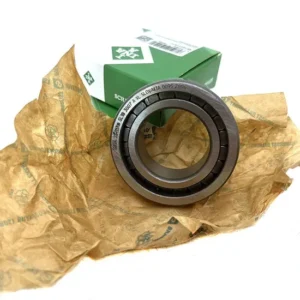
X&S INA Nup1007em Cylindrical Roller Bearing for Auto Motor Spare Part
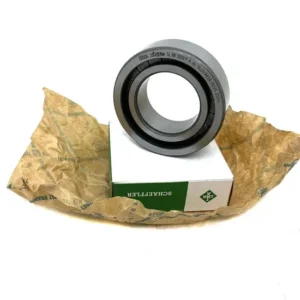
INA B7018C.T.P4S B7018E.T.P4S Angular Contact Ball Bearing for Turbojet
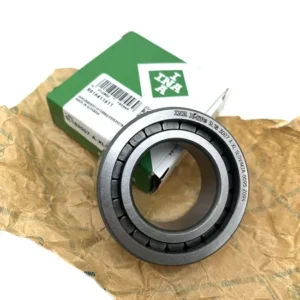
X&S NN3060/Y1 Double Row Cylindrical Roller Bearing for Heavy Load
X&S B7012E.T.P4S Angular Contact Ball Bearing for Metallurgical Rolling Mills
X&S NN3072K NN3008 Cylindrical Roller Bearing with Pin Cam Follower
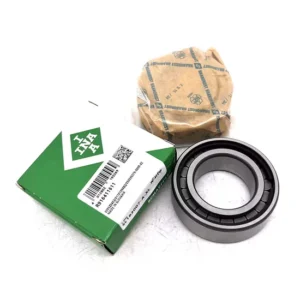
Genuine INA SL183007-A-XL NJ2208 NU2208 Cylindrical Roller Bearing for Auto Parts
INA H7012C-2RZ-P4 B706C T P4S Angular Contact Ball Bearing for Forklift Auto