FAG Bearing Designation Decoder: Wholesale Supplier & Cross-Reference Guide
- Published
- Technical Resources
- By author

FAG Bearing Designation Decoder: Wholesale Supplier & Cross-Reference Guide
Matching the base number is not enough.
To correctly decode an FAG bearing designation, you must systematically interpret the suffix codes for internal clearance (C1-C5), cage design (M, J, TV), and precision class (P0-P2). Ignoring these suffixes leads to catastrophic mismatches in thermal expansion and load distribution, causing premature seizure even when the base part number appears identical.
I learned this lesson the hard way early in my career. I was handling procurement for a heavy machinery client and ordered a batch of cylindrical roller bearings. The base numbers matched perfectly. I ignored the suffix codes for internal clearance and cage design, assuming they were minor variations. The bearings seized within weeks of operation. The replacement cost was significant, but the downtime cost was far worse. That failure shifted my entire approach. Now, as a supplier, I decode every designation before confirming an order. I have seen too many buyers lose money because they treated a simple suffix like an afterthought. Do not just match the base number; understand the internal structure.
Understanding the full designation is critical for industrial buyers, MRO managers, and distributors who need exact replacements. A FAG bearing designation decoder is not just a reference tool; it is a risk management protocol. When you source from a reliable FAG bearing supplier, ensure they verify these details against your application requirements.
Why Do Most Bearing Replacements Fail Despite Matching the Base Number?
The base number only defines geometry, not operational capability.
Many procurement teams assume that if the bore diameter, outer diameter, and width match, the bearing will work. This is a dangerous misconception. The base number identifies the physical dimensions and basic type, such as a deep-groove ball bearing or a spherical roller bearing. It does not specify how the bearing handles heat, vibration, or load direction. [NEED_CITE: ISO bearing designation standards for structural components]
The real failure cause is often an ignored suffix code. For example, two bearings may share the same base number but have different internal clearances. One might be designed for a tight fit in a high-precision spindle, while the other allows for thermal expansion in a hot rolling mill. Installing the wrong one leads to immediate issues. In a tight clearance application, heat buildup causes the inner ring to expand, eliminating the running clearance and leading to seizure. In a loose clearance application, excessive play causes vibration and premature fatigue.
Consider a case involving a mining MRO site. They replaced cage components in high-vibration crushers without checking the cage material suffix. The original bearings used a robust brass cage, but the replacements had a standard steel cage. The steel cages fractured under the shock loads, leading to frequent failures. By decoding the FAG bearing suffix codes explained in technical catalogs, they identified the correct cage design and reduced replacement frequency significantly.
When you consult a FAG bearing cross-reference guide, always look beyond the base number. Verify the suffixes that define internal clearance and cage design. This ensures that the replacement bearing can withstand the specific thermal and mechanical conditions of your application. A professional FAG bearing supplier will always check these details before shipping.
How to Decode the FAG Designation Structure Step-by-Step?
A systematic breakdown ensures exact specification matching.
Decoding an FAG designation requires a methodical approach. Start with the base number, then move through the suffixes in order. Each segment provides critical information about the bearing’s construction and performance characteristics. [NEED_CITE: FAG official technical catalogs for designation structure]
First, identify the base number. This indicates the bearing type and dimensions. Next, look for the internal clearance code. FAG uses C1 through C5 to denote clearance ranges, with C3 being common for general industrial applications. C2 is tighter, suitable for precise applications, while C4 and C5 are looser, allowing for greater thermal expansion. Misinterpreting these codes is a common error. Many assume tighter clearance is always better, but true reliability requires matching the exact thermal expansion profile of the application.
Then, examine the cage design suffix. Common codes include M for machined brass cages, J for stamped steel cages, and TV for glass fiber reinforced polyamide cages. Each material has distinct properties regarding strength, weight, and temperature resistance. For instance, TV cages are lightweight and suitable for high speeds, but may not withstand extreme temperatures as well as brass cages.
Finally, check the precision class. Codes range from P0 (normal) to P2 (high precision). Most industrial applications use P0 or P6, but high-speed spindles require P4 or P2. Using a lower precision class in a high-speed application leads to vibration and noise, while using a higher class where it is not needed increases cost without adding value.
By following this step-by-step methodology, you can avoid costly mistakes. Learn how to read FAG bearing part numbers by practicing with actual part lists. Compare the suffixes against your application requirements. If you are unsure, consult a detailed FAG bearing cross-reference guide or seek advice from an experienced FAG bearing supplier. They can help you interpret complex designations and ensure you select the correct component.
What Happens When You Treat Suffix Codes as an Afterthought?
Real-world failure analysis shows how wrong choices cause seizures.
Treating suffix codes as optional details leads to predictable failures. In heavy-duty applications, the consequences are severe. A heavy machinery OEM once experienced widespread seizures in their cylindrical roller bearings. The root cause was ignored internal clearance suffixes. The bearings were installed in applications with significant thermal growth, but the selected clearance was too tight. As the machinery heated up, the internal clearance vanished, causing metal-to-metal contact and rapid failure. This resulted in weeks of lost operation versus the expected lifespan of the bearings.
Another case involved a regional distributor who mixed batches in a single order. They failed to decode the traceability and suffix differences correctly. Customs authorities rejected the shipment due to inconsistent documentation and mismatched specifications. The delay caused significant logistical headaches and financial loss. This highlights the importance of accurate decoding not just for technical performance, but for compliance and logistics.
| Failure Mode | Cause | Consequence |
|---|---|---|
| Seizure | Incorrect internal clearance (too tight) | Metal-to-metal contact, rapid overheating |
| Cage Fracture | Wrong cage material for load/vibration | Premature wear, debris contamination |
| Excessive Vibration | Mismatched precision class | Noise, reduced lifespan, damage to housing |
| Customs Rejection | Inconsistent suffix decoding in documentation | Shipment delays, financial penalties |
These examples demonstrate that suffix codes are not trivial. They define the bearing’s behavior under stress. When you ignore them, you risk equipment failure, production downtime, and logistical issues. A reliable FAG bearing supplier understands these risks and verifies every detail. They ensure that the bearings you receive match your exact specifications, preventing these costly mistakes.
To avoid these pitfalls, always prioritize accurate decoding. Use a comprehensive FAG bearing cross-reference guide to verify suffix meanings. If you are managing a large project, involve technical experts early in the procurement process. Their insights can prevent failures before they occur. Remember, the goal is not just to buy a bearing, but to buy a solution that works in your specific environment.
How to Verify Authenticity and Cross-Reference FAG Codes Globally?
Proper decoding must be paired with traceability checks.
Decoding the designation is only half the battle. You must also ensure the bearing is genuine and compatible with your system. Counterfeit bearings often have incorrect or missing suffixes, leading to performance issues. Verifying authenticity requires checking traceability documentation and consulting cross-brand equivalents when necessary. [NEED_CITE: Industry application guidelines for bearing authenticity verification]
When sourcing globally, especially from regions with high counterfeit risks, demand complete traceability. Genuine bearings come with documentation that links the part number to its manufacturing batch. This documentation should include the full designation, including all suffix codes. If the documentation is missing or incomplete, treat the bearing with suspicion.
Cross-referencing is another critical step. Sometimes, you may need to replace an FAG bearing with an equivalent from another brand, or vice versa. A FAG bearing cross-reference guide helps you find equivalents based on dimensions and performance characteristics. However, be cautious. Not all equivalents are identical. Differences in material quality, heat treatment, and cage design can affect performance. Always compare the full designation, not just the base number.
For mixed-brand project orders, this becomes even more important. You may need to source bearings from multiple manufacturers to meet deadlines or budget constraints. In such cases, ensure that all bearings meet the same technical specifications. A professional supplier can assist with this by decoding designations and providing cross-references for all brands involved. They ensure that every bearing, regardless of brand, meets the required standards for your application.
Our approach involves decoding designations and providing cross-references first. We ensure genuine original bearings with complete traceability documentation for mixed-brand project orders. This minimizes the risk of mismatched specifications and ensures consistent performance across your equipment. By focusing on accuracy and authenticity, we help our clients avoid the costly mistakes associated with improper bearing selection.
When you work with a trusted FAG bearing supplier, you gain access to this level of expertise. They do not just sell parts; they provide technical support and verification services. This ensures that every bearing you install is correct for your application, reducing the risk of failure and maximizing uptime.
Conclusion
Decode fully, verify thoroughly, and source wisely.
Ignoring suffix codes invites failure. Matching base numbers is insufficient for reliable operation. Systematic decoding of clearance, cage, and precision ensures longevity. Partner with suppliers who prioritize technical accuracy and traceability. This approach prevents costly downtime and ensures optimal performance in demanding industrial environments.
Send Your FAG Bearing List for a Written Quote
FAG Bearing Supplier quotes spherical, cylindrical, tapered and thrust roller bearings together with housings and sleeves, for urgent replacements or planned shutdown orders. Any technical change is proposed separately and needs your approval.
- 1
Send your list by form, WhatsApp or email, position by position.
- 2
We confirm identification: exact version, complete assembly, and any clearly marked alternative.
- 3
Receive a written quote with designation, quantity, price and currency, stock status, estimated lead time and validity.
- Email: info@fagome.com
- Address:

Related FAG Bearing Maintenance Articles
More notes on version identification, mounting accessories and shutdown planning for heavy equipment.
 01
Oct 3, 2026 · Technical Resources · 7 min read
FAG Industrial Bearing Glossary: Wholesale Supplier & Bulk for Sale
Master the FAG Industria…
Read the full article 02
Oct 3, 2026 · Technical Resources · 7 min read
FAG to Other Brands Interchange Table: Cross-Reference Wholesale Supplier
Stop relying on basic di…
Read the full article 03
Oct 3, 2026 · Technical Resources · 7 min read
FAG SNV Housing Dimension Table: Wholesale Supplier for Bulk Orders
Verify the FAG SNV housi…
Read the full articleFAG Roller Bearings and Accessories for Heavy Equipment
Selected FAG bearings for mills, crushers, conveyors and industrial drives. Housings and sleeves can be quoted with the bearing.
Scroll sideways to browse →
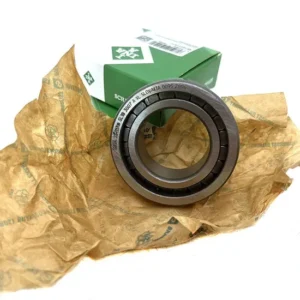
X&S INA Nup1007em Cylindrical Roller Bearing for Auto Motor Spare Part
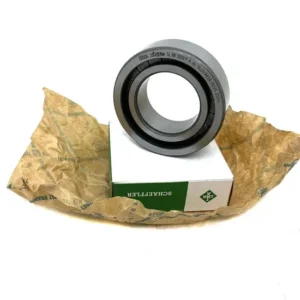
INA B7018C.T.P4S B7018E.T.P4S Angular Contact Ball Bearing for Turbojet
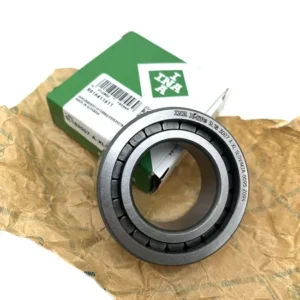
X&S NN3060/Y1 Double Row Cylindrical Roller Bearing for Heavy Load
X&S B7012E.T.P4S Angular Contact Ball Bearing for Metallurgical Rolling Mills
X&S NN3072K NN3008 Cylindrical Roller Bearing with Pin Cam Follower
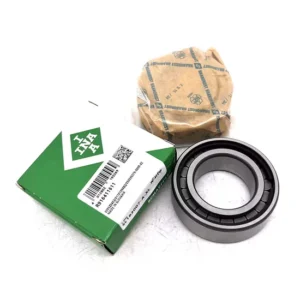
Genuine INA SL183007-A-XL NJ2208 NU2208 Cylindrical Roller Bearing for Auto Parts
INA H7012C-2RZ-P4 B706C T P4S Angular Contact Ball Bearing for Forklift Auto