Genuine FAG Bearings for Paper Machines Wholesale Supplier
- Published
- Buying Guide
- By author

Genuine FAG Bearings for Paper Machines Wholesale Supplier
Most bearing failures in paper mills are not caused by load, but by moisture ingress during transit.
Selecting the right FAG bearings for paper machines requires matching load and speed specifications with strict verification of traceability documentation and anti-rust packaging protocols. Without these safeguards, even genuine components can fail prematurely due to corrosion or customs delays, leading to significant production downtime.
I still recall the panic on a humid morning in Shenzhen when a client from Southeast Asia called, furious that their paper machine was idle. We had shipped a batch of FAG bearings for paper machines via less-than-container-load (LCL) consolidation. The bearings were genuine, but the original certificates and traceability documents had been packed loosely inside the carton. When the container arrived at the destination port, humidity had warped the papers, making them illegible to customs officers. The shipment was held for days while the client scrambled to verify authenticity remotely. That incident reshaped my approach: for continuous-operation equipment like paper machines, the physical integrity of documentation is as critical as the steel quality of the bearing itself.
This guide breaks down how to source FAG bearings for paper machines effectively, focusing on technical selection, authenticity verification, and logistics pitfalls that often go unnoticed until it is too late.
Which FAG Bearing Series Fits Your Paper Machine Section?
Matching the bearing type to the specific operational environment of the paper machine section is essential for longevity.
Paper machines are divided into distinct sections—wet end, press section, and dryer section—each imposing unique stress profiles on components. A one-size-fits-all approach leads to premature failure. Understanding the difference between spherical and cylindrical roller bearings in these contexts helps optimize performance.
| Paper Machine Section | Primary Load Type | Recommended FAG Bearing Series | Internal Clearance Requirement | Environmental Challenge |
|---|---|---|---|---|
| Wet End | Moderate Radial, Low Axial | Cylindrical Roller Bearings | Standard (C2/C3) | High Moisture, Chemical Exposure |
| Press Section | High Radial, Shock Loads | Spherical Roller Bearings | C3 or C4 | Heavy Vibration, Misalignment |
| Dryer Section | High Radial, Thermal Expansion | Spherical Roller Bearings | C3 or C4 | High Temperature, Speed Variance |
Spherical roller bearings are particularly vital in the press and dryer sections. They accommodate misalignment and handle heavy radial loads, which are common when paper webs are under high tension. In contrast, cylindrical roller bearings are often preferred in the wet end where speeds are high but misalignment is minimal, provided the housing is rigid.
A mill operator in Latin America once reported that switching to spherical roller bearings with C3 internal clearance in their dryer section extended service life noticeably. The higher clearance allowed for thermal expansion without inducing excessive preload, a common cause of overheating in high-speed applications. [NEED_CITE: thermal expansion effects on bearing preload in dryer sections]
When sourcing FAG bearings for paper machines, ensure you specify the correct internal clearance. Standard clearance may suffice for ambient temperatures, but dryer rolls operate at elevated temperatures, necessitating C3 or C4 clearances to maintain optimal running conditions.
How to Verify Genuine FAG Bearings and Traceability?
Authenticity is verified through laser markings, original packaging, and cross-referencing traceability documents with manufacturer databases.
The market is flooded with counterfeit bearings that look identical to the naked eye but lack the metallurgical integrity required for heavy industrial use. For MRO buyers and distributors, verifying genuineness is not just about quality; it is about liability and operational safety.
Genuine FAG products feature precise laser markings on the outer ring, including the brand logo, part number, and origin. Counterfeits often use etched or printed markings that fade or appear uneven. Additionally, the packaging should be intact, with holographic seals and barcodes that link to the manufacturer’s tracking system.
Traceability documentation is the backbone of verification. Each batch of FAG bearings for paper machines should come with a certificate of conformity that includes the heat number, manufacturing date, and inspection results. This document allows you to trace the bearing back to the specific production facility and quality control checks.
A European distributor once rejected a shipment because the traceability codes on the certificates did not match the batch numbers on the bearing boxes. Upon investigation, it turned out the supplier had mixed old stock with new inventory without updating the paperwork. This discrepancy could have led to severe issues if the bearings had been installed in a critical application. [NEED_CITE: importance of batch-specific traceability in industrial bearing supply chains]
To avoid such risks, always request digital copies of the traceability documents before shipment. Verify the codes against the physical items upon arrival. If the supplier cannot provide verifiable documentation, the risk of counterfeit goods is significantly higher.
What Logistics Pitfalls Ruin Paper Machine Bearings?
Moisture damage from poor anti-rust packaging and unprotected documents during LCL shipments is a leading cause of premature bearing failure.
Bearings are precision components sensitive to environmental conditions. Even a brief exposure to humidity during ocean freight can initiate surface corrosion, known as fretting or rust, which compromises the smooth running of the bearing. This is especially critical for FAG bearings for paper machines, which often sit in storage before installation.
Anti-rust packaging is not optional; it is a necessity. Genuine FAG bearings are typically wrapped in vapor-corrosion-inhibitor (VCI) paper and sealed in plastic bags. However, in LCL shipments, containers are opened and closed multiple times, exposing cargo to varying humidity levels. If the outer packaging is compromised or if the bearings are not properly sealed, moisture can penetrate.
Furthermore, as mentioned in the opening case, documentation must be protected. Customs officers in many regions require original, legible certificates for clearance. If these documents are damaged by moisture, the entire shipment can be delayed, causing costly downtime for the end-user.
A buyer in the Middle East experienced a two-week delay because their traceability documents were soaked in a rainstorm during transshipment. The local customs authority refused to accept digital copies, insisting on original papers. The cost of the delay far exceeded the savings from choosing a cheaper freight forwarder. [NEED_CITE: impact of documentation loss on customs clearance times in key import markets]
To mitigate this, insist on waterproof packaging for all documents, ideally in sealed plastic envelopes attached to the outside of the crate or inside a dedicated waterproof pouch within the container. For the bearings themselves, ensure that VCI packaging is intact and consider adding desiccant bags for long-distance sea freight.
How to Optimize Mixed-Batch Sourcing for MRO?
Consolidating multiple brands and sizes into a single container reduces freight costs and simplifies inventory management for MRO operations.
Maintenance, repair, and operations (MRO) buyers often need a variety of bearing types and brands to support different machinery across a plant. Ordering each item separately from official brand channels is inefficient and expensive due to high minimum order quantities (MOQs) and fragmented shipping costs.
Mixed-batch sourcing allows buyers to combine FAG bearings for paper machines with other necessary components, such as SKF or NSK bearings, into a single shipment. This approach maximizes container utilization and reduces per-unit freight costs. It also simplifies logistics, as all items arrive together, reducing the administrative burden of tracking multiple shipments.
However, mixed-batch sourcing requires careful planning. Ensure that the supplier has robust inventory management systems to prevent mixing of batches or mislabeling. Technical support is also crucial, as different brands may have slight variations in dimensions or tolerances. A knowledgeable supplier can provide cross-brand equivalent selection, helping you choose the right substitute if a specific FAG model is out of stock, without compromising performance.
A mining company in Africa reduced their annual bearing procurement costs noticeably by consolidating orders for various heavy-equipment bearings, including FAG bearings for paper machines used in their processing plant, into quarterly full-container loads. This strategy not only saved on freight but also ensured they had a comprehensive spare parts inventory on hand, minimizing unplanned downtime. [NEED_CITE: cost benefits of consolidated LCL/FCL shipping for industrial MRO]
When engaging in mixed-batch sourcing, request a detailed packing list that clearly separates items by brand and part number. This facilitates easier inspection and inventory entry upon arrival. Additionally, verify that the supplier provides technical datasheets for all included brands, ensuring your maintenance team has the necessary information for installation and upkeep.
Conclusion
Sourcing genuine FAG bearings for paper machines demands more than just checking part numbers; it requires rigorous attention to traceability and logistics.
By selecting the correct bearing series for each machine section, verifying authenticity through proper documentation, and protecting goods from moisture during transit, buyers can ensure reliable performance and avoid costly downtime. Mixed-batch sourcing offers a practical solution for optimizing costs and inventory, provided it is managed with precision and technical expertise.
Send Your FAG Bearing List for a Written Quote
FAG Bearing Supplier quotes spherical, cylindrical, tapered and thrust roller bearings together with housings and sleeves, for urgent replacements or planned shutdown orders. Any technical change is proposed separately and needs your approval.
- 1
Send your list by form, WhatsApp or email, position by position.
- 2
We confirm identification: exact version, complete assembly, and any clearly marked alternative.
- 3
Receive a written quote with designation, quantity, price and currency, stock status, estimated lead time and validity.
- Email: info@fagome.com
- Address:

Related FAG Bearing Maintenance Articles
More notes on version identification, mounting accessories and shutdown planning for heavy equipment.
 01
Oct 2, 2026 · Buying Guide · 6 min read
FAG Industrial Bearings Wholesale Supplier | Genuine Stock & Bulk Quotes
Request a quote for genu…
Read the full article 02
Oct 2, 2026 · Buying Guide · 7 min read
Discontinued FAG Numbers: Find Replacements from Global Wholesale Supplier
Secure Discontinued FAG …
Read the full article 03
Oct 2, 2026 · Buying Guide · 6 min read
Authentic FAG Bearings Supplier: Avoid Counterfeits with Neutral Checks
Avoiding Counterfeit FAG…
Read the full articleFAG Roller Bearings and Accessories for Heavy Equipment
Selected FAG bearings for mills, crushers, conveyors and industrial drives. Housings and sleeves can be quoted with the bearing.
Scroll sideways to browse →
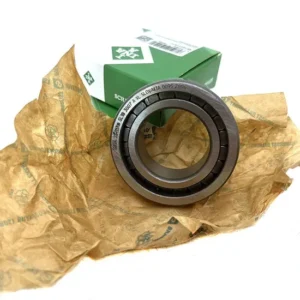
X&S INA Nup1007em Cylindrical Roller Bearing for Auto Motor Spare Part
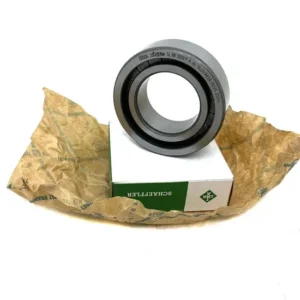
INA B7018C.T.P4S B7018E.T.P4S Angular Contact Ball Bearing for Turbojet
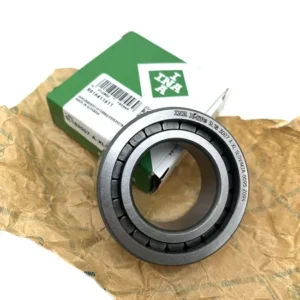
X&S NN3060/Y1 Double Row Cylindrical Roller Bearing for Heavy Load
X&S B7012E.T.P4S Angular Contact Ball Bearing for Metallurgical Rolling Mills
X&S NN3072K NN3008 Cylindrical Roller Bearing with Pin Cam Follower
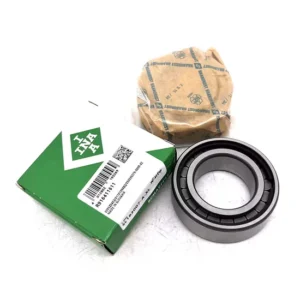
Genuine INA SL183007-A-XL NJ2208 NU2208 Cylindrical Roller Bearing for Auto Parts
INA H7012C-2RZ-P4 B706C T P4S Angular Contact Ball Bearing for Forklift Auto