Genuine FAG Bearings for Cement Plants Wholesale Supplier
- Published
- Buying Guide
- By author

Genuine FAG Bearings for Cement Plants Wholesale Supplier
The cheapest bearing on the invoice is often the most expensive component in your plant’s history.
Sourcing genuine FAG bearings for cement plants requires strict verification of original certificates and clearance reports to prevent catastrophic failures from counterfeit parts. Authenticity is not confirmed by a packing list alone but by cross-referencing factory-issued dimensional data with physical inspection.
I still remember the silence in a North African cement plant control room. It was not the peaceful quiet of a well-oiled machine, but the heavy, suffocating silence of a rotary kiln that had stopped turning. The culprit was a batch of spherical roller bearings that looked perfect on the outside. The buyer had saved a significant percentage on the initial purchase price, believing he had secured a deal on surplus stock. Within months, the cage fractured under thermal stress. The resulting downtime lasted weeks, not days. The cost of replacing the damaged rollers and lost production dwarfed the initial savings by an order of magnitude. That incident shifted my focus entirely. I stopped looking at price tags and started looking at paper trails. Now, when I evaluate FAG bearings for cement plants, I look for the traceability that connects the steel mill to the installation site.
This guide breaks down how to verify authenticity, select the right models for high-stress applications like rotary kilns and crushers, and understand the true lifecycle cost of your procurement decisions.
Why Do Cement Plants Specifically Need Genuine FAG Bearings?
Extreme temperatures and heavy loads in rotary kilns demand the precise metallurgy and clearance of original FAG parts.
Cement production is one of the most hostile environments for mechanical components. A rotary kiln operates continuously at high temperatures, subjecting support rollers to immense radial loads and thermal expansion. Standard industrial bearings often fail here because they lack the specific internal geometry and heat treatment required to maintain stability under these conditions.
Genuine FAG spherical roller bearings are engineered with optimized internal kinematics. This design reduces friction and heat generation, which is critical when ambient temperatures already push materials to their limits. Counterfeit or lower-tier alternatives often use inferior steel with higher inclusion levels. Under heavy load, these inclusions become initiation points for fatigue cracks. [NEED_CITE: ISO 15243 failure mode classification for rolling bearings]
Consider the difference in material purity. Original manufacturers use vacuum-degassed steel to minimize non-metallic inclusions. This process is not just a marketing claim; it is a measurable standard that directly impacts fatigue life. In a cement plant, where a single unplanned shutdown can cost hundreds of thousands in lost output, the reliability of the bearing steel is non-negotiable.
When sourcing FAG bearings for cement plants, you are not just buying a ring of steel and balls. You are buying the assurance that the metallurgy has been controlled from the melt. Generic replacements may match the outer dimensions, but they rarely match the internal stress distribution. This mismatch leads to premature spalling and cage failure, especially in the slow-speed, high-load application of kiln support rollers.
How to Spot Counterfeit or Refurbished FAG Bearings?
Never rely solely on packing lists; always cross-verify original factory clearance reports and certificates of origin.
The market is flooded with refurbished bearings repackaged as new, and outright counterfeits that mimic the branding perfectly. A packing list is merely a shipping document; it proves nothing about the contents inside the box. To ensure you are receiving genuine products, you must demand technical documentation that only the manufacturer or authorized distributors can provide.
The first step is verifying the clearance report. Every genuine large-size bearing comes with an individual measurement report detailing the internal clearance, bore diameter, and outside diameter. These values are unique to that specific unit. If a supplier cannot provide this report, or if the numbers look too uniform across multiple units, be suspicious. Genuine manufacturing tolerances vary slightly within the allowed range, but they are always documented.
Next, check the certificate of origin. This document traces the bearing back to the specific production facility. For FAG bearings for cement plants, this traceability is crucial. It allows you to verify that the product was not diverted from a different market or produced in an unauthorized facility.
| Verification Step | Genuine Product Indicator | Counterfeit/Refurbished Risk |
|---|---|---|
| Packaging | High-quality, branded box with holographic seals | Flimsy box, misspelled words, generic tape |
| Documentation | Individual clearance report with unique serial number | Missing report, or generic template without specific data |
| Markings | Laser-etched, sharp, and consistent font | Stamped unevenly, shallow, or easily rubbed off |
| Surface Finish | Smooth, uniform grind marks | Rough patches, signs of polishing to hide defects |
| Cage Material | Consistent color and texture (brass/polyamide) | Discolored, brittle, or mismatched material |
A US-based distributor once shared a case where a batch of bearings arrived with perfect packaging. However, upon requesting the clearance reports, the supplier delayed for weeks. When the documents finally arrived, the serial numbers did not match the bearings received. The delay was a tactic to forge paperwork. By insisting on immediate verification, the buyer avoided installing defective units that would have failed under load.
Which FAG Bearing Models Suit Different Cement Plant Equipment?
Spherical roller bearings are critical for kiln support rollers, while cylindrical rollers suit high-speed crusher applications.
Selecting the right bearing type is as important as ensuring its authenticity. Cement plants utilize various machinery, each with distinct load and speed requirements. Using the wrong type, even if genuine, leads to suboptimal performance and early failure.
For rotary kilns, spherical roller bearings are the standard choice. Their self-aligning capability compensates for shaft deflection and misalignment, which is common in large, long rotating cylinders. They handle heavy radial loads and moderate axial loads in both directions. When sourcing FAG bearings for cement plants for kiln applications, focus on models with reinforced cages and optimized raceway profiles to handle shock loads during startup and shutdown.
In contrast, crushers and mills operate under high impact and vibration. Here, cylindrical roller bearings are often preferred for their high radial load capacity and rigidity. They allow for higher speeds than spherical rollers but require precise alignment. For vertical mills, tapered roller bearings may be used to handle combined radial and axial loads effectively.
| Equipment Type | Primary Load Type | Recommended Bearing Type | Key Feature Requirement |
|---|---|---|---|
| Rotary Kiln | Heavy Radial, Moderate Axial | Spherical Roller Bearing | Self-alignment, high temperature resistance |
| Crusher | High Impact, Heavy Radial | Cylindrical Roller Bearing | High rigidity, impact resistance |
| Vertical Mill | Combined Radial and Axial | Tapered Roller Bearing | Precise preload adjustment |
| Fan/Blower | Moderate Radial, High Speed | Deep Groove Ball Bearing | Low noise, high precision |
Understanding these distinctions helps in negotiating with suppliers. Instead of asking for a generic “kiln bearing,” specify the need for spherical roller bearings with specific clearance classes suitable for high-temperature operation. This precision signals to the supplier that you know what you need, reducing the chance of being sold inappropriate stock.
What is the True Cost of Cheap vs. Genuine Bearings?
Initial savings on fake bearings are wiped out by massive unplanned downtime and collateral equipment damage.
The argument for buying cheaper, non-genuine bearings usually rests on upfront cost reduction. However, this perspective ignores the total cost of ownership. In heavy industry, the price of the bearing is a tiny fraction of the cost of a production stoppage.
When a counterfeit bearing fails, it rarely does so cleanly. A fractured cage can send debris through the gearbox, damaging gears and shafts. A seized bearing can warp the shaft itself, requiring extensive machining or replacement. The collateral damage often exceeds the value of the entire bearing set by a wide margin.
Furthermore, unplanned downtime in a cement plant is exponentially more expensive than planned maintenance. Losing a day of production means losing tons of clinker output, missing delivery deadlines, and paying overtime for emergency repairs. The savings from buying a fake bearing are erased in hours, not years.
Investing in genuine FAG bearings for cement plants is an insurance policy against these risks. With authentic parts, you get predictable lifespan data, allowing for accurate maintenance scheduling. You avoid the surprise failures that disrupt operations and damage reputation.
From a procurement standpoint, working with a supplier who provides full traceability and technical support adds value beyond the product. They help verify specifications, ensure correct installation practices, and provide failure analysis if issues arise. This partnership reduces the risk of human error and ensures that every dollar spent on bearings contributes to operational reliability rather than future repair bills.
Conclusion
Authenticity is verified by data, not promises.
Sourcing FAG bearings for cement plants demands a rigorous approach to documentation and technical verification. By prioritizing traceability, understanding application-specific requirements, and recognizing the hidden costs of counterfeit parts, operators can ensure reliable and efficient plant performance. Always demand the clearance report and certificate of origin before acceptance.
Send Your FAG Bearing List for a Written Quote
FAG Bearing Supplier quotes spherical, cylindrical, tapered and thrust roller bearings together with housings and sleeves, for urgent replacements or planned shutdown orders. Any technical change is proposed separately and needs your approval.
- 1
Send your list by form, WhatsApp or email, position by position.
- 2
We confirm identification: exact version, complete assembly, and any clearly marked alternative.
- 3
Receive a written quote with designation, quantity, price and currency, stock status, estimated lead time and validity.
- Email: info@fagome.com
- Address:

Related FAG Bearing Maintenance Articles
More notes on version identification, mounting accessories and shutdown planning for heavy equipment.
 01
Oct 2, 2026 · Buying Guide · 6 min read
FAG Industrial Bearings Wholesale Supplier | Genuine Stock & Bulk Quotes
Request a quote for genu…
Read the full article 02
Oct 2, 2026 · Buying Guide · 7 min read
Discontinued FAG Numbers: Find Replacements from Global Wholesale Supplier
Secure Discontinued FAG …
Read the full article 03
Oct 2, 2026 · Buying Guide · 6 min read
Authentic FAG Bearings Supplier: Avoid Counterfeits with Neutral Checks
Avoiding Counterfeit FAG…
Read the full articleFAG Roller Bearings and Accessories for Heavy Equipment
Selected FAG bearings for mills, crushers, conveyors and industrial drives. Housings and sleeves can be quoted with the bearing.
Scroll sideways to browse →
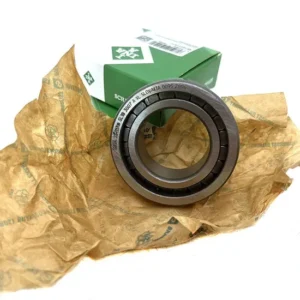
X&S INA Nup1007em Cylindrical Roller Bearing for Auto Motor Spare Part
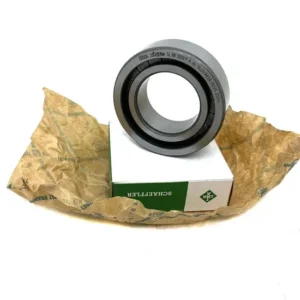
INA B7018C.T.P4S B7018E.T.P4S Angular Contact Ball Bearing for Turbojet
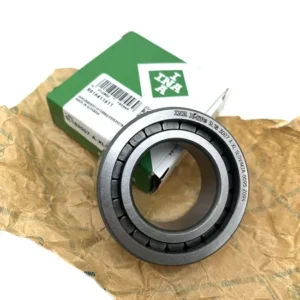
X&S NN3060/Y1 Double Row Cylindrical Roller Bearing for Heavy Load
X&S B7012E.T.P4S Angular Contact Ball Bearing for Metallurgical Rolling Mills
X&S NN3072K NN3008 Cylindrical Roller Bearing with Pin Cam Follower
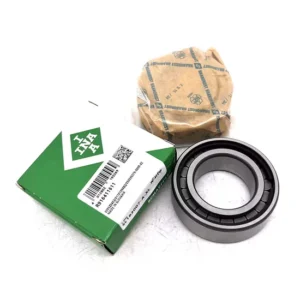
Genuine INA SL183007-A-XL NJ2208 NU2208 Cylindrical Roller Bearing for Auto Parts
INA H7012C-2RZ-P4 B706C T P4S Angular Contact Ball Bearing for Forklift Auto