FAG TVH M MB MA Cage Codes: Wholesale Supplier for Bulk Orders
- Published
- Brands & Alternatives
- By author

FAG TVH M MB MA Cage Codes: Wholesale Supplier for Bulk Orders
The most expensive bearing is the one that melts.
Selecting the correct FAG cage code—TVH for high-speed, low-temperature applications or M/MB/MA for high-temperature, heavy-shock environments—is the single most critical decision in procurement. Price differences are negligible compared to the cost of unplanned downtime caused by material mismatch.
I still remember the smell of burnt polyamide mixing with hot oil. It was a humid afternoon at a copper mine in Chile, and the roller press had just seized. The maintenance team pulled out a spherical roller bearing that looked intact from the outside, but the internal cage had disintegrated into a sticky, black mess. I had supplied it. I had checked the part number, the dimensions, and the load rating. But I had missed the suffix. It was a TVH cage in an application that regularly exceeded 120°C. That mistake cost my client weeks of production and me a significant portion of my early career savings. Since then, I have made it my practice to dissect every suffix before a container leaves the warehouse. Understanding the difference between FAG TVH M MB MA cage codes is not just about technical specs; it is about risk management. [NEED_CITE: ISO 15243 failure mode classification for cage damage]
This guide breaks down the material science behind these codes, helping distributors and MRO managers avoid the pitfalls that turn routine replacements into catastrophic failures. As a global sourcing partner, we see these errors repeatedly in mixed-brand orders. Here is how you get it right.
What Do FAG Cage Codes TVH, M, MB, and MA Actually Mean?
Cage codes define the material, manufacturing method, and guiding surface of the bearing retainer, directly influencing its thermal and mechanical limits.
Many buyers assume the cage is just a spacer holding the rolling elements apart. In reality, it is a dynamic component subjected to centrifugal forces, friction, and impact. FAG uses specific suffixes to denote these characteristics. Misinterpreting them leads to ordering a bearing that physically fits but functionally fails.
TVH stands for a cage made from glass-fiber reinforced polyamide 66. It is molded, lightweight, and has excellent sliding properties. The “V” indicates the cage is guided by the rollers, and the “H” denotes the specific material variant. This is the standard for modern, high-efficiency bearings where weight and friction matter. [NEED_CITE: FAG technical handbook on polymer cage materials]
In contrast, M, MB, and MA refer to machined brass cages. Brass is heavier but offers superior thermal stability and mechanical strength.
- M: A general designation for a machined brass cage.
- MB: Specifically indicates a brass cage guided by the inner ring.
- MA: Specifically indicates a brass cage guided by the outer ring.
The distinction between MB and MA is crucial for high-speed applications where gyroscopic forces affect cage stability. If the wrong guidance surface is selected, the cage can whip against the rolling elements, causing premature wear. For most heavy-industry applications, the primary choice is between the polymer TVH and the brass M-series. [NEED_CITE: Bearing cage guidance principles per DIN standards]
Understanding these definitions is the first step. The real challenge lies in matching them to your operating environment.
TVH vs. Machined Brass: Which Cage Survives Your Operating Temperature?
Temperature is the primary killer of polymer cages, while brass cages fail under insufficient lubrication or extreme contamination.
The most common misconception is that brass is always better because it is metal. However, TVH polyamide has distinct advantages in specific thermal windows. Polyamide 66, reinforced with glass fibers, can operate continuously at temperatures up to approximately 120°C. Beyond this threshold, the material begins to lose its structural integrity, leading to the melting scenario I witnessed in Chile.
Brass cages, on the other hand, can withstand temperatures well above 200°C, limited primarily by the lubricant and the bearing steel itself. This makes M/MB/MA cages the default choice for kilns, dryers, and heavy-duty mining equipment where heat buildup is inevitable.
However, TVH is not just a “cheap plastic” alternative. In electric motors and fans running at high speeds but moderate temperatures, TVH outperforms brass. Its lower mass reduces centrifugal force, allowing for higher limiting speeds. It also requires less lubrication due to its self-lubricating properties. Brass, being a metal-on-metal contact surface, generates more friction and heat if lubrication is marginal. [NEED_CITE: Comparative friction coefficients of polymer vs. brass bearing cages]
| Feature | TVH (Polyamide) | M/MB/MA (Brass) |
|---|---|---|
| Material | Glass-fiber reinforced PA66 | Machined Brass |
| Max Continuous Temp | Moderate (~120°C) | High (>200°C) |
| Weight | Light | Heavy |
| Friction | Low | Moderate |
| Speed Limit | High | Moderate |
| Shock Resistance | Good | Excellent |
A European wind farm operator once switched to TVH cages for their generator bearings. The result was a noticeable reduction in operating temperature and energy consumption. Conversely, a cement plant in the Middle East attempted to use TVH cages in their cooler fans, which were exposed to intermittent hot air bursts. The cages failed within months. The lesson is clear: map the thermal profile before selecting the code.
Load & Speed Matrix: Matching Cage Codes to Application Scenarios
High shock loads demand the ductility of brass, while high rotational speeds favor the lightness of polyamide.
Beyond temperature, the mechanical load profile dictates the cage selection. TVH cages are resilient but can crack under severe impact. Brass is ductile; it deforms rather than shatters, making it ideal for applications with vibration and shock.
Consider the nDm factor (speed factor). TVH cages allow for higher nDm values because their low mass reduces the stress on the cage pockets. In high-speed machine tool spindles or turbochargers, a brass cage might generate excessive heat due to friction and mass, leading to failure. TVH runs cooler and faster in these scenarios.
Conversely, in mining crushers or vibrating screens, the bearing experiences constant hammering. A polyamide cage can suffer from fatigue cracking over time. A machined brass cage absorbs these shocks without catastrophic failure. [NEED_CITE: Dynamic load capacity effects of cage material]
| Application Scenario | Recommended Cage | Reason |
|---|---|---|
| Electric Motors | TVH | Low friction, high speed, moderate temp |
| Roller Presses | M/MB/MA | High load, potential heat, shock |
| Mining Crushers | M/MB/MA | Extreme shock, vibration, dirt |
| HVAC Fans | TVH | High speed, low load, efficiency |
| Steel Mill Conveyors | M/MB/MA | High ambient heat, heavy load |
A client in the automotive sector recently consolidated an order for transmission bearings. They initially specified TVH for all units to save cost. Upon review, we identified that the main shaft bearings experienced higher shock loads during gear shifts. We recommended switching those specific positions to MB cages. The result was a more robust assembly without significantly impacting the overall budget. This level of technical scrutiny is what separates a parts supplier from a solutions partner.
How to Verify Cage Codes During Procurement to Avoid Counterfeits
Visual inspection and documentation traceability are essential to ensure the delivered cage matches the ordered suffix.
The market is flooded with bearings that carry the correct brand name but the wrong internal components. A counterfeit bearing might have a stamped steel cage instead of the specified machined brass or polyamide. To protect your inventory and your clients, you must verify the cage code physically and documentarily.
First, check the packaging. Genuine FAG bearings list the full suffix on the box label. If the box says “TVH” but the bearing inside has a metallic sheen, you have a problem. Second, inspect the bearing itself. TVH cages are typically beige or off-white and have a matte finish. Brass cages are golden and have visible machining marks. Steel cages are silver and often stamped.
Third, request the original manufacturer’s certificate of conformity. This document should detail the specific materials used. At our facility, we maintain strict traceability for every batch. When we consolidate mixed-container shipments for distributors in Latin America or Africa, we perform random spot checks to ensure the physical product matches the paperwork. [NEED_CITE: Best practices for bearing authentication and anti-counterfeit measures]
A distributor in Southeast Asia once received a shipment of spherical roller bearings labeled as MA. Upon opening, they found cages that were clearly stamped steel, not machined brass. Because they had sourced from a vendor with poor traceability, they faced a costly return process. By working with a supplier who prioritizes genuine sourcing and provides verifiable documentation, you eliminate this risk. We ensure that every FAG TVH M MB MA cage code we supply is backed by full traceability, giving you confidence in every unit you resell.
Conclusion
The right cage code prevents failure; the wrong one guarantees it.
Choosing between FAG TVH and M/MB/MA cages is not a matter of preference but of engineering necessity. TVH excels in high-speed, moderate-temperature environments, while brass cages dominate in high-heat, high-shock applications. By understanding these distinctions and verifying your supply chain, you protect your operations from costly downtime. Ensure your supplier provides genuine products with full traceability to match the precise demands of your machinery.
Send Your FAG Bearing List for a Written Quote
FAG Bearing Supplier quotes spherical, cylindrical, tapered and thrust roller bearings together with housings and sleeves, for urgent replacements or planned shutdown orders. Any technical change is proposed separately and needs your approval.
- 1
Send your list by form, WhatsApp or email, position by position.
- 2
We confirm identification: exact version, complete assembly, and any clearly marked alternative.
- 3
Receive a written quote with designation, quantity, price and currency, stock status, estimated lead time and validity.
- Email: info@fagome.com
- Address:

Related FAG Bearing Maintenance Articles
More notes on version identification, mounting accessories and shutdown planning for heavy equipment.
 01
Oct 3, 2026 · Brands & Alternatives · 8 min read
FAG Industrial Bearings: Genuine Wholesale Supplier for Global Bulk Orders
Secure genuine FAG indus…
Read the full article 02
Oct 3, 2026 · Brands & Alternatives · 8 min read
FAG Railway Bearings vs Other Brands: Wholesale Supplier
Comparing FAG railway be…
Read the full article 03
Oct 3, 2026 · Brands & Alternatives · 7 min read
FAG Large Bearings vs Chinese: Wholesale Supplier
Struggling to balance re…
Read the full articleFAG Roller Bearings and Accessories for Heavy Equipment
Selected FAG bearings for mills, crushers, conveyors and industrial drives. Housings and sleeves can be quoted with the bearing.
Scroll sideways to browse →
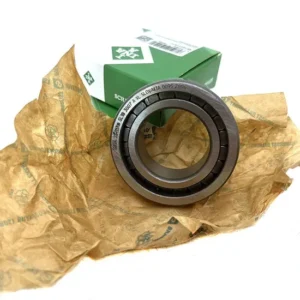
X&S INA Nup1007em Cylindrical Roller Bearing for Auto Motor Spare Part
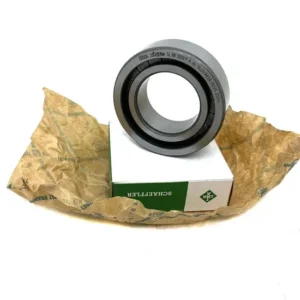
INA B7018C.T.P4S B7018E.T.P4S Angular Contact Ball Bearing for Turbojet

X&S NN3060/Y1 Double Row Cylindrical Roller Bearing for Heavy Load
X&S B7012E.T.P4S Angular Contact Ball Bearing for Metallurgical Rolling Mills
X&S NN3072K NN3008 Cylindrical Roller Bearing with Pin Cam Follower
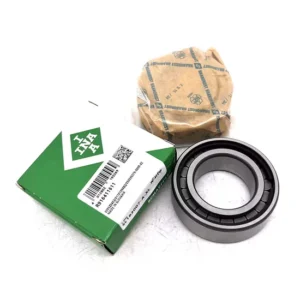
Genuine INA SL183007-A-XL NJ2208 NU2208 Cylindrical Roller Bearing for Auto Parts
INA H7012C-2RZ-P4 B706C T P4S Angular Contact Ball Bearing for Forklift Auto