FAG to SKF Suffix Code Cross-Reference for Wholesale Bearing Supplier
- Published
- Brands & Alternatives
- By author

FAG to SKF Suffix Code Cross-Reference for Wholesale Bearing Supplier
Matching basic bearing numbers is not enough; the suffix codes dictate survival in extreme conditions.
When substituting FAG bearings with SKF equivalents, or vice versa, relying solely on the basic dimension code invites catastrophic field failure. The core answer for any procurement decision is that while ISO standards ensure dimensional interchangeability for the basic number, the internal design specifications—defined by suffixes—are proprietary and distinct between manufacturers. A direct swap without verifying cage material, internal clearance, and lubrication suffixes often results in thermal seizure or premature fatigue, particularly in heavy mining and industrial applications. This guide provides the critical cross-reference logic needed to align these internal designs accurately.
I learned this lesson the hard way at the Lagos port, staring at a customs declaration that looked perfect on paper but spelled disaster for a client’s conveyor system. The documentation listed a standard FAG spherical roller bearing, but the replacement stock we sourced was an SKF equivalent matched only by the basic number. We missed the subtle difference in the cage suffix. Under the relentless African heat and heavy load, the incorrect polymer cage softened and deformed, melting into the rolling elements. The entire conveyor line halted for weeks, turning a routine maintenance swap into a mid-six-figure loss in downtime and emergency air freight. That incident shifted my entire approach to brand substitution. Now, I scrutinize every letter after the dash, knowing that in high-stakes environments, a single character mismatch can mean the difference between smooth operation and a seized shaft.
Understanding these nuances is essential for any wholesale bearing supplier managing mixed-brand inventories. The following sections break down the specific suffix categories where misalignment most frequently occurs, offering a practical framework for accurate cross-referencing.
Why Do FAG and SKF Suffix Codes Differ in Substitution?
Basic dimensions follow ISO standards, but internal engineering philosophies diverge significantly between German and Swedish manufacturing traditions.
The basic bearing number ensures that the outer diameter, inner diameter, and width are identical, allowing physical installation. However, the suffixes encode the manufacturer’s specific choices regarding internal geometry, cage design, and heat treatment. FAG, rooted in German engineering, often uses different default materials for cages and seals compared to SKF’s Swedish standards. For instance, a standard deep groove ball bearing from one brand might ship with a brass cage by default, while the other uses a stamped steel cage unless specified otherwise. [NEED_CITE: ISO 15243 failure classification related to incorrect component substitution]
This divergence means that a “direct equivalent” does not exist in a vacuum. It exists only when the application conditions—load, speed, temperature, and contamination—are matched by the specific suffix configuration. Ignoring this leads to the common error of assuming functional parity based on dimensional fit alone. In heavy equipment, where loads are erratic and temperatures fluctuate wildly, the internal design dictated by the suffix becomes the primary determinant of service life.
For a wholesale bearing supplier, this means that technical consultation must precede order confirmation. Simply matching the part number is insufficient; the suffix profile must be audited against the operational environment to ensure the substitute bearing can withstand the same stresses as the original.
Cage & Material Suffix Matrix: FAG vs SKF
Cage material dictates thermal stability and high-speed performance, yet the coding systems for these materials are not directly interchangeable.
The cage, or retainer, holds the rolling elements in place and is often the first component to fail under high stress or temperature. FAG and SKF use different alphanumeric codes to denote cage materials, leading to frequent confusion during cross-brand sourcing. A common mistake is substituting a bearing with a machined brass cage (often preferred for high stability) with one featuring a stamped steel cage (designed for cost-efficiency and moderate speeds), simply because the basic number matches.
| Feature | FAG Suffix Convention | SKF Suffix Convention | Operational Impact |
|---|---|---|---|
| Machined Brass Cage | M, MB, MA | M, ML, MA | High thermal stability, suitable for high speeds |
| Stamped Steel Cage | J, JR | No suffix (default), B | Cost-effective, limited high-temp performance |
| Polymer Cage | TVH, T VH | P, PA66, GF | Lightweight, corrosion-resistant, temp-limited |
| Window-Type Brass | – | Y, YM | Specific to certain spherical roller designs |
[NEED_CITE: Manufacturer technical catalogs for cage material properties and temperature limits]
Consider a vibrating screen application in a quarry. The original FAG bearings utilized a specific brass cage suffix designed to handle continuous vibration without fatigue cracking. A substitute SKF bearing was sourced with a standard steel cage, assuming equivalence. The steel cage, unable to dampen the vibrational energy effectively, developed micro-cracks and failed prematurely, causing significant damage to the screen deck. The correct cross-reference required matching the brass cage specification explicitly, not just the bearing size.
When acting as a wholesale bearing supplier, verifying the cage suffix is non-negotiable for high-vibration or high-temperature applications. The matrix above serves as a starting point, but always consult the specific technical data sheets for the exact operating limits of each material type.
Clearance & Lubrication Codes: Avoiding Thermal Seizures
Internal clearance and lubrication suffixes are critical for thermal management, and mismatches here lead directly to overheating and seizure.
Thermal expansion is a silent killer in heavy machinery. As bearings operate, they generate heat, causing the inner ring to expand more than the outer ring. This reduces internal clearance. If the initial clearance is insufficient, the bearing will seize. FAG and SKF denote internal clearance with similar C-codes (C2, C3, C4), but their default clearances for unmarked bearings can differ. Furthermore, lubrication suffixes indicate the type and amount of grease, which affects heat dissipation and friction.
A gearbox in a cement plant experienced repeated failures after switching from FAG to SKF bearings. The original FAG units had a C3 clearance suffix, appropriate for the operating temperature. The replacement SKF bearings were ordered without specifying the clearance, receiving the standard CN (Normal) clearance. Under load, the reduced clearance led to rapid heat buildup, degrading the lubricant and causing the rollers to weld to the raceways. [NEED_CITE: ISO 5753 standards for internal radial clearance]
| Parameter | FAG Suffix Example | SKF Suffix Example | Risk of Mismatch |
|---|---|---|---|
| Internal Clearance | C3, C4 | C3, C4 | Seizure if clearance is too tight; vibration if too loose |
| Grease Type | L73, L74 | GJN, WA | Chemical incompatibility, lubricant breakdown |
| Relubrication | ZR, ZRS | W20, W26 | Incorrect relubrication intervals, over-greasing |
[NEED_CITE: Technical guidelines on bearing lubrication and thermal expansion calculations]
The key is to never assume the default. Always specify the clearance suffix explicitly when ordering substitutes. For high-temperature environments, a larger clearance like C4 may be necessary, but this must be balanced with the cage material’s capabilities. A larger clearance with a weak polymer cage can lead to instability.
For a wholesale bearing supplier, providing clarity on clearance and lubrication suffixes prevents costly returns and field failures. It transforms a simple parts transaction into a value-added technical service, ensuring the client’s machinery runs reliably.
Sealing & Shielding Suffixes for Harsh Environments
Sealing suffixes define protection against contaminants, and incorrect substitution compromises the bearing’s defense in dusty or wet conditions.
In mining and construction, contamination is the primary cause of bearing failure. Dust, water, and debris can enter the bearing if the seals are not properly matched. FAG and SKF use different suffixes to denote seal types and materials. A rubber contact seal offers better protection against fine dust but generates more heat due to friction. A metal shield offers less protection but allows for higher speeds and lower friction.
A marine application faced severe corrosion issues after substituting FAG bearings with SKF equivalents. The original FAG bearings had a specific suffix indicating enhanced sealing for saltwater environments. The SKF substitutes were selected with a standard shield, which allowed moisture ingress. The resulting corrosion led to premature spalling and failure. [NEED_CITE: ISO 16757 standards for sealing effectiveness in harsh environments]
| Protection Type | FAG Suffix | SKF Suffix | Application Suitability |
|---|---|---|---|
| Rubber Contact Seal | RS, RSR | RS1, RS2 | High contamination, moderate speed |
| Metal Shield | Z, ZZ | Z, 2Z | Low contamination, high speed |
| Enhanced Sealing | TSH, V | SD, LD | Extreme dust/water, low speed |
[NEED_CITE: Manufacturer data on seal friction torque and contamination exclusion ratings]
When sourcing replacements, it is crucial to match the sealing suffix to the environmental conditions. In dusty mines, a contact seal is often necessary, even if it requires more frequent monitoring for heat buildup. In clean, high-speed applications, a shield may be preferable.
A knowledgeable wholesale bearing supplier will ask about the operating environment before confirming the suffix. This proactive approach ensures that the substituted bearing provides adequate protection, extending service life and reducing maintenance frequency.
Conclusion
Suffix alignment is the cornerstone of successful cross-brand bearing substitution.
Misinterpreting FAG and SKF suffix codes leads to preventable failures in critical machinery. By focusing on cage material, internal clearance, lubrication, and sealing specifications, buyers can ensure that substitute bearings perform as intended. This attention to detail transforms procurement from a risky gamble into a reliable strategy for maintaining operational continuity. For those managing complex inventories, precise suffix verification is not just a technical requirement—it is a business imperative.
Send Your FAG Bearing List for a Written Quote
FAG Bearing Supplier quotes spherical, cylindrical, tapered and thrust roller bearings together with housings and sleeves, for urgent replacements or planned shutdown orders. Any technical change is proposed separately and needs your approval.
- 1
Send your list by form, WhatsApp or email, position by position.
- 2
We confirm identification: exact version, complete assembly, and any clearly marked alternative.
- 3
Receive a written quote with designation, quantity, price and currency, stock status, estimated lead time and validity.
- Email: info@fagome.com
- Address:

Related FAG Bearing Maintenance Articles
More notes on version identification, mounting accessories and shutdown planning for heavy equipment.
 01
Oct 3, 2026 · Brands & Alternatives · 8 min read
FAG Industrial Bearings: Genuine Wholesale Supplier for Global Bulk Orders
Secure genuine FAG indus…
Read the full article 02
Oct 3, 2026 · Brands & Alternatives · 8 min read
FAG Railway Bearings vs Other Brands: Wholesale Supplier
Comparing FAG railway be…
Read the full article 03
Oct 3, 2026 · Brands & Alternatives · 7 min read
FAG Large Bearings vs Chinese: Wholesale Supplier
Struggling to balance re…
Read the full articleFAG Roller Bearings and Accessories for Heavy Equipment
Selected FAG bearings for mills, crushers, conveyors and industrial drives. Housings and sleeves can be quoted with the bearing.
Scroll sideways to browse →
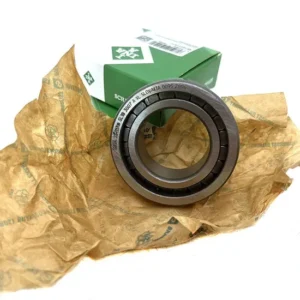
X&S INA Nup1007em Cylindrical Roller Bearing for Auto Motor Spare Part
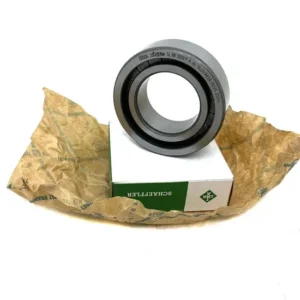
INA B7018C.T.P4S B7018E.T.P4S Angular Contact Ball Bearing for Turbojet
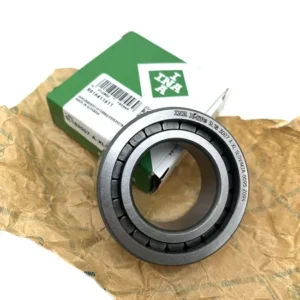
X&S NN3060/Y1 Double Row Cylindrical Roller Bearing for Heavy Load
X&S B7012E.T.P4S Angular Contact Ball Bearing for Metallurgical Rolling Mills
X&S NN3072K NN3008 Cylindrical Roller Bearing with Pin Cam Follower
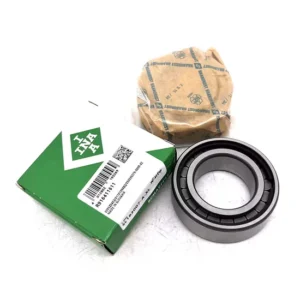
Genuine INA SL183007-A-XL NJ2208 NU2208 Cylindrical Roller Bearing for Auto Parts
INA H7012C-2RZ-P4 B706C T P4S Angular Contact Ball Bearing for Forklift Auto