FAG Spherical Roller Bearings E1 Design: Wholesale Supplier
- Published
- Buying Guide
- By author

FAG Spherical Roller Bearings E1 Design: Wholesale Supplier
Mixing E1 and standard designs is the primary cause of premature failure, not a flaw in the E1 architecture itself.
The FAG E1 design features a cage-guided center rib and optimized roller end profiles that eliminate the inner ring rib, resulting in higher load capacity and reduced friction compared to standard series. However, this structural difference creates incompatible internal clearance and kinematic behavior. When buyers or maintenance teams mix E1 bearings with standard design units in the same housing or application, the uneven load distribution leads to rapid inner ring spalling and cage fracture. Successful deployment requires strict batch consistency, verification of genuine parts through traceability documentation, and selection based on specific heavy-duty load requirements rather than generic replacement logic.
Having spent years navigating the procurement challenges in Southeast Asian mining hubs, I have seen countless operations suffer from avoidable downtime due to a fundamental misunderstanding of bearing internal structures. The assumption that all spherical roller bearings are interchangeable is a costly error. By focusing on the specific mechanical advantages of the E1 series and ensuring supply chain integrity, operators can secure the performance benefits intended by the manufacturer.
What Defines the FAG E1 Design?
The defining characteristic of the E1 series is its cage-guided center rib and the absence of an inner ring rib, which fundamentally alters how loads are transmitted within the bearing.
Traditional spherical roller bearings often rely on inner ring ribs to guide the rollers. In contrast, the E1 design utilizes a robust center rib on the outer ring to guide the cage, while the rollers feature optimized end profiles that interact directly with the raceways without the need for inner ring guidance. This configuration allows for larger, more robust rollers to be packed into the same envelope, significantly increasing the dynamic load rating. [NEED_CITE: FAG technical datasheet comparison of E1 vs standard load ratings]
The kinematics of this design reduce friction and heat generation, making it ideal for high-load, moderate-speed applications such as crushers, vibrating screens, and heavy gearboxes. The optimized roller end profile ensures smoother rolling motion and better lubrication film formation, which extends service life under harsh conditions. However, this benefit is contingent upon proper alignment and consistent internal clearance. If the bearing is subjected to misalignment beyond its self-aligning capability, or if the internal clearance is mismatched due to mixed installation, the advantages of the E1 design are nullified.
Understanding this structural nuance is critical for buyers. It is not merely a marketing label but a distinct engineering solution. When sourcing, one must ensure that the entire set of bearings in a specific application adheres to the same design standard to maintain uniform load distribution.
E1 vs. Standard Design: Which One to Choose?
Selection between E1 and standard designs should be driven by load requirements and operational severity, not by price or availability alone.
Many distributors stock both series, leading to confusion during emergency replacements. The decision matrix below highlights the key differences that impact performance and longevity. Note that these are qualitative distinctions based on structural design principles rather than proprietary numerical data.
| Feature | FAG E1 Design | Standard Design |
|---|---|---|
| Roller Guidance | Cage-guided via center rib | Often inner ring rib guided |
| Inner Ring Structure | No inner ring rib | Inner ring rib present |
| Load Capacity | Higher dynamic load rating | Standard dynamic load rating |
| Friction & Heat | Reduced friction due to optimized ends | Higher friction potential |
| Ideal Application | Heavy-duty, high-load, continuous operation | General purpose, moderate load |
| Mixing Compatibility | Incompatible with standard series | Incompatible with E1 series |
[NEED_CITE: ISO standards for spherical roller bearing dimensional and load classifications]
A European wind farm operator once faced repeated gearbox failures after replacing a failed standard bearing with an E1 unit from a different batch, assuming they were equivalent. The mismatch in internal clearance and load distribution caused uneven stress on the shaft, leading to premature wear on the adjacent components. This case underscores that while the E1 design offers superior performance, it demands precise application matching.
For MRO managers, the rule is simple: if the original equipment specifies E1, replace only with E1. If upgrading from standard to E1, consult technical support to verify housing fit and clearance requirements. Do not assume drop-in compatibility.
Why Do E1 Bearings Fail Prematurely?
Premature failure in E1 bearings is rarely due to design flaws but is predominantly caused by mixed installation with standard series bearings and incorrect clearance selection.
The most common scenario I have encountered in the field involves maintenance teams combining leftover standard bearings with new E1 units to complete a set. This practice disrupts the intended load sharing. The E1 bearing, with its higher load capacity and different internal geometry, will carry a disproportionate share of the load, leading to early fatigue. Meanwhile, the standard bearing may experience slippage or inadequate lubrication due to the altered kinematic environment.
In a nickel mine in Sulawesi, a crusher operator reported inner ring spalling within months of installation. Upon inspection, it was revealed that the maintenance crew had mixed E1 and standard bearings in the same housing to save costs. The clearance mismatch caused excessive axial movement and uneven radial loading, which the E1 design was not configured to handle in a mixed set. [NEED_CITE: Industry failure analysis reports on mixed bearing installations]
Another critical factor is clearance selection. The E1 design’s higher load capacity does not negate the need for appropriate internal clearance. In high-temperature environments, insufficient clearance can lead to thermal expansion issues, causing the rollers to bind. Conversely, excessive clearance can result in vibration and impact loading. Buyers must verify the clearance class (such as C3 or C4) matches the operational temperature and load conditions.
To avoid these pitfalls, establish a strict inventory segregation policy. Label E1 and standard bearings clearly in storage. Train maintenance staff on the visual and dimensional differences, such as the absence of the inner ring rib in E1 units. Consistency is key to unlocking the durability benefits of the E1 architecture.
How to Verify Genuine FAG E1 Bearings?
Verifying authenticity requires a multi-layered approach involving traceability documentation, physical inspection of surface finish, and sourcing from authorized suppliers with complete batch records.
The market is flooded with counterfeit bearings that mimic the external appearance of genuine products but lack the internal precision and material quality. Non-genuine E1 bearings often exhibit poor roller surface finish and inconsistent hardness, leading to early fatigue and catastrophic failure. In a cement plant audit, failure analysis of a suspected counterfeit E1 bearing revealed significant micro-pitting on the roller surfaces, a sign of substandard material processing and inadequate heat treatment.
To ensure genuineness, start with the packaging and labeling. Genuine FAG bearings come with specific security features and batch codes that can be traced back to the manufacturing facility. Request full traceability documents from your supplier, including material certificates and inspection reports. These documents should align with the batch number on the bearing box. [NEED_CITE: FAG official guidelines on product authentication and traceability]
Physical inspection is also crucial. Examine the roller end profile and the cage guidance rib. Genuine E1 bearings have a smooth, polished finish on the roller ends and a precisely machined center rib. Counterfeits often show tool marks, rough surfaces, or inconsistent dimensions. Use micrometers to check critical dimensions against the official datasheet tolerances. Any deviation beyond the standard limits indicates a non-genuine product.
Sourcing from a supplier with a robust global network and direct access to genuine stock minimizes the risk of counterfeits. A reliable partner provides not just the product but the technical assurance that comes with verified supply chains. They can offer cross-brand equivalent consultation if the exact FAG part is unavailable, ensuring that any alternative meets the same rigorous standards.
Conclusion
The FAG E1 design delivers superior load capacity and efficiency when applied correctly and sourced authentically.
Its unique cage-guided center rib and optimized roller profile make it a preferred choice for heavy-duty applications, but these advantages are lost if mixed with standard designs or if counterfeit parts are used. Success lies in understanding the structural differences, maintaining batch consistency, and verifying genuineness through rigorous documentation and inspection. By treating the E1 series as a specialized engineering component rather than a generic spare part, buyers can maximize equipment reliability and minimize unplanned downtime.
Send Your FAG Bearing List for a Written Quote
FAG Bearing Supplier quotes spherical, cylindrical, tapered and thrust roller bearings together with housings and sleeves, for urgent replacements or planned shutdown orders. Any technical change is proposed separately and needs your approval.
- 1
Send your list by form, WhatsApp or email, position by position.
- 2
We confirm identification: exact version, complete assembly, and any clearly marked alternative.
- 3
Receive a written quote with designation, quantity, price and currency, stock status, estimated lead time and validity.
- Email: info@fagome.com
- Address:

Related FAG Bearing Maintenance Articles
More notes on version identification, mounting accessories and shutdown planning for heavy equipment.
 01
Oct 2, 2026 · Buying Guide · 6 min read
FAG Industrial Bearings Wholesale Supplier | Genuine Stock & Bulk Quotes
Request a quote for genu…
Read the full article 02
Oct 2, 2026 · Buying Guide · 7 min read
Discontinued FAG Numbers: Find Replacements from Global Wholesale Supplier
Secure Discontinued FAG …
Read the full article 03
Oct 2, 2026 · Buying Guide · 6 min read
Authentic FAG Bearings Supplier: Avoid Counterfeits with Neutral Checks
Avoiding Counterfeit FAG…
Read the full articleFAG Roller Bearings and Accessories for Heavy Equipment
Selected FAG bearings for mills, crushers, conveyors and industrial drives. Housings and sleeves can be quoted with the bearing.
Scroll sideways to browse →
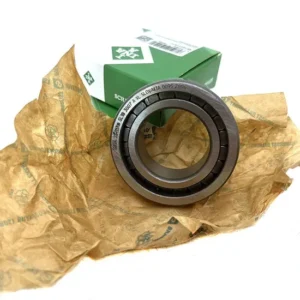
X&S INA Nup1007em Cylindrical Roller Bearing for Auto Motor Spare Part
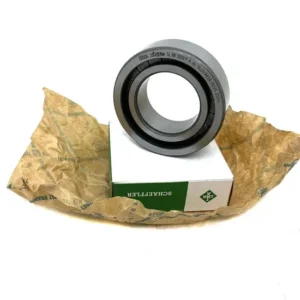
INA B7018C.T.P4S B7018E.T.P4S Angular Contact Ball Bearing for Turbojet
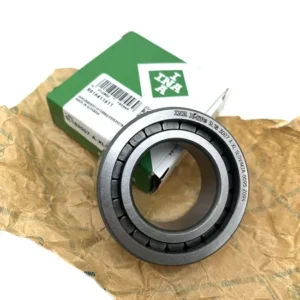
X&S NN3060/Y1 Double Row Cylindrical Roller Bearing for Heavy Load
X&S B7012E.T.P4S Angular Contact Ball Bearing for Metallurgical Rolling Mills
X&S NN3072K NN3008 Cylindrical Roller Bearing with Pin Cam Follower
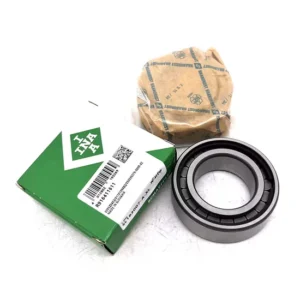
Genuine INA SL183007-A-XL NJ2208 NU2208 Cylindrical Roller Bearing for Auto Parts
INA H7012C-2RZ-P4 B706C T P4S Angular Contact Ball Bearing for Forklift Auto