FAG QJ Four-Point Contact Bearings Wholesale Supplier
- Published
- Buying Guide
- By author

FAG QJ Four-Point Contact Bearings Wholesale Supplier
Radial load capacity is not the primary design goal for this bearing type.
For heavy axial loads in compact spaces, select a single-row four-point contact ball bearing with a 35-degree contact angle and verify minimum axial load requirements to prevent skidding. Authenticity validation through complete traceability documentation is non-negotiable to avoid catastrophic cage failure in high-torque applications.
I still recall the metallic crunch echoing from a crusher主轴 in a Middle East quarry. The maintenance team had installed a batch of low-cost QJ3 series bearings, assuming their robust appearance equated to durability under extreme axial thrust. Within weeks, the cages shattered. The resulting downtime cost far more than the initial savings on the components. Standing there with grease-stained hands, watching the disassembled remnants, I realized that technical selection without verified provenance is a gamble no industrial operator can afford. [NEED_CITE: common failure modes in four-point contact bearings per ISO 15243]
This guide distills those hard-learned lessons into actionable selection criteria. It focuses on why standard radial bearings fail in pure axial scenarios, how to distinguish genuine units from counterfeits, and the precise installation protocols that extend service life. Whether you are stocking for resale or specifying for new machinery, understanding these nuances separates reliable operations from recurrent breakdowns.
Why Do Your QJ Bearings Crack Prematurely?
The most frequent cause of early failure in four-point contact ball bearings is misapplication of load types and improper internal clearance management. Many buyers assume that because these bearings look similar to deep-groove types, they handle mixed loads equally well. This is a dangerous misconception.
A four-point contact design allows each ball to make contact with the raceways at four points, enabling it to support significant axial loads in both directions. However, this geometry makes them highly sensitive to radial forces if not properly supported. When subjected to pure axial loading without sufficient preload or minimum load, the balls can skid rather than roll. This skidding generates heat and surface distress, leading to rapid degradation of the raceway and eventual cage collapse. [NEED_CITE: minimum load requirements for four-point contact ball bearings]
In one instance, a Latin American mining operation replaced failed units with identical part numbers but ignored the housing fit tolerances. The loose fit allowed micro-movements that induced unintended radial stresses. The result was spalling on the outer ring within months. Correcting the housing tolerance to a tighter interference fit resolved the issue, demonstrating that the bearing itself was not defective, but the system integration was flawed.
To prevent such failures, always calculate the equivalent dynamic load considering both axial and radial components. If the application involves predominantly axial loads, ensure the bearing is preloaded correctly during installation. Neglecting this step invites slippage and premature wear, regardless of the brand quality.
FAG QJ vs. Double Row Angular Contact: A Specification Comparison
Choosing between a single-row four-point contact bearing (QJ series) and a double-row angular contact bearing often confuses procurement teams. Both handle axial loads, but their structural efficiencies differ significantly in space-constrained designs.
| Feature | Single-Row Four-Point Contact (QJ) | Double-Row Angular Contact |
|---|---|---|
| Axial Load Capacity | High in both directions | High, but direction-dependent based on arrangement |
| Radial Space Requirement | Compact (single row width) | Wider (double row width) |
| Speed Limitation | Moderate to High | Moderate |
| Misalignment Tolerance | Low | Very Low |
| Preload Requirement | Critical for stability | Often pre-set by manufacturer |
The QJ series excels where axial space is limited. Its single-row design occupies roughly half the width of a comparable double-row unit while maintaining substantial axial carrying capacity. This makes it ideal for gearboxes, hoists, and slewing rings where envelope dimensions are tight. [NEED_CITE: dimensional standards for QJ series bearings per ISO 15]
Conversely, double-row angular contact bearings offer higher rigidity and better resistance to combined loads but demand more axial space. In a recent project for a European wind turbine manufacturer, switching from double-row to QJ bearings in the yaw drive reduced the overall assembly width by nearly half, simplifying the housing design and lowering material costs.
However, this compactness comes with a trade-off: QJ bearings are less tolerant of misalignment. Any deviation in shaft or housing alignment induces edge stresses that accelerate fatigue. Therefore, precise machining of mating components is essential when opting for the QJ design.
When evaluating these options, prioritize space constraints and load direction. If axial space is abundant and rigidity is paramount, double-row may be preferable. For compact, high-axial-load applications, the QJ series is the superior engineering choice, provided alignment is strictly controlled.
How to Verify the Authenticity of FAG QJ Bearings?
Counterfeit bearings are pervasive in global supply chains, particularly for popular series like the QJ3. Visual inspection alone is insufficient; sophisticated fakes replicate logos and packaging with alarming accuracy. The only reliable method is rigorous documentation verification and detailed physical inspection.
Genuine FAG bearings come with complete traceability documentation, including batch numbers, material certificates, and factory test reports. These documents link the specific unit to its production run, allowing verification against the manufacturer’s records. Without this paper trail, the risk of acquiring substandard materials increases exponentially. [NEED_CITE: anti-counterfeiting guidelines for industrial bearings]
Physical indicators include the precision of the laser marking, the quality of the cage material, and the surface finish of the raceways. Counterfeit units often exhibit rough grinding marks, inconsistent font spacing in markings, and inferior cage alloys that lack the necessary toughness. In a mixed-batch shipment received by a Southeast Asian distributor, several QJ bearings lacked the characteristic smooth finish of genuine products. Subsequent hardness testing revealed values below the required specification, confirming their counterfeit nature.
Always request full traceability files before finalizing payment. Verify the batch number on the bearing matches the certificate. Inspect the cage for uniform color and texture; genuine polyamide or brass cages have a distinct, high-quality appearance. If the price seems too good to be true, it almost certainly is. The cost of a failed bearing dwarfs the savings from a discounted counterfeit.
Standard Steps for Installation and Clearance Adjustment
Proper installation is as critical as correct selection. Even a genuine FAG QJ bearing will fail prematurely if installed incorrectly. The process requires precision tools and adherence to strict procedural steps to ensure optimal performance.
- Cleanliness: Ensure the shaft, housing, and tools are immaculate. Contaminants act as abrasives, damaging raceways during press-fit.
- Heating Method: Use an induction heater or oil bath to expand the inner ring for mounting. Never apply direct flame, which alters metallurgy. Target temperature should be controlled to avoid exceeding material limits. [NEED_CITE: safe heating temperatures for bearing installation]
- Press-Fit: Apply force evenly to the inner ring. Avoid transmitting force through the balls or cage, which causes immediate damage.
- Clearance Measurement: After mounting, measure the residual internal clearance. For QJ bearings, this is crucial to determine if additional preload is needed. Use feeler gauges or dial indicators for accuracy.
- Minimum Axial Load Application: Ensure the system applies the minimum required axial load. If the application does not naturally provide this, install springs or adjust shims to create sufficient preload. This prevents ball skidding during operation.
A common error observed in field repairs is skipping the clearance check. Technicians assume the factory clearance is sufficient post-installation. However, interference fits reduce internal clearance. Failing to account for this reduction can lead to overheating and seizure under load. In a cement plant overhaul, ignoring this step led to three consecutive bearing failures on the same kiln drive until the clearance was properly adjusted.
Follow these steps meticulously. Document each measurement for future reference. This discipline transforms installation from a routine task into a reliability assurance protocol.
Conclusion
Selection precision and verified authenticity define operational longevity.
FAG QJ four-point contact bearings offer unmatched axial capacity in compact spaces, but only when applied correctly. Misunderstanding their load sensitivity or compromising on provenance invites costly failures. By prioritizing traceable sourcing, rigorous installation protocols, and accurate load calculation, you secure the reliability your heavy machinery demands.
Send Your FAG Bearing List for a Written Quote
FAG Bearing Supplier quotes spherical, cylindrical, tapered and thrust roller bearings together with housings and sleeves, for urgent replacements or planned shutdown orders. Any technical change is proposed separately and needs your approval.
- 1
Send your list by form, WhatsApp or email, position by position.
- 2
We confirm identification: exact version, complete assembly, and any clearly marked alternative.
- 3
Receive a written quote with designation, quantity, price and currency, stock status, estimated lead time and validity.
- Email: info@fagome.com
- Address:

Related FAG Bearing Maintenance Articles
More notes on version identification, mounting accessories and shutdown planning for heavy equipment.
 01
Oct 2, 2026 · Buying Guide · 6 min read
FAG Industrial Bearings Wholesale Supplier | Genuine Stock & Bulk Quotes
Request a quote for genu…
Read the full article 02
Oct 2, 2026 · Buying Guide · 7 min read
Discontinued FAG Numbers: Find Replacements from Global Wholesale Supplier
Secure Discontinued FAG …
Read the full article 03
Oct 2, 2026 · Buying Guide · 6 min read
Authentic FAG Bearings Supplier: Avoid Counterfeits with Neutral Checks
Avoiding Counterfeit FAG…
Read the full articleFAG Roller Bearings and Accessories for Heavy Equipment
Selected FAG bearings for mills, crushers, conveyors and industrial drives. Housings and sleeves can be quoted with the bearing.
Scroll sideways to browse →
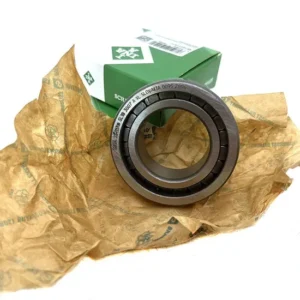
X&S INA Nup1007em Cylindrical Roller Bearing for Auto Motor Spare Part
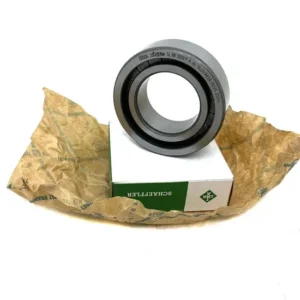
INA B7018C.T.P4S B7018E.T.P4S Angular Contact Ball Bearing for Turbojet
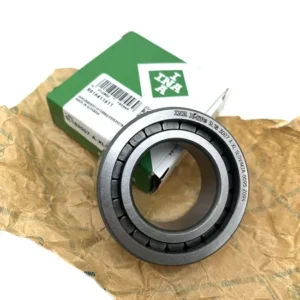
X&S NN3060/Y1 Double Row Cylindrical Roller Bearing for Heavy Load
X&S B7012E.T.P4S Angular Contact Ball Bearing for Metallurgical Rolling Mills
X&S NN3072K NN3008 Cylindrical Roller Bearing with Pin Cam Follower
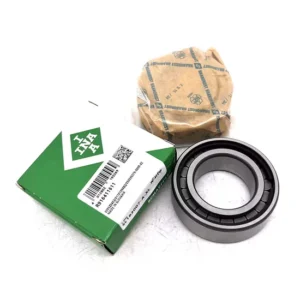
Genuine INA SL183007-A-XL NJ2208 NU2208 Cylindrical Roller Bearing for Auto Parts
INA H7012C-2RZ-P4 B706C T P4S Angular Contact Ball Bearing for Forklift Auto