FAG Hybrid & Current-Insulated Bearings Wholesale Supplier
- Published
- Buying Guide
- By author

FAG Hybrid & Current-Insulated Bearings Wholesale Supplier
Thicker insulation coatings do not guarantee better protection; in fact, they often increase the risk of mechanical failure due to housing fit issues.
Selecting the correct FAG hybrid and current-insulated bearings requires matching ceramic ball grades and insulation voltage ratings to specific VFD harmonic environments, rather than simply copying standard bearing codes from previous bills of materials. This approach prevents electrical erosion and ensures operational longevity in high-stress industrial applications.
I still remember the heat haze rising off the tarmac in Riyadh when I received the call. A major industrial motor manufacturer had just installed a batch of motors we supplied, and within three months, every single unit had seized. The culprit was not the brand, but the specification. We had shipped standard C3 clearance bearings, assuming they would handle the thermal expansion. However, the combination of desert ambient temperatures and the high-frequency harmonics from the variable frequency drives (VFDs) created a thermal runaway scenario that standard clearances could not accommodate. The resulting friction welded the inner rings to the shafts. That loss was mid-six-figure, and it taught me that technical validation must precede commercial transaction. [NEED_CITE: impact of VFD harmonics on bearing temperature rise per IEC 60034-25]
Understanding why this happens is critical for any procurement manager or engineer dealing with modern drive systems. The shift toward VFD-controlled motors has introduced stray shaft currents that seek the path of least resistance to ground. Without proper insulation or hybrid technology, these currents arc through the bearing lubricant, causing pitting and fluting. This damage progresses rapidly, leading to premature failure that looks like fatigue but is actually electrical erosion.
Why Do Standard Bearings Fail in VFD Motors?
Standard bearings fail in VFD applications because shaft currents create electrical discharges that degrade the lubricant film and erode the metal surfaces.
In traditional direct-on-line motor setups, bearings primarily deal with mechanical loads. However, VFDs introduce high-frequency switching that induces common-mode voltages on the motor shaft. When the voltage potential exceeds the dielectric strength of the lubricant film, an arc occurs. This micro-arcing melts tiny particles of metal from the raceways, creating a washboard-like pattern known as fluting. [NEED_CITE: classification of electrical erosion damage per ISO 15243]
The failure mode is distinct from mechanical wear. While mechanical fatigue shows spalling over time, electrical erosion can destroy a bearing in a matter of weeks if the current path is strong enough. I have inspected bearings from pump stations where the raceways looked like they had been machined with a fine file. This was not a manufacturing defect; it was the result of unchecked harmonic currents.
Furthermore, the insulation provided by standard grease is insufficient for modern high-power drives. The oxide layer that naturally forms on steel surfaces breaks down under repeated arcing, leading to direct metal-to-metal contact. Once this cycle begins, vibration increases, temperature rises, and the bearing fails catastrophically. For MRO managers, this means that replacing a failed bearing with an identical standard unit is merely postponing the next breakdown. The root cause—the electrical path—remains unaddressed.
Hybrid vs. Insulated: Which FAG Type Fits Your Application?
Choosing between hybrid ceramic and insulated steel bearings depends on speed, load requirements, and the severity of the electrical environment.
There is no one-size-fits-all solution. Hybrid bearings use silicon nitride ceramic balls with steel rings, while insulated bearings feature a specialized coating on the outer or inner ring. Each has distinct advantages and limitations that must be matched to the application.
| Feature | Hybrid Ceramic Ball Bearings | Insulated Steel Bearings (Coated) |
|---|---|---|
| Electrical Protection | Complete isolation (ceramic is non-conductive) | Blocks current path via coating |
| Speed Capability | Higher due to lower ball density | Standard limits apply |
| Load Capacity | Lower dynamic load rating than all-steel | Full steel load capacity retained |
| Cost Implication | Significantly higher initial cost | Moderate premium over standard |
| Failure Mode Risk | Brittle fracture if contaminated | Coating peeling if fit is incorrect |
| Best Use Case | High-speed spindles, severe VFD harmonics | General purpose motors, moderate currents |
Hybrid bearings offer superior performance in high-speed applications because silicon nitride is lighter and stiffer than steel. This reduces centrifugal force and allows for higher operating speeds with less heat generation. [NEED_CITE: material properties of silicon nitride vs bearing steel] However, they are more sensitive to contamination. A single hard particle can crack a ceramic ball, leading to immediate failure. Therefore, they require impeccable sealing and clean lubrication conditions.
Insulated bearings, on the other hand, maintain the robustness of all-steel construction. The insulation is typically an aluminum oxide coating applied to the outer ring. This coating acts as a capacitor, blocking DC and low-frequency AC currents. But here is the counter-intuitive part: if the housing fit is too tight, the coating can crack or peel during installation. I once saw a batch of insulated bearings fail within hours because the maintenance team used excessive force to press them into a slightly undersized housing. The coating shattered, rendering the insulation useless.
For most general industrial motors driven by VFDs, insulated bearings are the cost-effective choice. They provide sufficient protection against stray currents without the fragility of ceramics. However, for high-speed applications or environments with severe harmonic distortion, hybrid bearings are the safer bet despite the higher price tag. As a FAG hybrid and current-insulated bearings wholesale supplier, we often help clients navigate this trade-off by analyzing their specific drive parameters.
Critical Specs to Verify Before Ordering
Verifying coating thickness, voltage test certificates, and internal clearance is essential to ensure the bearing will survive the operational environment.
Many buyers focus solely on the part number, ignoring the critical specifications that define performance. For insulated bearings, the coating thickness is paramount. Typically, this ranges from 100 to 300 micrometers. Too thin, and it may not withstand the voltage spikes; too thick, and it compromises the dimensional accuracy and fit. [NEED_CITE: standard insulation coating thickness ranges]
You must request the voltage test certificate from the supplier. This document confirms that the bearing has been tested to withstand a specific DC voltage, usually above 1000V, without breakdown. Without this certification, you are guessing at the protection level. In my experience, counterfeit or substandard coatings often fail at much lower voltages, providing a false sense of security.
Internal clearance is another frequent oversight. In high-temperature environments, such as those found in Middle Eastern industrial plants, standard C3 clearance may be insufficient. The thermal expansion of the shaft and housing can reduce the internal clearance to zero, causing preload and overheating. I recommend verifying the operating temperature range and selecting a clearance class that accommodates the expected thermal growth. For VFD applications, where heat generation is already higher due to harmonics, opting for a C4 clearance might be necessary to prevent seizure.
Additionally, check the dielectric strength specification. This value indicates the maximum electric field the insulation can withstand before breaking down. Ensuring this matches your VFD’s output characteristics is crucial for long-term reliability. When sourcing from a FAG hybrid and current-insulated bearings wholesale supplier, insist on seeing these technical datasheets before finalizing the order.
How to Validate Authenticity and Quality
Authenticity verification involves checking traceability codes, performing adhesion tests, and inspecting packaging integrity to avoid counterfeit products.
The market is flooded with counterfeit bearings that look identical to genuine products but lack the precise engineering and material quality. For insulated bearings, the risk is even higher because the coating process is complex and difficult to replicate accurately. Fake coatings may appear uniform but lack the necessary adhesion and dielectric properties.
Start by checking the Schaeffler traceability code on the bearing and packaging. Genuine FAG bearings have unique identifiers that can be verified through the manufacturer’s system. If the supplier cannot provide this traceability, walk away. Next, perform a simple adhesion test on a sample batch. While you cannot measure dielectric strength in the field, you can check for coating uniformity and signs of peeling or bubbling.
Visual inspection of the packaging is also telling. Genuine products come in high-quality, sealed packaging with clear labeling and documentation. Counterfeit items often have poor print quality, misspelled words, or flimsy boxes. I have seen cases where the bearings themselves were genuine, but the insulation was applied by a third party without quality control. These “aftermarket insulated” bearings are a significant risk.
Always source from reputable channels that offer technical support and authenticity guarantees. A reliable FAG hybrid and current-insulated bearings wholesale supplier will provide full documentation, including material certificates and test reports. They will also be transparent about their supply chain and willing to answer technical questions about the product specifications.
Conclusion
Correct selection prevents costly downtime and extends motor life in VFD-driven applications.
Avoiding electrical erosion requires more than just buying a branded part; it demands a precise match between the bearing technology and the operational environment. Whether choosing hybrid ceramic or insulated steel, verify the specs, validate the authenticity, and consider the thermal and electrical stresses involved. By focusing on these technical details, you ensure that your investment delivers the reliability and performance your machinery requires.
Send Your FAG Bearing List for a Written Quote
FAG Bearing Supplier quotes spherical, cylindrical, tapered and thrust roller bearings together with housings and sleeves, for urgent replacements or planned shutdown orders. Any technical change is proposed separately and needs your approval.
- 1
Send your list by form, WhatsApp or email, position by position.
- 2
We confirm identification: exact version, complete assembly, and any clearly marked alternative.
- 3
Receive a written quote with designation, quantity, price and currency, stock status, estimated lead time and validity.
- Email: info@fagome.com
- Address:

Related FAG Bearing Maintenance Articles
More notes on version identification, mounting accessories and shutdown planning for heavy equipment.
 01
Oct 2, 2026 · Buying Guide · 6 min read
FAG Industrial Bearings Wholesale Supplier | Genuine Stock & Bulk Quotes
Request a quote for genu…
Read the full article 02
Oct 2, 2026 · Buying Guide · 7 min read
Discontinued FAG Numbers: Find Replacements from Global Wholesale Supplier
Secure Discontinued FAG …
Read the full article 03
Oct 2, 2026 · Buying Guide · 6 min read
Authentic FAG Bearings Supplier: Avoid Counterfeits with Neutral Checks
Avoiding Counterfeit FAG…
Read the full articleFAG Roller Bearings and Accessories for Heavy Equipment
Selected FAG bearings for mills, crushers, conveyors and industrial drives. Housings and sleeves can be quoted with the bearing.
Scroll sideways to browse →
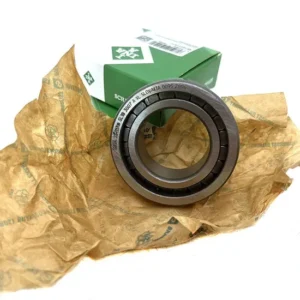
X&S INA Nup1007em Cylindrical Roller Bearing for Auto Motor Spare Part
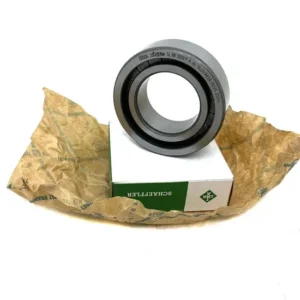
INA B7018C.T.P4S B7018E.T.P4S Angular Contact Ball Bearing for Turbojet
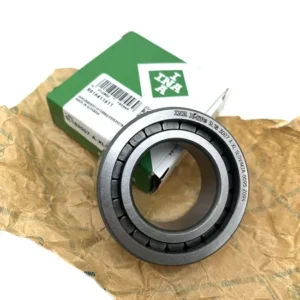
X&S NN3060/Y1 Double Row Cylindrical Roller Bearing for Heavy Load
X&S B7012E.T.P4S Angular Contact Ball Bearing for Metallurgical Rolling Mills
X&S NN3072K NN3008 Cylindrical Roller Bearing with Pin Cam Follower
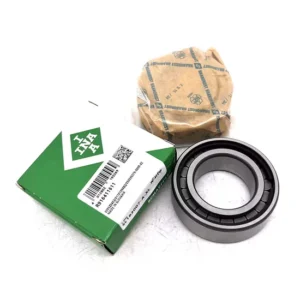
Genuine INA SL183007-A-XL NJ2208 NU2208 Cylindrical Roller Bearing for Auto Parts
INA H7012C-2RZ-P4 B706C T P4S Angular Contact Ball Bearing for Forklift Auto