FAG Equivalents for NU Series Cylindrical Roller Bearings Wholesale Supplier
- Published
- Brands & Alternatives
- By author

FAG Equivalents for NU Series Cylindrical Roller Bearings Wholesale Supplier
Matching basic dimensions is not enough to replace a FAG NU bearing.
To select reliable FAG equivalents for NU series cylindrical roller bearings, you must match the internal clearance class (such as C3), cage material composition, and dimensional tolerance grade, rather than relying solely on bore and outer diameter measurements. Ignoring these specifications leads to premature thermal failure in heavy-load applications.
The smell of burnt oil in a cement plant’s main drive room is distinct. It signals that a critical component has failed under stress. I stood next to a seized roller crusher in Nigeria, watching maintenance teams scramble. The original equipment specified a FAG NU316 bearing. The local supply chain was empty, and sea freight from Europe would take months. We had a box of domestic NU316 bearings in stock. They matched the 80mm bore and 165mm outer diameter perfectly. But simply swapping them without checking the internal clearance would have been a mistake. The original unit operated with a C3 clearance to accommodate thermal expansion from high friction loads. A standard clearance equivalent would have locked up within hours. By verifying the clearance code and cage design before installation, we kept the plant running until the rainy season ended. This experience highlights why understanding the technical nuances of FAG equivalents for NU series components is vital for procurement professionals. [NEED_CITE: ISO 15243 failure mode classification for thermal damage]
Procurement managers often assume that any bearing with the same part number prefix is interchangeable. This assumption ignores the engineering precision required for industrial machinery. When sourcing FAG equivalents for NU series replacements, the goal is to maintain equipment reliability while reducing lead times. The following sections detail how to evaluate alternatives based on critical technical parameters.
Why Dimensional Matching Fails in Heavy-Duty Applications
Basic bore and outer diameter measurements do not guarantee functional equivalence in high-load environments.
Cylindrical roller bearings are designed to handle heavy radial loads. The NU design allows for axial displacement of the shaft relative to the housing, which is crucial for accommodating thermal expansion. However, the internal geometry determines how the bearing handles this movement. If you source FAG equivalents for NU series units based only on external dimensions, you risk mismatching the internal fit.
The primary failure point in incorrect substitutions is internal clearance. Bearings are manufactured with specific clearance classes, such as C2, C3, or C4. A standard clearance bearing might work in a low-speed fan, but it will fail in a vibrating screen or crusher. The rollers need space to expand as they heat up. Without adequate clearance, the rollers press against the raceways, generating excessive heat. This heat further expands the metal, creating a feedback loop that ends in seizure. [NEED_CITE: Thermal expansion coefficients of bearing steel vs operational temperature ranges]
Another critical factor is the cage material. FAG often uses machined brass or polyamide cages in their NU series. Cheaper alternatives might use stamped steel cages. Stamped cages are less robust and can deform under heavy vibration or shock loads. In a mining application, a deformed cage can release rollers, causing catastrophic damage to the housing. When evaluating FAG equivalents for NU series options, always request the cage material specification. A machined brass cage offers better guidance and heat dissipation than stamped steel.
| Parameter | Standard Commercial Grade | Premium Equivalent Grade | Risk of Mismatch |
|---|---|---|---|
| Internal Clearance | Standard (CN) | C3 or C4 | High thermal seizure risk |
| Cage Material | Stamped Steel | Machined Brass/Polyamide | Cage deformation under shock |
| Raceway Finish | Ground | Super-finished | Increased noise and wear |
| Tolerance Class | Normal (P0) | P6 or P5 | Vibration and misalignment |
Evaluating Cage Design and Material Durability
The cage holds the rollers in place and dictates the bearing’s speed and load limits.
In the NU design, the cage is a critical structural element. It maintains the spacing between rollers and guides them during rotation. When selecting FAG equivalents for NU series bearings, the cage design often reveals the quality tier of the manufacturer. High-quality equivalents use machined cages made from brass or high-strength polyamide. These materials resist deformation and offer smooth operation.
Brass cages are common in heavy industrial applications. They are robust and can withstand high temperatures. However, brass is susceptible to corrosion in certain chemical environments. Polyamide cages, often reinforced with glass fiber, are lighter and offer good sliding properties. They are resistant to corrosion but have lower temperature limits. Stamped steel cages are the lowest cost option. They are suitable for light loads but prone to fatigue cracking in heavy-duty cycles.
I once inspected a batch of imported bearings for a steel mill client. The external dimensions were perfect, but the cages were stamped from thin steel. The application involved heavy shock loads from rolling mills. Within weeks, several bearings failed due to cage fracture. The original FAG specifications called for a machined brass cage. The supplier had substituted a cheaper design to cut costs. This incident underscores the importance of verifying cage specifications when sourcing FAG equivalents for NU series products. [NEED_CITE: Mechanical properties of bearing cage materials under shock loading]
Do not assume that all “NU” bearings use the same cage type. Always check the suffix codes. For example, a suffix indicating a brass cage is different from one indicating polyamide. If the documentation does not specify the cage material, request a sample or detailed drawing. A reliable supplier will provide this information transparently.
Internal Clearance and Thermal Management
Correct clearance selection prevents thermal locking in high-speed or high-load operations.
Internal clearance is the amount of play between the rollers and raceways. It is not a defect but a designed feature. As a bearing operates, friction generates heat. The inner ring, outer ring, and rollers all expand. If there is no room for this expansion, the bearing binds. This is known as thermal locking.
FAG bearings typically specify clearance classes like C3 for normal industrial applications. C3 clearance is larger than standard clearance. When replacing a FAG NU bearing, you must match this clearance. Using a standard clearance equivalent in a C3 application will lead to premature failure. Conversely, using a C4 clearance in a standard application might cause excessive vibration and noise.
Measuring internal clearance requires specialized tools, but you can verify it through documentation. Reputable manufacturers test every batch and provide clearance data. When sourcing FAG equivalents for NU series units, ask for the inspection report. Look for the measured clearance values and ensure they fall within the specified range for the designated class. [NEED_CITE: ISO 5753 standards for radial internal clearance]
Temperature also affects clearance. In hot environments, the initial clearance might decrease as the bearing heats up. Engineers often select a higher clearance class to compensate. If you are replacing a bearing in a high-temperature environment, do not downgrade the clearance class to save money. The cost of downtime far exceeds the price difference between clearance classes.
Tolerance Classes and Precision Requirements
Precision grades determine the runout and vibration levels of the rotating assembly.
Tolerance classes define the allowable deviation in dimensions and geometry. Standard bearings are usually P0 (Normal) class. High-precision applications require P6 or P5 classes. FAG produces bearings in various precision grades. When selecting FAG equivalents for NU series replacements, you must match the precision grade of the original unit.
Using a P0 bearing in a P6 application will result in excessive runout. This causes vibration, noise, and uneven load distribution. In precision machine tools or high-speed motors, this is unacceptable. However, in a slow-moving conveyor roller, a P0 bearing might be sufficient. The key is to know the application requirements.
Check the original bearing’s marking for precision codes. If it is unmarked, it is likely P0. If it has a P6 or P5 marking, you must source an equivalent with the same precision. High-precision bearings require tighter control over manufacturing processes. Not all suppliers can consistently produce P5 grade bearings. Verify the supplier’s quality control capabilities before placing large orders. [NEED_CITE: ABMA or ISO tolerance class definitions for rolling bearings]
Precision also affects the fit between the bearing and the shaft/housing. A P5 bearing requires a tighter fit than a P0 bearing. If the shaft is machined for a P5 bearing, a P0 equivalent might be too loose, leading to creep and fretting corrosion. Always coordinate the bearing precision with the mating component tolerances.
Case Study: Avoiding Downtime in Mining Operations
Real-world validation of technical selection criteria in harsh environments.
A copper mine in South America faced frequent failures in their conveyor drive rollers. The original equipment used FAG NU2240 bearings. The maintenance team switched to a cheaper alternative that matched the dimensions but ignored the clearance and cage specifications. The new bearings failed within three months due to cage fracture and thermal seizure.
We analyzed the failed units and identified two issues. First, the replacement bearings had standard clearance instead of the required C3. Second, the cages were stamped steel instead of machined brass. The heavy load and vibration of the conveyor caused the cages to deform and the bearings to overheat.
We sourced FAG equivalents for NU series bearings that matched the original specifications: C3 clearance, machined brass cages, and P6 precision. We also verified the raceway finish to ensure smooth operation. After installing the correct equivalents, the bearings lasted over a year without failure. The mine reduced its maintenance costs and avoided unplanned downtime. This case demonstrates that technical diligence pays off. [NEED_CITE: Case studies on bearing failure analysis in mining industry]
Conclusion
Selecting the right equivalent requires technical verification, not just part number matching.
Replacing FAG NU series bearings with equivalents is a viable strategy to reduce costs and lead times. However, success depends on matching internal clearance, cage material, and precision tolerances. Do not rely solely on external dimensions. Verify the technical specifications with your supplier and request inspection reports. By focusing on these critical parameters, you can ensure reliable performance and avoid costly downtime. Sourcing FAG equivalents for NU series components demands attention to detail, but the rewards in operational efficiency are significant.
Send Your FAG Bearing List for a Written Quote
FAG Bearing Supplier quotes spherical, cylindrical, tapered and thrust roller bearings together with housings and sleeves, for urgent replacements or planned shutdown orders. Any technical change is proposed separately and needs your approval.
- 1
Send your list by form, WhatsApp or email, position by position.
- 2
We confirm identification: exact version, complete assembly, and any clearly marked alternative.
- 3
Receive a written quote with designation, quantity, price and currency, stock status, estimated lead time and validity.
- Email: info@fagome.com
- Address:

Related FAG Bearing Maintenance Articles
More notes on version identification, mounting accessories and shutdown planning for heavy equipment.
 01
Oct 3, 2026 · Brands & Alternatives · 8 min read
FAG Industrial Bearings: Genuine Wholesale Supplier for Global Bulk Orders
Secure genuine FAG indus…
Read the full article 02
Oct 3, 2026 · Brands & Alternatives · 8 min read
FAG Railway Bearings vs Other Brands: Wholesale Supplier
Comparing FAG railway be…
Read the full article 03
Oct 3, 2026 · Brands & Alternatives · 7 min read
FAG Large Bearings vs Chinese: Wholesale Supplier
Struggling to balance re…
Read the full articleFAG Roller Bearings and Accessories for Heavy Equipment
Selected FAG bearings for mills, crushers, conveyors and industrial drives. Housings and sleeves can be quoted with the bearing.
Scroll sideways to browse →
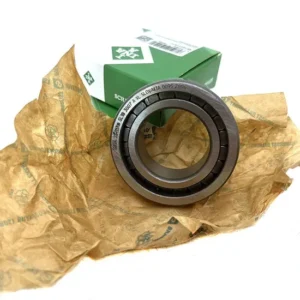
X&S INA Nup1007em Cylindrical Roller Bearing for Auto Motor Spare Part
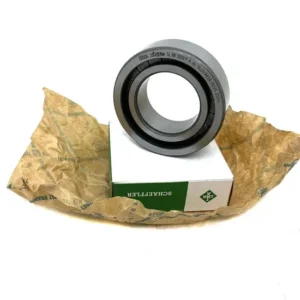
INA B7018C.T.P4S B7018E.T.P4S Angular Contact Ball Bearing for Turbojet
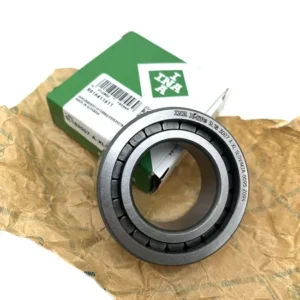
X&S NN3060/Y1 Double Row Cylindrical Roller Bearing for Heavy Load
X&S B7012E.T.P4S Angular Contact Ball Bearing for Metallurgical Rolling Mills
X&S NN3072K NN3008 Cylindrical Roller Bearing with Pin Cam Follower
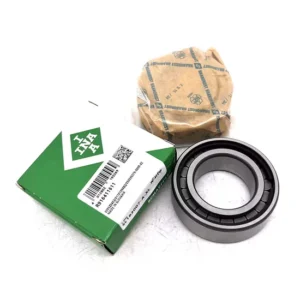
Genuine INA SL183007-A-XL NJ2208 NU2208 Cylindrical Roller Bearing for Auto Parts
INA H7012C-2RZ-P4 B706C T P4S Angular Contact Ball Bearing for Forklift Auto