FAG Cylindrical Roller Bearings E-TVP2 M1 Wholesale Supplier
- Published
- Buying Guide
- By author

FAG Cylindrical Roller Bearings E-TVP2 M1 Wholesale Supplier
Brass is not always the superior choice for heavy-duty applications. In high-speed scenarios, a machined brass cage can introduce vibration and heat buildup that a modern polymer design effectively eliminates. Selecting the wrong cage material leads to premature seizure, regardless of the bearing’s load rating.
For FAG cylindrical roller bearings, choose the E-TVP2 suffix for high-speed, low-noise, and moderate-temperature applications where weight reduction and dynamic stability are critical. Choose the M1 suffix for extreme thermal environments, heavy shock loads, and conditions where chemical resistance or higher mechanical strength is required. The core differentiator is not just material, but the operating temperature threshold and speed dynamics defined by the cage design.
I still remember the silence in the workshop after the main drive of a conveyor system halted. It was not a gradual slowdown; it was an abrupt, grinding stop. The maintenance team pulled the housing apart to find the cylindrical roller bearing fused into a single mass of metal and melted polymer. The drawing had specified a standard cylindrical roller bearing without a cage suffix. I had supplied what was available in stock: a unit with a TVP2 cage. The application environment, however, hovered consistently above the thermal limit of the glass-fiber reinforced polyamide. The cage softened, lost its structural integrity, and allowed the rollers to skew and lock. That incident shifted my focus from merely matching dimensions to rigorously verifying the suffix codes that define internal construction. [NEED_CITE: FAG technical documentation on cage material temperature limits]
Understanding these suffixes is the first step in preventing such failures. When sourcing from a FAG Cylindrical Roller Bearings E-TVP2 M1 Wholesale Supplier, buyers must look beyond the basic part number. The suffix dictates how the bearing behaves under stress, heat, and speed. Ignoring this detail turns a precision component into a liability.
What Do E-TVP2 and M1 Suffixes Mean?
The suffixes E-TVP2 and M1 refer specifically to the cage design and material, which guide the rolling elements and maintain spacing within the bearing. These are not arbitrary codes but precise definitions of the bearing’s internal architecture.
The E-TVP2 designation indicates a two-piece window-type cage made from glass-fiber reinforced polyamide 66. The “E” often denotes an optimized internal design with higher load capacity due to larger or more numerous rollers, while the TVP2 specifies the cage material and construction. This polymer cage is lightweight, which reduces centrifugal forces at high speeds. It also offers good sliding properties, reducing friction between the cage and the rolling elements. [NEED_CITE: ISO standards for bearing cage classification and material properties]
In contrast, the M1 suffix signifies a solid, machined cage made from brass. Brass is chosen for its robustness, higher temperature tolerance, and resistance to certain chemicals. The machining process allows for precise guidance of the rollers, making it suitable for applications where the bearing experiences significant axial loads or shock. Unlike the molded polymer, the brass cage does not have the same thermal ceiling, allowing it to maintain structural integrity in hotter environments.
| Feature | E-TVP2 Cage | M1 Cage |
|---|---|---|
| Material | Glass-fiber reinforced polyamide 66 | Machined brass |
| Weight | Light | Heavy |
| Primary Advantage | High-speed capability, low noise | High thermal resistance, shock load capacity |
| Guidance Method | Window-type, roller-guided | Solid, roller-guided |
| Typical Application | Electric motors, pumps, gearboxes | Steel mills, mining crushers, high-temp fans |
A European wind farm operator once reported excessive noise from the gearbox bearings during initial commissioning. The bearings were correctly sized for the load, but the cage type was M1 brass. At the high rotational speeds of the generator input stage, the heavier brass cage created imbalance and vibration. Switching to E-TVP2 cages reduced the mass significantly, dampening the vibration and lowering the operational noise floor. This case highlights that heavier does not mean better when dynamics are involved. [NEED_CITE: Case studies on bearing cage influence on vibration in high-speed applications]
When engaging with a FAG Cylindrical Roller Bearings E-TVP2 M1 Wholesale Supplier, request the specific datasheet for the suffix in question. Do not assume interchangeability. The physical dimensions may be identical, but the performance envelope is distinct.
How Do Temperature Limits Dictate Your Choice?
Temperature is the most critical factor in cage selection. Polymer materials have a defined thermal range beyond which they lose mechanical strength. Brass, being a metal, retains its properties at much higher temperatures.
The E-TVP2 cage is designed for continuous operation up to a specific temperature threshold. Beyond this point, the polyamide begins to soften. If the bearing operates in an environment where heat generation from friction or external sources pushes the temperature past this limit, the cage can deform. This deformation leads to increased clearance, roller misalignment, and eventual failure. [NEED_CITE: Manufacturer guidelines on polyamide cage temperature limits]
M1 brass cages do not suffer from this thermal softening. They can withstand significantly higher operating temperatures without losing structural integrity. This makes them the default choice for applications near heat sources, such as kilns, dryers, or engines. However, brass has its own limitations regarding lubrication compatibility and potential for galvanic corrosion in certain wet environments, though this is less common in standard industrial settings.
A Middle East steel mill experienced repeated failures in their cooling fan bearings. The ambient temperature combined with the heat from the process pushed the bearing housing temperature well above the safe limit for polymer cages. The initial specification called for TVP2 due to cost considerations. After switching to M1 brass cages, the failure rate dropped noticeably. The brass cages maintained their shape and guidance function despite the sustained high heat. This switch was not about load capacity but thermal survival.
Buyers must assess the maximum operating temperature of their application, including transient spikes. If the temperature approaches the upper limit of the polymer, the M1 cage is the safer option. A reliable FAG Cylindrical Roller Bearings E-TVP2 M1 Wholesale Supplier will ask for these thermal parameters before confirming stock availability. Do not rely on general room-temperature assumptions for industrial machinery.
Which Cage Wins in High-Speed vs Heavy-Load Scenarios?
The choice between E-TVP2 and M1 often comes down to the balance between speed and load. Each material excels in different dynamic conditions.
High-speed applications benefit from the lightness of the E-TVP2 cage. Centrifugal force increases with the square of the speed. A heavier brass cage exerts more force on the guiding surfaces, leading to higher friction and heat generation. The polymer cage minimizes this effect, allowing the bearing to run cooler and smoother at elevated RPMs. Additionally, the inherent damping properties of polyamide reduce noise, making E-TVP2 ideal for applications where acoustic performance matters, such as in HVAC systems or precision machine tools. [NEED_CITE: Dynamics of rolling element bearings at high speeds]
Conversely, heavy-load and shock-load scenarios favor the M1 brass cage. Brass has higher mechanical strength and stiffness than polyamide. In applications where the bearing experiences sudden impacts or severe vibration, such as in mining crushers or vibrating screens, a polymer cage might crack or fracture. The machined brass cage absorbs these shocks without deforming, ensuring the rollers remain properly spaced and guided.
A mining equipment manufacturer in South America reported cracking issues with polymer cages in their jaw crusher bearings. The shock loads from crushing large rocks exceeded the impact resistance of the TVP2 material. Switching to M1 brass cages resolved the issue, as the metal cage could withstand the repetitive high-impact forces without fracturing. The trade-off was a slight increase in operating temperature due to the heavier cage, but the application speed was low enough that this was not a concern.
| Scenario | Recommended Cage | Reason |
|---|---|---|
| High Speed (> Reference Speed) | E-TVP2 | Lower mass reduces centrifugal force and heat |
| Low Noise Requirement | E-TVP2 | Polymer dampens vibration and sound |
| High Shock Load | M1 | Brass offers superior impact resistance |
| High Operating Temperature | M1 | Brass maintains strength at elevated temps |
| Moderate Speed and Load | E-TVP2 | Cost-effective and efficient for standard duties |
When sourcing from a FAG Cylindrical Roller Bearings E-TVP2 M1 Wholesale Supplier, provide details on both the rotational speed and the nature of the load. Is it steady or pulsating? Is speed constant or variable? These factors determine whether the lightweight advantage of TVP2 or the robustness of M1 is more valuable.
How to Verify Genuine FAG Cages During Procurement?
Counterfeit bearings often cut corners on internal components, particularly cages. A fake bearing might use inferior plastic or recycled brass that lacks the necessary strength or thermal properties. Verifying the authenticity of the cage material is essential for ensuring performance.
Genuine FAG bearings come with traceability documentation that includes batch numbers and material certifications. The packaging should be intact, with clear labeling that matches the part number and suffix. Inspect the cage visually if possible. The E-TVP2 cage should have a consistent beige or light brown color with no visible voids or irregularities in the glass-fiber reinforcement. The M1 brass cage should have a uniform golden hue and smooth machined surfaces without burrs or tool marks that indicate poor manufacturing quality. [NEED_CITE: Guidelines for identifying counterfeit industrial bearings]
Request material certificates from your supplier. For M1 cages, this should confirm the brass alloy composition. For E-TVP2, it should verify the use of glass-fiber reinforced polyamide 66. A reputable FAG Cylindrical Roller Bearings E-TVP2 M1 Wholesale Supplier will provide these documents without hesitation. Be wary of suppliers who cannot produce traceability paperwork or who offer prices significantly below market average, as this often indicates compromised quality.
In one instance, a distributor in Southeast Asia received a shipment of bearings labeled as M1. Upon inspection, the cages appeared dull and had rough edges. Laboratory testing revealed they were made from a low-grade brass alloy with impurities that weakened the structure. The supplier had substituted genuine parts with counterfeits. This highlights the importance of working with verified partners who prioritize authenticity over margin.
Conclusion
Selecting the correct cage material is as critical as choosing the right bearing size. The E-TVP2 and M1 suffixes represent distinct engineering solutions for different operational challenges.
Match the cage to the environment: use E-TVP2 for speed and efficiency, and M1 for heat and shock. Always verify the suffix against your application’s thermal and dynamic requirements. Partner with a trusted FAG Cylindrical Roller Bearings E-TVP2 M1 Wholesale Supplier who provides genuine products and technical transparency to ensure long-term reliability.
Send Your FAG Bearing List for a Written Quote
FAG Bearing Supplier quotes spherical, cylindrical, tapered and thrust roller bearings together with housings and sleeves, for urgent replacements or planned shutdown orders. Any technical change is proposed separately and needs your approval.
- 1
Send your list by form, WhatsApp or email, position by position.
- 2
We confirm identification: exact version, complete assembly, and any clearly marked alternative.
- 3
Receive a written quote with designation, quantity, price and currency, stock status, estimated lead time and validity.
- Email: info@fagome.com
- Address:

Related FAG Bearing Maintenance Articles
More notes on version identification, mounting accessories and shutdown planning for heavy equipment.
 01
Oct 2, 2026 · Buying Guide · 6 min read
FAG Industrial Bearings Wholesale Supplier | Genuine Stock & Bulk Quotes
Request a quote for genu…
Read the full article 02
Oct 2, 2026 · Buying Guide · 7 min read
Discontinued FAG Numbers: Find Replacements from Global Wholesale Supplier
Secure Discontinued FAG …
Read the full article 03
Oct 2, 2026 · Buying Guide · 6 min read
Authentic FAG Bearings Supplier: Avoid Counterfeits with Neutral Checks
Avoiding Counterfeit FAG…
Read the full articleFAG Roller Bearings and Accessories for Heavy Equipment
Selected FAG bearings for mills, crushers, conveyors and industrial drives. Housings and sleeves can be quoted with the bearing.
Scroll sideways to browse →
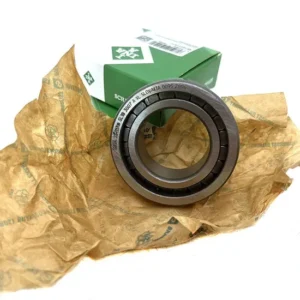
X&S INA Nup1007em Cylindrical Roller Bearing for Auto Motor Spare Part
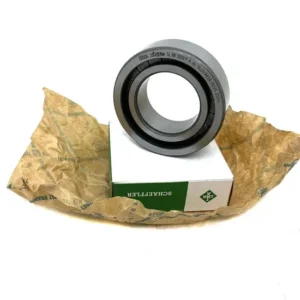
INA B7018C.T.P4S B7018E.T.P4S Angular Contact Ball Bearing for Turbojet
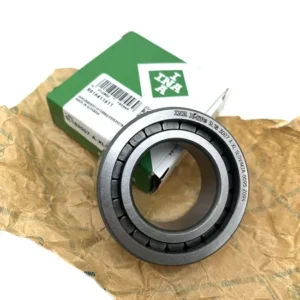
X&S NN3060/Y1 Double Row Cylindrical Roller Bearing for Heavy Load
X&S B7012E.T.P4S Angular Contact Ball Bearing for Metallurgical Rolling Mills
X&S NN3072K NN3008 Cylindrical Roller Bearing with Pin Cam Follower
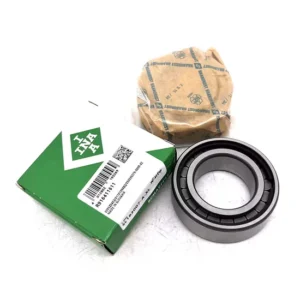
Genuine INA SL183007-A-XL NJ2208 NU2208 Cylindrical Roller Bearing for Auto Parts
INA H7012C-2RZ-P4 B706C T P4S Angular Contact Ball Bearing for Forklift Auto