FAG Bearings with Solid Lubricant Wholesale Supplier
- Published
- Buying Guide
- By author

FAG Bearings with Solid Lubricant Wholesale Supplier
Solid lubricant does not mean zero maintenance. It means the maintenance interval shifts from frequent grease replenishment to rigorous condition monitoring. Selecting the right FAG bearings with solid lubricant requires matching specific temperature peaks and load limits to site conditions, backed by strict authenticity verification to prevent catastrophic failures.
I still recall the dust choking the air at a copper mine in Chile, where conveyor idlers failed repeatedly despite daily greasing. The heat was relentless, and standard grease turned into a gritty paste that accelerated wear rather than preventing it. When I first sourced replacements, I focused solely on the part number, ignoring the internal clearance and thermal expansion limits. The bearings seized within days, causing a mid-six-figure loss in downtime and replacement costs. That failure taught me that FAG bearings with solid lubricant are not just a drop-in substitute for standard units; they are engineered solutions for extreme environments where traditional lubrication fails. Today, when advising clients across Latin America and Africa, I prioritize understanding the operational context before discussing inventory.
The transition from liquid grease to solid lubricant changes the fundamental physics of bearing operation. Instead of a fluid film that can be pumped or injected, the lubricant is integrated into the bearing cage or matrix, releasing slowly under friction and heat. This design eliminates the risk of grease washout in wet conditions and prevents dust ingress from turning lubricant into an abrasive compound. However, this benefit comes with strict constraints on load capacity and speed. Buyers must verify that the selected FAG bearings with solid lubricant align with their specific application demands, rather than assuming universal compatibility.
What Defines a Genuine FAG Solid Lubricant Bearing?
True solid lubricant bearings integrate lubricants into the matrix or cages, differing fundamentally from surface-coated alternatives. Many suppliers offer bearings with external coatings or simple grease packing, labeling them as “solid lube” for marketing purposes. These imitations fail under high thermal stress because the lubricant cannot replenish the contact zones effectively. A genuine FAG bearings with solid lubricant unit uses a specialized polymer cage impregnated with solid lubricant particles, ensuring consistent release over the bearing’s lifespan.
The distinction lies in the manufacturing process. Authentic units undergo precise impregnation techniques that bond the lubricant to the cage material, preventing dislodgement during high-vibration operations. In contrast, counterfeit or inferior products often rely on superficial treatments that wear off quickly. [NEED_CITE: differences between impregnated cage technology and surface coating methods] When inspecting samples, look for uniform coloration in the cage material and verify the part number against official catalogs. Any deviation in the cage texture or color may indicate a non-genuine product.
For distributors and MRO operators, understanding this difference is critical. A fake bearing might appear identical externally but lacks the internal structural integrity to handle heavy loads. In a cement plant kiln fan application, for instance, the thermal expansion must be accommodated by the bearing design. If the solid lubricant is merely a surface additive, it will degrade rapidly, leading to premature seizure. Genuine FAG bearings with solid lubricant maintain their lubricating properties even at elevated temperatures, provided the load remains within specified limits. This reliability is why verifying the source is as important as selecting the correct specification.
How to Match Solid Lube Bearings to Your Specific Site Conditions?
Selection depends on precise temperature peaks, dust ingress levels, and load profiles, not just general “high-temp” claims. Many buyers mistakenly assume that any solid lubricant bearing can withstand extreme heat. In reality, each variant has a defined operating range. Exceeding this range causes the polymer cage to soften or deform, leading to immediate failure. To avoid this, map your site’s temperature profile against the lubricant’s degradation curve. [NEED_CITE: temperature range mapping vs lubricant degradation curves for polymer cages]
Consider a mining conveyor system exposed to direct sunlight and ambient heat from crushed ore. The bearing housing temperature may fluctuate significantly throughout the day. A standard solid lubricant bearing might handle the average temperature but fail during peak heat spikes. In such cases, selecting a variant with higher thermal stability is essential. Additionally, dust ingress levels affect performance. While solid lubricant prevents grease from attracting dust, excessive particulate matter can still abrade the rolling elements if seals are inadequate.
| Condition Factor | Standard Grease-Lubed Bearing | Genuine FAG Solid Lubricant Bearing |
|---|---|---|
| Dust Ingress Resistance | Low (grease attracts dust) | High (no sticky residue) |
| Maintenance Frequency | High (regular re-greasing) | Low (condition monitoring only) |
| Temperature Limit | Moderate (grease degrades) | High (depends on cage material) |
| Load Capacity Derating | Minimal | Noticeable (due to cage material) |
A European wind farm operator once reported extended service life after switching to FAG bearings with solid lubricant for main shaft applications. The key was not just the lubricant type but the careful selection of clearance classes to accommodate thermal expansion. By matching the bearing’s internal geometry to the expected temperature swings, they avoided the micro-spalling that had plagued their previous installations. This case highlights the importance of holistic selection, considering both lubrication and mechanical fit.
When evaluating site conditions, also consider the load direction and magnitude. Solid lubricant bearings often have reduced dynamic load ratings compared to their steel-caged counterparts due to the softer cage material. [NEED_CITE: load rating derating factors at elevated temperatures for polymer cages] If your application involves heavy shock loads, ensure the selected FAG bearings with solid lubricant can withstand the stress without cage deformation. Consulting technical datasheets and seeking expert advice can prevent costly mismatches.
Why Do Counterfeit Solid Lube Bearings Fail Prematurely?
Fakes use inferior base metals and fake lubricants that seize under heavy loads. The market is flooded with counterfeit bearings that mimic the appearance of genuine products but lack the internal quality. These units often use low-grade steel with high inclusion density, making them prone to fatigue cracking. [NEED_CITE: root cause distribution per ISO 15243 for bearing failures] When combined with substandard solid lubricant materials, the result is rapid degradation and unexpected downtime.
In a recent case, a Middle East steel mill experienced repeated failures in their roller table bearings. Upon investigation, the failed units were found to have cages made from recycled plastic with inconsistent lubricant distribution. The lubricant had clumped in certain areas, leaving other parts of the cage dry. This uneven release caused localized overheating and eventual seizure. Genuine FAG bearings with solid lubricant undergo strict quality control to ensure uniform impregnation, preventing such issues.
Counterfeit bearings also lack the precise dimensional tolerances required for smooth operation. Even minor deviations in raceway geometry can lead to increased friction and heat generation. In high-temperature environments, this excess heat accelerates the degradation of the solid lubricant, creating a vicious cycle of failure. Buyers must be vigilant, as visual inspection alone is often insufficient to detect these flaws. Relying on reputable suppliers with traceable documentation is the only way to mitigate this risk.
The cost of using counterfeit FAG bearings with solid lubricant extends beyond the price of the bearing itself. Unplanned downtime, equipment damage, and safety hazards can result in losses far exceeding the savings from cheaper alternatives. For MRO operators, the priority should be reliability and longevity, not initial purchase price. Verifying the authenticity of each batch ensures that the bearings perform as intended, protecting both equipment and operational continuity.
How to Verify Authenticity and Demand Proper Documentation?
Buyers must require full traceability, mill certificates, and verify part numbers directly against official FAG catalogs. Authenticity verification is not just a formality; it is a critical step in ensuring bearing performance. Start by requesting the original packaging and checking for security features such as holograms or unique serial numbers. Cross-reference the part number with the manufacturer’s online database to confirm its validity. [NEED_CITE: verification checklist including X-ray fluorescence for material and batch traceability docs]
Material analysis can also reveal counterfeit products. X-ray fluorescence (XRF) testing can identify the chemical composition of the steel and cage material, comparing it against known standards for genuine FAG bearings with solid lubricant. Discrepancies in alloy content or impurity levels are clear indicators of fake products. While this method requires specialized equipment, it is invaluable for high-value orders or critical applications.
Documentation plays a crucial role in verification. Genuine suppliers provide mill certificates, test reports, and proof of origin for each batch. These documents trace the bearing from production to delivery, ensuring transparency. If a supplier cannot provide complete documentation, it is a red flag. As a global supplier, we emphasize the importance of these records, offering full traceability for all FAG bearings with solid lubricant in our inventory. This commitment helps clients avoid the risks associated with counterfeit products.
Technical selection support is another layer of verification. Reputable suppliers offer engineering assistance to ensure the chosen bearing matches the application requirements. This service includes reviewing load calculations, temperature profiles, and mounting instructions. By leveraging this expertise, buyers can make informed decisions and avoid common pitfalls. Ensuring that every FAG bearings with solid lubricant unit is genuine and correctly specified is the foundation of reliable industrial operations.
Conclusion
Selecting the right bearing is about matching engineering realities, not just marketing claims. Genuine FAG bearings with solid lubricant offer superior performance in harsh environments, but only when correctly selected and verified. Counterfeit products pose significant risks, making authenticity checks essential for every purchase. By prioritizing traceability and technical accuracy, operators can ensure long-term reliability and minimize downtime.
Send Your FAG Bearing List for a Written Quote
FAG Bearing Supplier quotes spherical, cylindrical, tapered and thrust roller bearings together with housings and sleeves, for urgent replacements or planned shutdown orders. Any technical change is proposed separately and needs your approval.
- 1
Send your list by form, WhatsApp or email, position by position.
- 2
We confirm identification: exact version, complete assembly, and any clearly marked alternative.
- 3
Receive a written quote with designation, quantity, price and currency, stock status, estimated lead time and validity.
- Email: info@fagome.com
- Address:

Related FAG Bearing Maintenance Articles
More notes on version identification, mounting accessories and shutdown planning for heavy equipment.
 01
Oct 2, 2026 · Buying Guide · 6 min read
FAG Industrial Bearings Wholesale Supplier | Genuine Stock & Bulk Quotes
Request a quote for genu…
Read the full article 02
Oct 2, 2026 · Buying Guide · 7 min read
Discontinued FAG Numbers: Find Replacements from Global Wholesale Supplier
Secure Discontinued FAG …
Read the full article 03
Oct 2, 2026 · Buying Guide · 6 min read
Authentic FAG Bearings Supplier: Avoid Counterfeits with Neutral Checks
Avoiding Counterfeit FAG…
Read the full articleFAG Roller Bearings and Accessories for Heavy Equipment
Selected FAG bearings for mills, crushers, conveyors and industrial drives. Housings and sleeves can be quoted with the bearing.
Scroll sideways to browse →
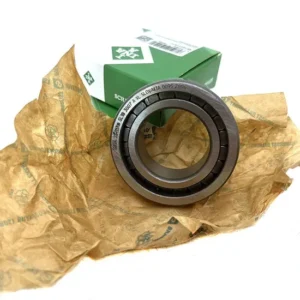
X&S INA Nup1007em Cylindrical Roller Bearing for Auto Motor Spare Part
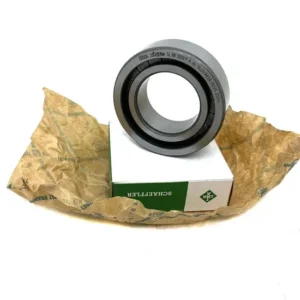
INA B7018C.T.P4S B7018E.T.P4S Angular Contact Ball Bearing for Turbojet
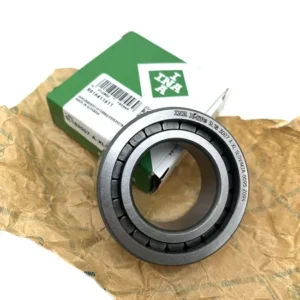
X&S NN3060/Y1 Double Row Cylindrical Roller Bearing for Heavy Load
X&S B7012E.T.P4S Angular Contact Ball Bearing for Metallurgical Rolling Mills
X&S NN3072K NN3008 Cylindrical Roller Bearing with Pin Cam Follower
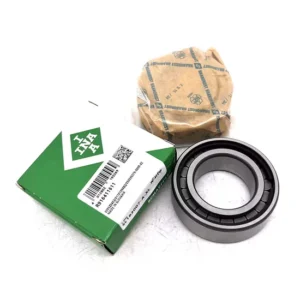
Genuine INA SL183007-A-XL NJ2208 NU2208 Cylindrical Roller Bearing for Auto Parts
INA H7012C-2RZ-P4 B706C T P4S Angular Contact Ball Bearing for Forklift Auto