FAG Bearings Import Duties by Market: Wholesale Supplier Guide
- Published
- Procurement & Trade FAQs
- By author

FAG Bearings Import Duties by Market: Wholesale Supplier Guide
Tariff rates do not depend on product value; they depend entirely on HS code precision.
Accurate HS code classification and complete traceability documents are critical to avoiding punitive tariffs and customs delays when importing FAG bearings globally. Regional distributors and MRO buyers must prioritize correct tariff planning and factory-level documentation to optimize landed costs and prevent port detention.
I still remember the silence on the phone line from a client in Buenos Aires. It was not the usual chatter about delivery schedules or technical specifications. It was the heavy, expensive silence of goods stuck at customs. We had shipped a container of tapered roller bearings, and because the HS code was classified one digit off from the local requirement, combined with missing original traceability files, the shipment was held for weeks. The penalty tariffs alone wiped out the margin for that quarter, and the final payment was delayed for months. That incident changed how I approach every single shipment of Import Duties on FAG Bearings. It is not enough to know the bearing dimensions; you must know the customs logic of the destination country.
Understanding these nuances is the difference between a smooth transaction and a logistical nightmare. Let us break down exactly how to navigate this complex landscape.
How Do HS Codes Dictate FAG Bearing Import Duties?
The Harmonized System (HS) code is the primary determinant of your tariff rate, not the brand reputation or invoice price.
Many buyers assume that all ball bearings fall under a single generic category. This is a dangerous misconception. The World Customs Organization (WCO) distinguishes sharply between different bearing types, and each maps to a different tariff bracket [NEED_CITE: WCO Harmonized System explanatory notes for heading 8482]. For instance, deep groove ball bearings have a distinct classification from spherical roller bearings or tapered roller bearings. A misclassification here does not just result in a minor administrative fee; it can trigger a full customs audit and retroactive penalties.
Consider the case of a distributor in Southeast Asia who received a mixed-brand container. The commercial invoice listed “bearings” generically. However, the local customs authority requires specific sub-headings for angular contact ball bearings versus cylindrical roller bearings. Because the declaration was vague, the entire container was flagged for inspection. The clearance process stretched over multiple cycles, incurring storage fees that exceeded the freight cost.
To avoid this, you must map your Import Duties on FAG Bearings to the precise technical type.
| Bearing Type | General HS Heading | Documentation Risk Level |
|---|---|---|
| Deep Groove Ball Bearings | 8482.10 | Moderate |
| Tapered Roller Bearings | 8482.20 | High |
| Spherical Roller Bearings | 8482.30 | High |
| Thrust Ball Bearings | 8482.50 | Moderate |
| Other Ball Bearings | 8482.80 | Low |
Note that these headings are global standards, but local interpretations vary. Always verify the specific eight-to-ten-digit code required by the destination country’s customs portal [NEED_CITE: Local customs government portals for tariff classification].
What Traceability Documents Prevent Customs Detention?
Commercial invoices are insufficient; customs authorities increasingly demand factory-level traceability for premium brands.
A common counter-intuitive view in our industry is that a proforma invoice and a packing list are enough to clear goods. In reality, for high-value brands like FAG, customs officers in many emerging markets look for proof of origin that goes beyond a simple statement. They want to see the chain of custody. This is where the lack of proper documentation becomes a costly bottleneck.
I recall a shipment to the Middle East involving deep groove ball bearings. The goods were genuine, and the prices were competitive. However, the buyer failed to provide the original certificate of origin that matched the batch numbers on the bearings. The local customs agency initiated an audit to verify if the goods were counterfeit or parallel imports. The resulting delay increased the landed cost by a double-digit percentage due to demurrage charges and administrative fines.
To prevent this, your documentation package for Import Duties on FAG Bearings must include:
- Original Certificate of Origin: Must explicitly state the manufacturing country and align with the free trade agreement (if applicable).
- Factory Traceability Records: Batch numbers on the packaging must match the invoice and the certificate.
- Brand Authorization Proof: Some regions require evidence that the exporter is authorized to sell the brand, preventing gray market accusations.
We ensure that every shipment includes complete Schaeffler origin documentation. This level of detail guarantees that the paper trail matches the physical goods, smoothing the path through customs.
Which Markets Have the Highest Tariff Risks for Bearings?
Emerging markets often apply stricter scrutiny and higher default tariff rates due to protective industrial policies.
Not all ports are created equal. While established markets like the EU or North America have predictable, transparent tariff structures, other regions present higher volatility. South America, for example, has a history of applying protective tariffs to imported industrial components to support local manufacturing. Here, the risk is not just the base tariff, but the arbitrary application of anti-dumping duties if the paperwork is not flawless.
In one instance, a client in Brazil faced a sudden spike in duties because their supplier did not provide a detailed breakdown of the bearing components. The customs officer applied a default higher rate for “unfinished machinery parts” rather than the specific rate for finished bearings. This error cost the buyer significantly more than the standard tariff would have.
Similarly, in parts of Africa and Central Asia, the lack of digital integration between customs agencies means that manual verification is common. Any discrepancy in the description of Import Duties on FAG Bearings can lead to physical inspections that take weeks. Understanding these regional nuances is vital. It is not just about knowing the rate; it is about knowing the enforcement culture.
How to Leverage FTAs to Reduce Bearing Import Costs?
Proper documentation unlocks preferential treaty rates, often reducing tariffs to zero or near-zero levels.
Free Trade Agreements (FTAs) are powerful tools for cost reduction, but they are frequently underutilized due to administrative complexity. Many buyers pay full Most Favored Nation (MFN) rates because they do not submit the correct FTA-specific certificates. For example, shipments between countries with existing trade pacts can benefit from reduced or eliminated duties, but only if the Certificate of Origin follows the specific format required by that treaty.
The methodology is straightforward but requires precision. You must identify if the exporting and importing countries have an active FTA. Then, ensure that the origin criteria are met. For bearings, this usually means proving that the substantial transformation occurred in the exporting country.
A European wind farm operator once saved a significant amount on a large order of spherical roller bearings by utilizing the EU’s trade agreements. The key was ensuring that the origin certificate explicitly referenced the relevant FTA clause. Without this specific reference, the customs system defaults to the standard rate.
When managing Import Duties on FAG Bearings, always ask your supplier if they can provide FTA-compliant documentation. This small step can lead to substantial savings on landed costs, making your procurement strategy more competitive.
Conclusion
Precision in classification and documentation is the most effective tool for cost control in bearing procurement.
Navigating the complexities of global trade requires more than just finding the right product. It demands a deep understanding of how HS codes, traceability documents, and regional regulations interact. By prioritizing accurate classification and securing complete factory-level documentation, buyers can avoid punitive tariffs and ensure smooth customs clearance. This approach transforms potential logistical risks into manageable, predictable processes.
Send Your FAG Bearing List for a Written Quote
FAG Bearing Supplier quotes spherical, cylindrical, tapered and thrust roller bearings together with housings and sleeves, for urgent replacements or planned shutdown orders. Any technical change is proposed separately and needs your approval.
- 1
Send your list by form, WhatsApp or email, position by position.
- 2
We confirm identification: exact version, complete assembly, and any clearly marked alternative.
- 3
Receive a written quote with designation, quantity, price and currency, stock status, estimated lead time and validity.
- Email: info@fagome.com
- Address:

Related FAG Bearing Maintenance Articles
More notes on version identification, mounting accessories and shutdown planning for heavy equipment.
 01
Oct 2, 2026 · Procurement & Trade FAQs · 7 min read
FAG Bearings Annual Supply Agreements Wholesale Supplier
Secure your supply chain…
Read the full article 02
Oct 2, 2026 · Procurement & Trade FAQs · 8 min read
FAG Large Bearings Inspection Reports: Genuine Wholesale Supplier for Bulk Orders
Verify Inspection Report…
Read the full article 03
Oct 2, 2026 · Procurement & Trade FAQs · 7 min read
Ship Large FAG Bearings Safely: Wholesale Supplier for Bulk Orders
Shipping Large FAG Beari…
Read the full articleFAG Roller Bearings and Accessories for Heavy Equipment
Selected FAG bearings for mills, crushers, conveyors and industrial drives. Housings and sleeves can be quoted with the bearing.
Scroll sideways to browse →
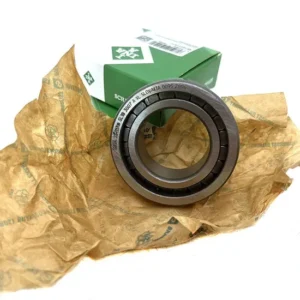
X&S INA Nup1007em Cylindrical Roller Bearing for Auto Motor Spare Part
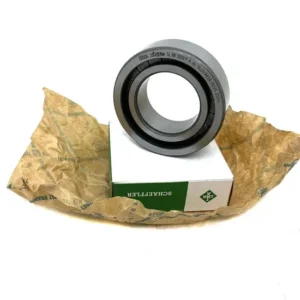
INA B7018C.T.P4S B7018E.T.P4S Angular Contact Ball Bearing for Turbojet
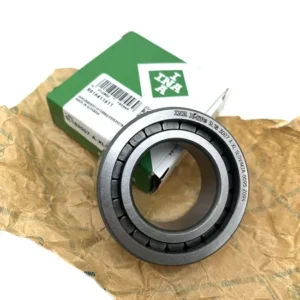
X&S NN3060/Y1 Double Row Cylindrical Roller Bearing for Heavy Load
X&S B7012E.T.P4S Angular Contact Ball Bearing for Metallurgical Rolling Mills
X&S NN3072K NN3008 Cylindrical Roller Bearing with Pin Cam Follower
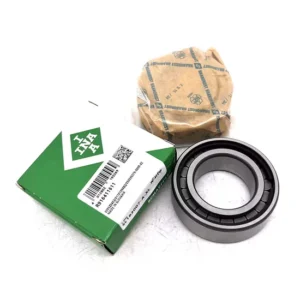
Genuine INA SL183007-A-XL NJ2208 NU2208 Cylindrical Roller Bearing for Auto Parts
INA H7012C-2RZ-P4 B706C T P4S Angular Contact Ball Bearing for Forklift Auto