FAG Bearings for Steel & Aluminum Mills: Wholesale Supplier
- Published
- Buying Guide
- By author

FAG Bearings for Steel & Aluminum Mills: Wholesale Supplier
Higher clearance is not a universal fix for high-temperature mills.
Selecting the correct FAG bearings for steel and aluminium mills requires matching specific internal clearances and load ratings to exact mill conditions to prevent catastrophic failures. Misaligned clearances and poor lubrication cause the majority of early cage failures in heavy metallurgical applications. [NEED_CITE: root cause distribution per ISO 15243]
I still remember the sound of metal grinding against metal echoing through a warehouse in Qingdao. It was not machinery running; it was the sound of a return shipment from a Southeast Asian aluminum plant. The cargo contained spherical roller bearings that had failed after less than three months of operation. The client expected them to last a year. The issue was not the brand, nor was it a manufacturing defect in the traditional sense. The problem was a mismatch in internal clearance. I had spent years in Jinan inspecting bearings with calipers, checking packaging and rollers, but this incident taught me that technical selection outweighs brand reputation when the operating environment is extreme. A wrong specification turns premium components into scrap metal.
Understanding why these failures happen is the first step toward securing reliable operations. For distributors and MRO operators, the goal is not just to buy a part number but to ensure the component survives the thermal and mechanical stresses of rolling mills. This guide breaks down the technical nuances of selecting genuine FAG bearings for these demanding environments.
Why Do FAG Bearings Fail Prematurely in Steel Mills?
Thermal expansion and incorrect clearance settings are the primary drivers of premature failure in hot rolling applications.
In hot rolling mills, temperatures fluctuate wildly. Steel billets enter the stands at high heat, transferring thermal energy to the rolls and subsequently to the bearing housings. If the internal clearance of the bearing is too tight, the rolling elements expand against the races, creating excessive preload. This leads to rapid temperature rise, lubricant breakdown, and eventually, cage fragmentation. Conversely, if the clearance is too loose, vibration increases, leading to skidding and uneven wear.
A common misconception is that simply choosing a higher clearance class like C4 will solve all heat-related issues. However, higher clearance is not always better for high-temp mills. Incorrect clearance causes cage fragmentation because the rolling elements lose proper guidance, impacting the cage pockets with greater force. [NEED_CITE: effect of internal clearance on cage dynamics in high-load applications]
Consider a case from a Middle East steel mill. They experienced repeated failures in their roughing stand spherical roller bearings. The initial assumption was poor lubrication. Upon analysis, it was found that the bearings were installed with standard C3 clearance, but the operating temperature caused the inner ring to expand more than anticipated relative to the outer ring. The effective clearance dropped to near zero during peak operation. Switching to a carefully calculated C4 clearance, verified against the specific housing fit and shaft tolerance, extended the service life significantly.
The key takeaway is that clearance selection must account for the difference in thermal expansion between the inner ring, outer ring, and housing. This requires precise calculation rather than guesswork. Genuine FAG bearings offer consistent dimensional stability, but only if the correct clearance class is selected for the specific mill stand position.
How to Choose the Right FAG Bearing Type for Each Mill Stand?
Spherical roller bearings suit hot mills due to their self-aligning capability, while cylindrical rollers excel in cold rolling where precision and rigidity are paramount.
Different stands in a steel or aluminum mill impose different loads and alignment challenges. Selecting the right bearing type is critical for maximizing efficiency and minimizing downtime.
| Mill Stand Type | Primary Load Characteristic | Recommended FAG Bearing Type | Key Selection Factor |
|---|---|---|---|
| Hot Roughing Stand | Heavy shock loads, misalignment | Spherical Roller Bearing | Self-alignment, high load capacity |
| Cold Rolling Stand | High precision, radial rigidity | Cylindrical Roller Bearing | Low friction, high speed capability |
| Aluminum Extrusion Press | High axial thrust, steady load | Thrust Roller Bearing | Axial load rating, heat resistance |
In hot roughing stands, the rolls are subject to significant deflection and misalignment. Spherical roller bearings are designed to accommodate angular misalignment, making them ideal for these positions. Their barrel-shaped rollers distribute load evenly, even if the shaft bends slightly under heavy pressure.
In contrast, cold rolling mills require high precision and surface finish quality. Here, cylindrical roller bearings are preferred. They offer higher radial rigidity and lower friction, which is essential for maintaining tight tolerances on the final product. A European cold mill operator once reported a noticeable drop in efficiency and surface quality due to premature wear in their cylindrical roller bearings. The root cause was poor load distribution caused by incorrect housing fits, not the bearing itself. Ensuring proper housing geometry is as important as selecting the right bearing type. [NEED_CITE: influence of housing fit on load distribution in cylindrical roller bearings]
For aluminum extrusion presses, the primary challenge is axial thrust. Thrust bearings must handle massive continuous axial loads while resisting overheating. In one instance, an aluminum extrusion press experienced a temperature rise above normal limits in its thrust bearing assembly. The issue was traced to inadequate lubrication flow and incorrect preload setting. Adjusting the lubrication protocol and verifying the preload restored stable operating temperatures.
When sourcing FAG bearings for these applications, it is crucial to verify the specific design features required for each stand. Not all spherical roller bearings are identical; some have optimized cage designs for higher speeds, while others are built for maximum load capacity. Understanding these distinctions helps in making the right choice.
What Specifications Must Be Verified Before Bulk Ordering?
Always verify C3/C4 clearances, P0/P6 precision classes, and original traceability documents to ensure compatibility and authenticity.
Before placing a bulk order for mill maintenance, several technical specifications must be double-checked. Relying solely on the part number is risky, as suffixes indicating clearance, precision, and cage material can vary.
First, confirm the internal clearance. As discussed, C3 is common for general industrial use, but hot mills often require C4. Verify this against the OEM manual and actual operating conditions. Second, check the precision class. Most mill applications use P0 (Normal) or P6 (Class 6). Higher precision like P5 is reserved for specific high-speed or high-accuracy applications. Using a higher precision than necessary increases cost without adding value, while using lower precision can lead to vibration and premature failure. [NEED_CITE: ISO precision class definitions and application guidelines]
Third, examine the cage material. Steel cages are robust and suitable for most heavy-load applications. Brass cages offer better emergency running properties but may be susceptible to chemical attack from certain additives in lubricants. Polymer cages are lightweight and reduce friction but have temperature limits. Ensure the cage material is compatible with the lubrication and temperature profile of the mill.
A regional distributor in Latin America once received a shipment of bearings that looked authentic but failed quickly. Upon inspection, the clearance was marked as C3, but the actual measurement suggested a tighter tolerance, closer to C2. This discrepancy caused overheating in a hot mill application. This highlights the importance of verifying specifications not just on paper but through physical inspection or trusted sourcing channels.
Verifying these details before ordering prevents costly mistakes. It ensures that the bearings received match the technical requirements of the mill, reducing the risk of premature failure and unplanned downtime.
How to Ensure You Are Buying Genuine FAG Bearings?
Rely on authorized global suppliers with complete customs and origin certificates to mitigate the risk of counterfeits.
The market for industrial bearings is flooded with counterfeits. These fake products often look identical to genuine ones but lack the material quality and precision engineering required for heavy-duty applications. Using counterfeit bearings in a steel mill is a recipe for disaster, leading to catastrophic failures and significant financial loss.
To ensure authenticity, source from suppliers who provide complete traceability documentation. This includes original manufacturer certificates, customs declaration forms, and proof of origin. Genuine FAG bearings come with specific packaging features and marking standards that can be verified. However, visual inspection alone is not enough. Advanced counterfeits can replicate packaging and markings.
A US buyer once shared their experience of receiving a mixed batch of bearings. Some were genuine, while others were high-quality fakes. The fakes failed within weeks, causing unexpected downtime. The only way to distinguish them was through detailed material analysis and comparison with known genuine samples. This underscores the need for reliable supply chains.
Working with a supplier who offers technical selection support and has a proven track record in the metallurgical industry adds an extra layer of security. They can help verify the suitability of the bearings for your specific application and provide assurance of authenticity. This is particularly important for MRO operators who need to minimize risk and ensure continuous production.
Conclusion
Correct technical selection and verified authenticity are non-negotiable for reliable mill operations.
Choosing the right FAG bearings for steel and aluminium mills involves more than picking a part number. It requires a deep understanding of operating conditions, precise clearance selection, and verification of authenticity. By focusing on these technical aspects, operators can prevent premature failures and maintain efficient production. Sourcing from trusted partners who provide genuine products and technical support is essential for long-term reliability.
Send Your FAG Bearing List for a Written Quote
FAG Bearing Supplier quotes spherical, cylindrical, tapered and thrust roller bearings together with housings and sleeves, for urgent replacements or planned shutdown orders. Any technical change is proposed separately and needs your approval.
- 1
Send your list by form, WhatsApp or email, position by position.
- 2
We confirm identification: exact version, complete assembly, and any clearly marked alternative.
- 3
Receive a written quote with designation, quantity, price and currency, stock status, estimated lead time and validity.
- Email: info@fagome.com
- Address:

Related FAG Bearing Maintenance Articles
More notes on version identification, mounting accessories and shutdown planning for heavy equipment.
 01
Oct 2, 2026 · Buying Guide · 6 min read
FAG Industrial Bearings Wholesale Supplier | Genuine Stock & Bulk Quotes
Request a quote for genu…
Read the full article 02
Oct 2, 2026 · Buying Guide · 7 min read
Discontinued FAG Numbers: Find Replacements from Global Wholesale Supplier
Secure Discontinued FAG …
Read the full article 03
Oct 2, 2026 · Buying Guide · 6 min read
Authentic FAG Bearings Supplier: Avoid Counterfeits with Neutral Checks
Avoiding Counterfeit FAG…
Read the full articleFAG Roller Bearings and Accessories for Heavy Equipment
Selected FAG bearings for mills, crushers, conveyors and industrial drives. Housings and sleeves can be quoted with the bearing.
Scroll sideways to browse →
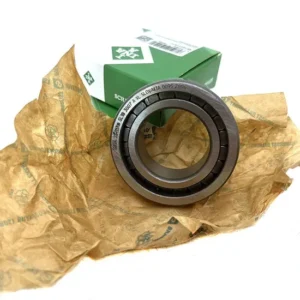
X&S INA Nup1007em Cylindrical Roller Bearing for Auto Motor Spare Part
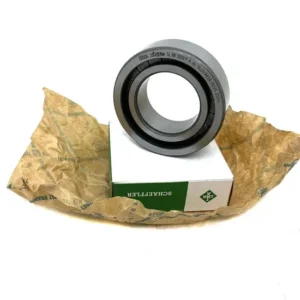
INA B7018C.T.P4S B7018E.T.P4S Angular Contact Ball Bearing for Turbojet
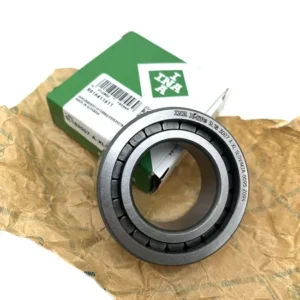
X&S NN3060/Y1 Double Row Cylindrical Roller Bearing for Heavy Load
X&S B7012E.T.P4S Angular Contact Ball Bearing for Metallurgical Rolling Mills
X&S NN3072K NN3008 Cylindrical Roller Bearing with Pin Cam Follower
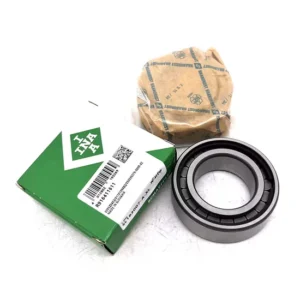
Genuine INA SL183007-A-XL NJ2208 NU2208 Cylindrical Roller Bearing for Auto Parts
INA H7012C-2RZ-P4 B706C T P4S Angular Contact Ball Bearing for Forklift Auto