FAG Bearings for Pumps & Compressors Wholesale Supplier
- Published
- Buying Guide
- By author

FAG Bearings for Pumps & Compressors: Selection Guide & Failure Analysis
Standard clearance is not the default safe choice.
Selecting FAG bearings for pumps and compressors requires precise matching of internal clearance, sealing configuration, and lubrication regime to specific operating environments, rather than relying solely on standard catalog specifications. The most common cause of premature failure in these applications is not material defect, but a mismatch between thermal expansion characteristics and the selected bearing fit.
I learned this lesson the hard way early in my career while assembling gearboxes in the workshop, where I assumed that as long as the bearing spun freely, the job was done. It was only after entering the Latin American market that I faced the harsh reality of industrial fluid machinery. I once supplied a batch of FAG bearings for pumps and compressors to a paper mill in Brazil without fully accounting for the local high-humidity environment and continuous heavy-load conditions. I had specified standard internal clearance and standard seals based on typical catalog recommendations. Within six months, the grease emulsified due to moisture ingress and heat buildup, leading to rotor seizure and a three-day production line shutdown. The claim letter landed directly on my desk. That experience forced me to deeply study the工况 (operating conditions) matching for pump and compressor applications. I now understand that the selection of cylindrical roller bearings and spherical roller bearings from FAG, particularly regarding internal clearance and sealing solutions under varying speeds and temperatures, is a matter where a slight deviation leads to significant consequences. Today, before recommending any solution, I insist on understanding the medium, load profile, and site environment, never blindly competing on price alone.
This guide breaks down the technical nuances of selecting FAG bearings for pumps and compressors, focusing on the critical parameters that determine reliability in harsh-duty fluid machinery.
Why Do Standard FAG Bearings Fail in Compressors?
Standard specifications often ignore the combined effects of thermal expansion and environmental contamination.
In many procurement scenarios, buyers select bearings based purely on dimensional compatibility and basic load ratings. However, compressors and pumps operate in dynamic thermal environments that standard room-temperature specifications do not adequately address. The primary failure mode observed in field applications is not fatigue spalling, but rather binding due to insufficient internal clearance or seal failure due to incompatible lubrication.
When a compressor operates, the shaft and housing expand at different rates depending on their materials and temperature gradients. If the bearing is selected with standard internal clearance (C0 or CN), the thermal growth of the shaft can eliminate the operational clearance entirely, leading to preload conditions that generate excessive heat. This heat further accelerates grease degradation, creating a vicious cycle of failure. [NEED_CITE: thermal expansion effects on bearing internal clearance per ISO standards]
Consider the case of a mining slurry pump operation. The equipment was subjected to heavy radial loads and abrasive dust. The initial specification called for standard seals, which failed rapidly due to the ingress of contaminant particles. The abrasive wear rate accelerated significantly, leading to premature bearing replacement cycles. By switching to a more robust sealing solution and adjusting the clearance class, the service life was extended noticeably. This highlights that FAG bearings for pumps and compressors must be viewed as a system component, not just a standalone part.
The key takeaway is that standard clearance is rarely the optimal choice for high-temperature or high-load applications. Engineers must calculate the expected thermal growth and select a clearance class that accommodates this expansion without compromising running accuracy.
How to Choose the Right Clearance for Pump Bearings?
Match C3 or C4 clearances to operating temperatures and shaft growth calculations.
Internal clearance is the most critical parameter for ensuring the longevity of FAG bearings for pumps and compressors. The choice between standard clearance, C3, or C4 depends largely on the operating temperature and the fit between the bearing and its seating.
In high-temperature environments, such as chemical compressors, the shaft expands more than the outer ring if the housing is cooled or made of a different material. This differential expansion reduces the internal clearance. If the initial clearance is too small, the bearing will operate under preload, generating excessive heat and leading to rapid failure. Therefore, larger clearances like C3 or C4 are often required to compensate for thermal expansion. [NEED_CITE: ISO standards for bearing internal clearance classes]
| Clearance Class | Typical Application Context | Thermal Compensation Capability | Sealing Compatibility |
|---|---|---|---|
| Standard (CN) | Room temperature, light loads, precise positioning | Low | Standard seals |
| C3 | Moderate temperatures, normal fits, general industrial pumps | Medium | Standard to enhanced seals |
| C4 | High temperatures, tight fits, heavy loads, compressors | High | Enhanced or labyrinth seals |
A common mistake is assuming that C3 clearance is always safer. In reality, if the operating temperature is low and the load is light, C3 clearance can lead to excessive vibration and noise due to too much play. The selection must be balanced against the actual operating conditions. For instance, in a tropical climate paper mill, the combination of high ambient temperature and continuous load necessitated a move from standard to C3 clearance to prevent binding.
When specifying FAG bearings for pumps and compressors, it is essential to provide the supplier with detailed information about the operating temperature range and the proposed shaft and housing fits. This allows for a more accurate recommendation of the appropriate clearance class.
Which Sealing Solutions Prevent Grease Emulsion?
Compare labyrinth, contact, and non-contact seals for wet and contaminated environments.
Sealing is the first line of defense for FAG bearings for pumps and compressors against contaminants and lubricant loss. In wet environments, such as paper mills or marine applications, grease emulsion is a major threat. When water mixes with grease, it loses its lubricating properties, leading to corrosion and wear.
Standard contact seals may provide good protection against dust but can generate excessive heat due to friction, especially at higher speeds. This heat can degrade the grease and accelerate emulsion if moisture is present. Non-contact seals, such as labyrinth seals, offer lower friction and better heat dissipation but may allow some contaminant ingress if not properly designed with purge systems.
| Seal Type | Friction Level | Contamination Protection | Suitability for Wet Environments |
|---|---|---|---|
| Contact Seal | High | Excellent | Poor (heat generation risks emulsion) |
| Non-Contact Seal | Low | Good | Moderate (requires purge or secondary protection) |
| Labyrinth Seal | Very Low | Good | Excellent (when combined with proper lubrication) |
In the Brazilian paper mill case mentioned earlier, the use of standard contact seals contributed to the heat buildup that facilitated grease emulsion. Switching to a labyrinth seal design, combined with a moisture-resistant grease, significantly improved the bearing’s resilience to the humid environment. [NEED_CITE: grease compatibility and emulsion resistance matrices]
It is also crucial to consider the lubrication regime. Premium seals can fail faster than standard ones if the lubricant is not compatible with the seal material or if the operating temperature exceeds the grease’s thermal stability. Therefore, the selection of seals and lubricants must be done in tandem.
What Are the Procurement Risks of Mismatched Bearings?
False economy of cheap alternatives versus the total cost of unplanned downtime.
Procuring FAG bearings for pumps and compressors is not just about unit price; it is about risk management. Choosing a cheaper alternative or a mismatched specification can lead to significant hidden costs, including unplanned downtime, emergency shipping fees, and potential damage to other machine components.
A mid-six-figure loss from a single compressor failure far outweighs the savings from purchasing non-optimal bearings. In one instance, a client opted for a lower-cost bearing with inadequate clearance for a high-temperature compressor application. The bearing failed within months, causing rotor damage and requiring a complete overhaul. The total cost, including lost production, was several times the initial savings on the bearing purchase.
Furthermore, sourcing from unauthorized distributors increases the risk of receiving counterfeit or substandard products. Genuine FAG bearings for pumps and compressors come with traceability documentation that ensures authenticity and quality compliance. Without this documentation, buyers have no recourse in case of failure and cannot verify the product’s origin. [NEED_CITE: industry reliability reports for rotating equipment]
To mitigate these risks, buyers should work with suppliers who offer technical selection support and can provide mixed-brand sourcing options. This allows for the consolidation of orders and ensures that all components meet the required specifications. Traceability documentation is essential for bulk maintenance orders to ensure accountability and quality assurance.
Conclusion
Precision in selection prevents premature failure.
Choosing the right FAG bearings for pumps and compressors involves more than just picking a part number. It requires a holistic approach that considers internal clearance, sealing solutions, and lubrication compatibility relative to the specific operating environment. By understanding the thermal dynamics and contamination risks, engineers and procurement specialists can avoid common pitfalls and ensure reliable machine performance. Always prioritize technical matching over initial cost savings to minimize the risk of unplanned downtime and maximize asset lifecycle.
Send Your FAG Bearing List for a Written Quote
FAG Bearing Supplier quotes spherical, cylindrical, tapered and thrust roller bearings together with housings and sleeves, for urgent replacements or planned shutdown orders. Any technical change is proposed separately and needs your approval.
- 1
Send your list by form, WhatsApp or email, position by position.
- 2
We confirm identification: exact version, complete assembly, and any clearly marked alternative.
- 3
Receive a written quote with designation, quantity, price and currency, stock status, estimated lead time and validity.
- Email: info@fagome.com
- Address:

Related FAG Bearing Maintenance Articles
More notes on version identification, mounting accessories and shutdown planning for heavy equipment.
 01
Oct 2, 2026 · Buying Guide · 6 min read
FAG Industrial Bearings Wholesale Supplier | Genuine Stock & Bulk Quotes
Request a quote for genu…
Read the full article 02
Oct 2, 2026 · Buying Guide · 7 min read
Discontinued FAG Numbers: Find Replacements from Global Wholesale Supplier
Secure Discontinued FAG …
Read the full article 03
Oct 2, 2026 · Buying Guide · 6 min read
Authentic FAG Bearings Supplier: Avoid Counterfeits with Neutral Checks
Avoiding Counterfeit FAG…
Read the full articleFAG Roller Bearings and Accessories for Heavy Equipment
Selected FAG bearings for mills, crushers, conveyors and industrial drives. Housings and sleeves can be quoted with the bearing.
Scroll sideways to browse →
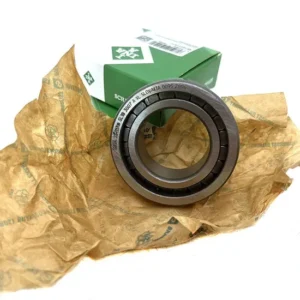
X&S INA Nup1007em Cylindrical Roller Bearing for Auto Motor Spare Part
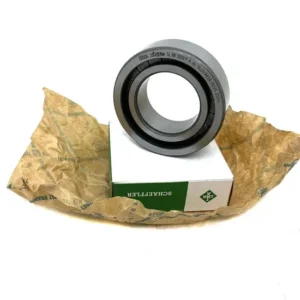
INA B7018C.T.P4S B7018E.T.P4S Angular Contact Ball Bearing for Turbojet
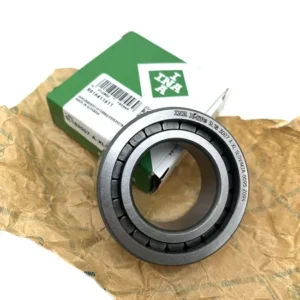
X&S NN3060/Y1 Double Row Cylindrical Roller Bearing for Heavy Load
X&S B7012E.T.P4S Angular Contact Ball Bearing for Metallurgical Rolling Mills
X&S NN3072K NN3008 Cylindrical Roller Bearing with Pin Cam Follower
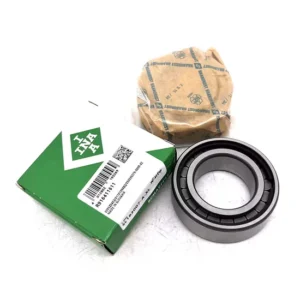
Genuine INA SL183007-A-XL NJ2208 NU2208 Cylindrical Roller Bearing for Auto Parts
INA H7012C-2RZ-P4 B706C T P4S Angular Contact Ball Bearing for Forklift Auto