FAG Bearings for Printing Machines Wholesale Supplier
- Published
- Buying Guide
- By author

FAG Bearings for Printing Machines Wholesale Supplier
Most bearing seizures in printing presses are not caused by operational load, but by transit humidity and incorrect clearance suffixes.
Selecting the right FAG bearings for printing machines requires precise attention to internal clearance codes (C3/C4) and strict moisture-proof packaging protocols. For high-speed offset presses and tropical distribution routes, standard clearance is often insufficient, and generic wooden crates fail to prevent pre-installation rust. Ensuring the Bill of Lading suffixes match the physical bearing engraving is the single most critical step to avoid costly downtime and claims.
I still remember the silence in a printing plant near Santos Port. It was not the quiet of efficiency, but the heavy, expensive silence of a halted production line. A shipment of cylindrical roller bearings had arrived, but the tropical humidity had done its work before the crate was even opened. The cages were rusted, seized tight against the rollers. The root cause was not a manufacturing defect, but a missing suffix on the shipping documents and a lack of vapor-corrosion inhibitor (VCI) protection in the crate. That incident shifted my entire approach to sourcing. Now, every specification is double-checked, and every crate is treated as if it is crossing an ocean into a sauna. This guide details how to select genuine FAG bearings for printing machines that survive both the journey and the high-speed thermal demands of modern pressrooms.
The transition from general industrial use to printing applications demands a shift in mindset. In mining or construction, robustness is key. In printing, precision and thermal stability are paramount. A bearing that runs hot in a crusher might be acceptable; in a high-speed web offset press, that same heat causes paper registration errors and roller expansion. [NEED_CITE: thermal expansion effects on printing precision per ISO standards]. Understanding this distinction is the first step in avoiding the common pitfalls that plague many distributors.
Why Do Printing Machines Demand Specific FAG Bearing Suffixes?
Internal clearance directly dictates high-speed thermal expansion and running precision.
Many buyers assume that a standard deep groove ball bearing is a universal component. In printing machinery, this assumption leads to premature failure. The core issue is internal radial clearance. Standard clearance (CN) is designed for normal operating temperatures and loads. However, printing presses, especially high-speed offset models, generate significant heat due to friction and rapid rotation. If the bearing does not have enough room to expand thermally, the internal components bind, leading to a sharp temperature spike and eventual seizure.
This is where the suffix becomes critical. A bearing marked with C3 has greater internal clearance than standard. For certain high-speed units, C4 is required. Selecting the wrong suffix is not a minor error; it is a fundamental mismatch between the component and its operating environment. I have seen replacements ordered frequently because the initial batch was specified with CN clearance, only to overheat within weeks. Switching to C3 or C4 resolved the issue entirely.
The selection process must also consider the sealing type. Printing environments often involve ink mist, solvents, and cleaning agents. A standard open bearing will contaminate quickly. Conversely, a rubber-sealed bearing (2RS) might create too much friction for high-speed applications. Here, the labyrinth seal or V-ring options offered in the FAG bearings for printing machines range provide a balanced solution, protecting against contaminants without generating excessive heat. [NEED_CITE: FAG technical catalog data on seal friction torque].
It is not just about the bearing itself, but how the suffix communicates its capability. When you order, you are not just buying steel; you are buying a specific thermal and sealing profile. Ignoring these suffixes is akin to ordering a tire without specifying the speed rating. It might fit, but it will not perform under pressure.
FAG Bearing Specification Matrix for Printing Presses
Different printing units require distinct bearing types to handle radial loads and axial guidance.
A printing press is not a monolithic machine; it is a series of distinct units, each with unique mechanical demands. The infeed unit handles heavy paper webs, requiring robust radial load capacity. The printing unit itself demands high precision and minimal runout. The delivery unit deals with accumulated stacks and variable speeds. Using a one-size-fits-all approach across these units is a recipe for inefficiency.
To clarify the selection, consider the following comparison of common bearing types used in these applications. Note that the suitability depends heavily on the specific press model and manufacturer recommendations.
| Bearing Type | Primary Application in Press | Load Capacity | Speed Capability | Sealing Option Recommendation |
|---|---|---|---|---|
| Cylindrical Roller | Main roller journals, infeed units | High Radial | High | Open or Labyrinth |
| Deep Groove Ball | Motor drives, fan units, light guides | Moderate Radial/Axial | Very High | 2RS or ZR |
| Angular Contact | Precision spindle units, gearboxes | High Axial/Radial | High | Pair mounting required |
| Spherical Roller | Heavy-duty frame supports, oscillating units | Very High Radial | Moderate | Open with separate seal |
[NEED_CITE: ISO bearing classification standards for load and speed ratings].
The table highlights why cylindrical roller bearings are often the choice for main printing rollers. They handle high radial loads with minimal friction, crucial for maintaining consistent print quality. However, they cannot handle axial loads, which is why they are often paired with angular contact bearings in complex assemblies.
A case from a European printer illustrates this well. They experienced frequent vibration in their offset unit. The investigation revealed that deep groove ball bearings had been substituted for cylindrical rollers in a high-load position. The ball bearings deformed under the radial pressure, causing runout that ruined print registration. Replacing them with the correct cylindrical type, sourced as genuine FAG bearings for printing machines, restored the precision immediately.
When reviewing specifications, do not just look at the dimensions. Look at the application context. A bearing that works perfectly in a motor drive may fail catastrophically in a roller journal. The matrix serves as a starting point, but always cross-reference with the press manufacturer’s manual.
How to Avoid Transit Rust in High-Humidity Destinations?
VCI packaging and desiccant protocols are non-negotiable for tropical and maritime routes.
The journey from the warehouse to the pressroom can be more damaging than the operation itself. For buyers in Latin America, Southeast Asia, or coastal regions, humidity is the silent killer of inventory. I have walked through warehouses where boxes of bearings sat for months, only to be opened and found with surface rust on the cages and races. This is not just cosmetic; it compromises the smooth running of the bearing and can lead to early fatigue failure.
Standard cardboard boxes offer little protection against moisture ingress during sea freight. The temperature fluctuations in a shipping container create condensation, known as “container rain.” This water settles on the metal surfaces, initiating corrosion almost immediately. To combat this, the packaging must be engineered for the environment, not just for containment.
The solution lies in Vapor Corrosion Inhibitor (VCI) technology. VCI emitters release a protective gas that forms a molecular layer on the metal surface, preventing oxidation. This is not a optional extra for high-humidity destinations; it is a requirement. Additionally, silica gel desiccants should be placed inside the inner packaging to absorb any residual moisture.
I recall a shipment destined for a tropical port where the supplier had skipped the VCI step to cut costs. The result was a claim ratio that wiped out the margin for the entire quarter. Since then, I insist on full-container moisture-proof consolidation for all FAG bearings for printing machines headed for humid climates. The cost of VCI packaging is negligible compared to the cost of a rejected shipment.
Another critical factor is the wooden crate itself. Untreated wood contains moisture that can migrate to the bearings. Using kiln-dried wood and ensuring the crate is sealed tightly prevents external humidity from entering. [NEED_CITE: international maritime packaging guidelines for metal goods].
Buyers should not assume that “export packaging” means “moisture-proof.” Always specify the requirement for VCI and desiccants in your purchase order. Verify the presence of these elements upon arrival. If the packaging looks damp or the VCI emitters are missing, inspect every unit before accepting the delivery.
Verification Checklist Before Signing the Bill of Lading
Ensuring B/L suffixes perfectly match physical bearing engraving prevents customs and operational errors.
The final checkpoint before the goods leave the supplier’s control is the documentation. A discrepancy between the Bill of Lading (B/L) and the actual product can cause delays at customs, but more importantly, it can lead to the wrong bearings being installed. In the rush of logistics, suffixes are often omitted or abbreviated on documents. A bearing listed as “6205” on the B/L might actually be “6205-2RS-C3” in the box. If the installer expects a standard open bearing and receives a sealed C3 unit, or vice versa, the consequences can be severe.
I developed a strict verification protocol after the Santos incident. Now, every shipment of FAG bearings for printing machines undergoes a final check where the physical engraving on the bearing ring is compared against the commercial invoice and the B/L draft. This is not a casual glance; it is a line-by-line verification of every character, including spaces and hyphens.
The checklist includes:
- Base Number: Verify the basic bearing number matches the order.
- Suffixes: Check for clearance (C3, C4), sealing (2RS, ZR), and cage material (M, T) suffixes.
- Brand Markings: Ensure the FAG logo and origin markings are clear and authentic.
- Batch Consistency: Confirm that all bearings in a batch have the same suffixes.
[NEED_CITE: best practices for bearing identification and traceability].
A US buyer once received a mixed batch where half the bearings were C3 and half were CN, despite the order specifying only C3. Because the B/L did not detail the suffixes, the error was not caught until installation began. The resulting downtime and rework cost far more than the time saved by skipping the verification step.
By treating the B/L as a technical document rather than just a shipping form, you protect your investment. Require suppliers to provide photos of the bearing engravings before shipment if possible. This simple step adds a layer of security that pays dividends in operational reliability. When you source FAG bearings for printing machines, ensure that the paperwork tells the same story as the metal.
Conclusion
Precision in selection and protection in transit are the twin pillars of reliable printing press performance.
Choosing the correct clearance and sealing suffixes prevents thermal failure, while rigorous moisture-proof packaging ensures the bearings arrive in pristine condition. Verifying documentation against physical stock eliminates costly administrative and operational errors. By focusing on these technical and logistical details, buyers can secure genuine FAG bearings for printing machines that deliver consistent, high-speed performance.
Send Your FAG Bearing List for a Written Quote
FAG Bearing Supplier quotes spherical, cylindrical, tapered and thrust roller bearings together with housings and sleeves, for urgent replacements or planned shutdown orders. Any technical change is proposed separately and needs your approval.
- 1
Send your list by form, WhatsApp or email, position by position.
- 2
We confirm identification: exact version, complete assembly, and any clearly marked alternative.
- 3
Receive a written quote with designation, quantity, price and currency, stock status, estimated lead time and validity.
- Email: info@fagome.com
- Address:

Related FAG Bearing Maintenance Articles
More notes on version identification, mounting accessories and shutdown planning for heavy equipment.
 01
Oct 2, 2026 · Buying Guide · 6 min read
FAG Industrial Bearings Wholesale Supplier | Genuine Stock & Bulk Quotes
Request a quote for genu…
Read the full article 02
Oct 2, 2026 · Buying Guide · 7 min read
Discontinued FAG Numbers: Find Replacements from Global Wholesale Supplier
Secure Discontinued FAG …
Read the full article 03
Oct 2, 2026 · Buying Guide · 6 min read
Authentic FAG Bearings Supplier: Avoid Counterfeits with Neutral Checks
Avoiding Counterfeit FAG…
Read the full articleFAG Roller Bearings and Accessories for Heavy Equipment
Selected FAG bearings for mills, crushers, conveyors and industrial drives. Housings and sleeves can be quoted with the bearing.
Scroll sideways to browse →
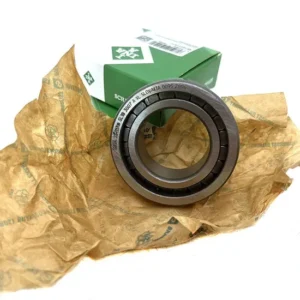
X&S INA Nup1007em Cylindrical Roller Bearing for Auto Motor Spare Part
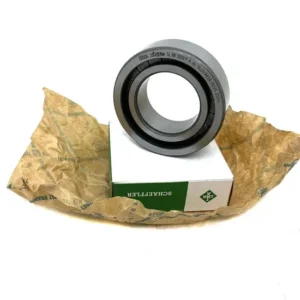
INA B7018C.T.P4S B7018E.T.P4S Angular Contact Ball Bearing for Turbojet
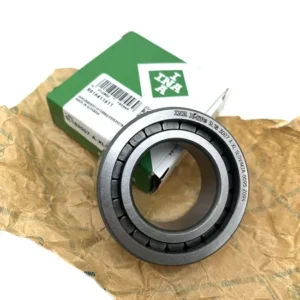
X&S NN3060/Y1 Double Row Cylindrical Roller Bearing for Heavy Load
X&S B7012E.T.P4S Angular Contact Ball Bearing for Metallurgical Rolling Mills
X&S NN3072K NN3008 Cylindrical Roller Bearing with Pin Cam Follower
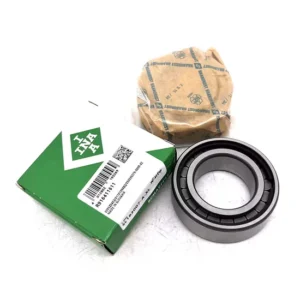
Genuine INA SL183007-A-XL NJ2208 NU2208 Cylindrical Roller Bearing for Auto Parts
INA H7012C-2RZ-P4 B706C T P4S Angular Contact Ball Bearing for Forklift Auto