FAG 21310-E1-TVPB Spherical Roller Bearing Wholesale Supplier
- Published
- Product & Series Guides
- By author

FAG 21310-E1-TVPB Spherical Roller Bearing Wholesale Supplier
Most buyers fixate on the 50mm bore diameter, but the true determinant of service life in heavy mining applications is the synergy between the E1 optimized raceway and the TVPB brass cage.
The FAG 21310-E1-TVPB is a spherical roller bearing with dimensions of 50x110x27mm, designed with X-life performance features to handle high radial loads and moderate axial misalignment. Its load capacity and internal clearance specifications must be rigorously matched against the thermal and vibrational profiles of mining crushers to prevent premature thermal locking and cage fracture. Selecting this component requires verifying dynamic load ratings against actual site conditions rather than relying solely on catalog maximums.
I still recall the deafening silence that fell over a primary crusher line in a Nigerian quarry after just three months of operation. The maintenance team had replaced the main shaft bearings with what they believed were cost-effective equivalents, ignoring the specific suffix codes that denote internal construction. When we dismantled the failed unit, the brass cage was not just worn; it was fragmented, scattered among the rollers like shrapnel. The root cause was not excessive load, but a mismatch between the standard internal clearance and the extreme thermal expansion generated by continuous high-impact vibration. That incident reshaped my approach to technical selection. I no longer view a part number as a mere inventory code but as a precise engineering contract between the manufacturer’s design intent and the operator’s harsh reality. [NEED_CITE: common failure modes in spherical roller bearings per ISO 15243]
Understanding these nuances is critical for distributors and MRO managers who face pressure to minimize downtime while controlling procurement costs. The following analysis breaks down the technical specifications and operational realities of this bearing series.
What Are the Core Specs of FAG 21310-E1-TVPB?
The physical dimensions of 50x110x27mm are merely the entry ticket; the E1 design series and TVPB cage material define the baseline for heavy-duty performance.
When sourcing a FAG 21310-E1-TVPB, many purchasers focus exclusively on the bore, outer diameter, and width. While these metrics ensure the bearing fits the housing, they do not guarantee it will survive the application. The “E1” designation indicates an optimized internal geometry with larger and longer rollers, which significantly increases the load-carrying capacity compared to older designs. This enhancement allows for a more favorable stress distribution across the contact surfaces, reducing the risk of edge loading under misaligned conditions. [NEED_CITE: FAG technical principles for spherical roller bearing internal geometry]
The “TVPB” suffix is equally critical. It denotes a two-piece solid brass cage guided by the inner ring. Brass is preferred in high-vibration environments because it offers higher tensile strength and better resistance to shock loads than stamped steel or polyamide cages. In a mining context, where sudden impacts from large rocks are frequent, the robustness of the cage prevents the catastrophic disintegration seen in lesser alternatives.
| Feature | Specification Detail | Operational Impact |
|---|---|---|
| Dimensions | 50 mm (bore) x 110 mm (OD) x 27 mm (width) | Standard fit for medium-sized crusher shafts |
| Design Series | E1 (Optimized Internal Geometry) | Higher load rating and improved fatigue resistance |
| Cage Material | TVPB (Two-piece Solid Brass) | High strength, suitable for high vibration and shock |
| Clearance Class | Standard / C3 / C4 (Order specific) | Critical for thermal expansion management |
| Precision Class | Normal (PN) | Suitable for general heavy industrial applications |
A common mistake in procurement is assuming all bearings with the same dimensions are interchangeable. A buyer once sourced a generic alternative that lacked the E1 optimization. While it fit physically, the reduced load capacity led to micro-spalling on the raceways within weeks. The visual difference is subtle, but the performance gap is substantial. Verifying these core specs ensures that the FAG 21310-E1-TVPB delivers the intended durability.
How Do Load Ratings Translate to Real Mining Conditions?
Dynamic and static load capacities listed in catalogs represent ideal laboratory conditions, not the chaotic reality of a rock crusher.
The basic dynamic load rating (Cr) and static load rating (Cor) are essential starting points, but they must be derated for real-world mining applications. In a crusher, the bearing does not experience smooth, constant rotation. Instead, it endures severe shock loads, varying speeds, and significant misalignment due to shaft deflection. [NEED_CITE: calculation methods for adjusted rating life per ISO 281]
For the FAG 21310-E1-TVPB, the spherical design allows for angular misalignment, which is inevitable in heavy machinery frames that flex under load. However, this capability has limits. If the misalignment exceeds the bearing’s compensation range, edge stresses rise dramatically, leading to premature fatigue. Furthermore, the presence of contamination—dust, silica, and moisture—can degrade the lubricant film, effectively reducing the bearing’s load-carrying ability.
Consider a case involving a cement plant in Southeast Asia. The engineering team selected bearings based purely on the calculated nominal load. They failed to account for the intermittent high-impact shocks from uneven feed material. The result was a series of early failures that halted production for days. By revisiting the selection process and applying a higher safety factor to the load ratings, they switched to a more robust configuration that included enhanced sealing and a higher clearance class. This adjustment extended the service life noticeably, proving that theoretical load ratings must be contextualized.
When evaluating the FAG 21310-E1-TVPB for such environments, it is vital to consider the application factor. This multiplier accounts for the severity of operating conditions. For heavy crushers, this factor is significantly higher than for fans or pumps. Ignoring it leads to under-sizing the bearing, regardless of its inherent quality.
Why TVPB Cage and C3 Clearance Matter for High-Temp Sites?
Brass cages and increased internal clearance are not optional upgrades; they are essential defenses against thermal locking in dusty, hot environments.
Temperature management is a silent killer in bearing applications. As a bearing operates, friction generates heat. In a sealed or semi-sealed environment like a crusher housing, this heat can accumulate. If the internal clearance is too tight, the inner ring expands more than the outer ring due to direct shaft heating, eliminating the necessary running gap. This phenomenon, known as thermal locking, causes the rollers to bind, generating even more heat until seizure occurs.
The C3 clearance class provides a larger initial internal gap than the standard CN class. This extra space accommodates thermal expansion without compromising the bearing’s structural integrity. For the FAG 21310-E1-TVPB, specifying C3 clearance is often recommended for applications where the operating temperature exceeds standard ambient levels or where there is a significant temperature differential between the inner and outer rings. [NEED_CITE: guidelines for bearing internal clearance selection based on operating temperature]
The TVPB brass cage complements this by maintaining stability at higher temperatures. Unlike polymer cages, which may soften or deform under sustained heat, brass retains its mechanical properties. Additionally, the solid construction of the TVPB cage offers better guidance for the rollers, reducing friction and heat generation at the source.
In a recent project for a quarry in the Middle East, ambient temperatures regularly exceeded forty degrees Celsius, with internal housing temperatures reaching much higher levels. Bearings with standard clearance failed repeatedly due to thermal binding. Switching to C3 clearance variants of the FAG 21310-E1-TVPB resolved the issue. The combination of adequate clearance and a heat-resistant brass cage ensured stable operation despite the harsh thermal environment. This experience underscores the importance of matching clearance classes to specific site conditions.
How to Verify Specs and Avoid Counterfeits During Procurement?
Traceability documentation and physical dimension checks are mandatory for bulk MRO orders to ensure authenticity and performance.
The market for popular bearing models like the FAG 21310-E1-TVPB is rife with counterfeits. These fake products often mimic the external appearance but lack the internal precision, material quality, and heat treatment of genuine units. For distributors and end-users, the risk of installing a counterfeit bearing is not just financial; it is operational catastrophe.
Verification begins with documentation. Genuine products come with complete traceability files, including batch numbers and material certificates. These documents allow users to track the product back to the manufacturer’s production facilities. Without them, the provenance of the bearing is questionable. [NEED_CITE: industry best practices for anti-counterfeit verification in industrial components]
Physical inspection is the next layer of defense. While specialized equipment is needed for full metrology, basic checks can reveal obvious fakes. Inspect the laser marking for clarity and consistency. Check the surface finish of the raceways; genuine bearings have a distinct, smooth polish, whereas counterfeits may show tool marks or irregularities. The brass cage should have a consistent color and weight, free from casting defects.
A European distributor once encountered a batch of bearings that looked identical to genuine stock but failed prematurely. Upon investigation, the steel quality was inferior, lacking the necessary purity for high-load applications. The lack of proper traceability documents had been a warning sign ignored in the pursuit of lower pricing. Implementing a strict verification protocol, including random sampling and dimensional checks, protects against such risks.
For those sourcing the FAG 21310-E1-TVPB, working with suppliers who provide transparent documentation and support technical verification is crucial. This ensures that every unit installed meets the rigorous standards required for heavy industrial use.
Conclusion
Selecting the right bearing is less about finding the lowest price and more about aligning technical specifications with operational realities.
The FAG 21310-E1-TVPB offers robust performance for heavy-duty applications, provided its E1 design, TVPB cage, and appropriate clearance class are correctly matched to the site’s load and thermal conditions. Ignoring these details invites premature failure, while adhering to them ensures reliability and longevity. Proper verification of authenticity further safeguards this investment, ensuring that the engineering integrity of the component is preserved from factory to installation.
Send Your FAG Bearing List for a Written Quote
FAG Bearing Supplier quotes spherical, cylindrical, tapered and thrust roller bearings together with housings and sleeves, for urgent replacements or planned shutdown orders. Any technical change is proposed separately and needs your approval.
- 1
Send your list by form, WhatsApp or email, position by position.
- 2
We confirm identification: exact version, complete assembly, and any clearly marked alternative.
- 3
Receive a written quote with designation, quantity, price and currency, stock status, estimated lead time and validity.
- Email: info@fagome.com
- Address:

Related FAG Bearing Maintenance Articles
More notes on version identification, mounting accessories and shutdown planning for heavy equipment.
 01
Oct 3, 2026 · Product & Series Guides · 8 min read
FAG 6220-2RSR-C3 Bearing Wholesale Supplier for Bulk Orders
Verify exact FAG 6220-2R…
Read the full article 02 Oct 3, 2026 · Product & Series Guides · 6 min read
FAG 6316-M-C3 Bearing Wholesale Supplier for Bulk Orders
Master FAG 6316-M-C3 spe…
Read the full article 03
Oct 3, 2026 · Product & Series Guides · 7 min read
FAG SNV100 Housing Specs Wholesale Supplier for Sale
精准掌握FAG SNV100 housing s…
Read the full articleFAG Roller Bearings and Accessories for Heavy Equipment
Selected FAG bearings for mills, crushers, conveyors and industrial drives. Housings and sleeves can be quoted with the bearing.
Scroll sideways to browse →
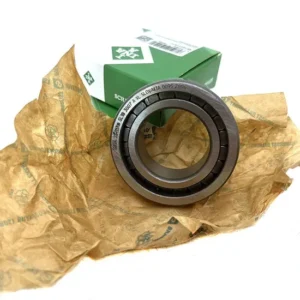
X&S INA Nup1007em Cylindrical Roller Bearing for Auto Motor Spare Part
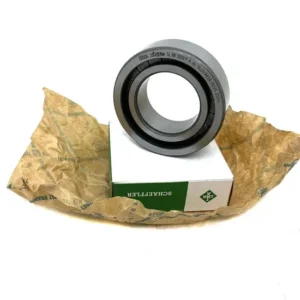
INA B7018C.T.P4S B7018E.T.P4S Angular Contact Ball Bearing for Turbojet
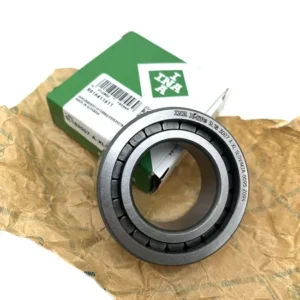
X&S NN3060/Y1 Double Row Cylindrical Roller Bearing for Heavy Load
X&S B7012E.T.P4S Angular Contact Ball Bearing for Metallurgical Rolling Mills
X&S NN3072K NN3008 Cylindrical Roller Bearing with Pin Cam Follower
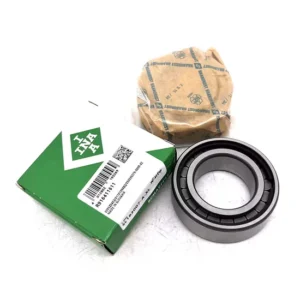
Genuine INA SL183007-A-XL NJ2208 NU2208 Cylindrical Roller Bearing for Auto Parts
INA H7012C-2RZ-P4 B706C T P4S Angular Contact Ball Bearing for Forklift Auto